Thursday, October 22, 2026

Why I Didn't Like The Great Mouse Detective As A Kid (And Still Don't Today) (Part 1)


I hated The Great Mouse Detective from the moment I first saw it as a kid. I watched it on VHS completely astonished with what I've watched and had this suspicion that this was a phenomenal flop. I mean, no one could possibly like this movie right? What's there to like? Well, my suspicions were wrong. The movie was a moderate critical and commercial success, was often credited for laying the groundwork for the Disney Renaissance, and it currently has a cult following to this day.

I was initially dumbfounded at first, but doing some research on the film's production, I realized that Disney didn't have high hopes for the movie either. The movie had a somewhat troubled history and the creative team behind it were not given the full support from the studio at the time. It was produced around the same time as the notorious flop that was The Black Cauldron and the animation department was expected to shut down if this movie suffered the same fate. The then-new management at Disney were getting worried about the company's legacy and they didn't fully back the project at all. So the movie opened in the summer of 1986 and it did well enough to convince Disney to make more animated features.

So that means that the film's minor success came from people, either professional critics or ordinary moviegoers, who saw it as a genuinely good film without any hype or high expectations at all. I'm honestly impressed and sincerely happy with what they did, this movie proved Disney wrong. Hell, even nine years before I was born, it proved me wrong, and that's a genuine accomplishment that I can't take away. 

But even though I can acknowledge the good it has done for Disney, I still don't think it's a good movie. I had so many fundamental issues with the story and characters that I just didn't like it as a kid and I still dislike it today for the same reasons. So without further ado, here's an in depth look at why I don't like this one.   

My First And Biggest Problem With The Movie


The movie is set in Victorian London and it opens when the toymaker Hiram Flaversham gets kidnapped. His daughter, Olivia, leaves home to find Basil of Baker Street, the titular mouse detective. Along the way, she is accompanied by Dr David Q Dawson, an army surgeon who had just returned home from Afghanistan. We meet Basil for the first time and... let me play a song that sums up the character perfectly.


This is one of the biggest problems I have with this movie, Basil is an egotistical narcissist with no respect for his clients, tells people that they have no time for their problems, does his job as a detective to satisfy his ego, and endangers two innocent bystanders. 

I've gotten plenty of objections from GMD fans I've talked to elsewhere online, many of them believe that I'm criticizing him in bad faith, that he's not this terrible person I make him out to be, and many of my complaints were dismissed as hyperbole. So is this true? Am I taking Basil out of context and criticizing him in bad faith? Well... no! I'm sorry, there's nothing out of context about this. Here's all we see Basil do in the first act of the film!

Ignores people in need!

Tells a kid that he has no time for her problems!

Endangers two innocent bystanders, including said child!

Now all of the clips and stills are condensed of course, but the context is clear. You will note that not one of these scenes I've shown you contains anything other than Basil doing one of three things, acting entitled, being only loyal to himself, or doing his job for his personal gain. None of this is coming from me or what I think of the character, it's in the movie itself. Nothing out of context, nothing in bad faith!

When it comes to most Disney heroes and heroines, they have one thing in common, they're generally good people regardless of their flaws and they cared about the people in their lives. The only Disney character I can easily compare Basil to is Gaston from Beauty and the Beast, but from a non-Disney example, I thought of one character who instantly reminded me of Basil.


He's so close to Denzel Washington's character in Training Day, it's just insane. Both are amoral narcissists who do their jobs as detectives for their personal gain and endangered the lives of innocent people, but why no one acknowledged this about Basil, I don't get it. Yes, there are detectives both in media and real life who act like this, and we have a word for these people too, we call them "assholes"! Just because a detective has negative traits, it doesn't always mean it can piss you off when it's happening!

Usually, in good stories, there's some circumstances to that kind of behavior. Take Eddie Valiant from Who Framed Roger Rabbit. We see him being a jerk from the moment he was introduced, but there's another side to that. Eddie's brother was murdered by a cartoon and that led to his prejudice towards cartoons until the end of the movie. The only reason we see Basil do everything he did in he first act was to bolster his ego and impress Olivia and Dawson with how great he is, and I'm sorry, there's nothing heroic and good about any of this. That's just someone being a jerk for no reason and therefore giving the audience no reason to like him.

And they didn't make Basil this way to make him relatable, they did it because they thought it would be cute, because someone read the Sherlock Holmes books and decided "hey, people love Sherlock Holmes, so let's take that character, make him into a mouse, and BOOM! Instant laughs from the audience!" That's the problem, cute is all they were thinking of when they were creating Basil the way he was. No one was really thinking about what this implies about Basil as a person or how it impacted anything! There's, fundamentally speaking, nothing to like about this dude! What is there to care about other than that? 

But the worst part is that Basil being an asshole wasn't actually my biggest problem. My biggest problem is that his pride, narcissism, and ego in the first act felt so completely pointless and had nothing to do with the rest of the movie. Take the Beast from Beauty and the Beast and Woody from Toy Story. These movies established both of these characters as flawed men and their selfish moments were essential to their character developments. We actually see their transformations from flawed individuals to selfless and kind people. But we don't see that in The Great Mouse Detective. It starts with Basil as a narcissist and moves on to something totally unrelated. We'll see how in part 2.

Why I Don't Find Ratigan A Great Villain


Now before I criticize the character, I have nothing against Vincent Price. There's obviously some joy with his performance, but I have problems with Ratigan in terms of how he was written. My problem with the character is that he's the reason why every other character in the film just comes across as stupid to me, and his plan for taking over Mousedom doesn't make much sense.

To put it simply, Ratigan has his peg-legged Gremlins rip off bat named Fidget kidnap Hiram so he can coerce the toymaker into building a robot version the the mouse queen, assassinate the actual queen by feeding her to his pet Power Ranger monster sized cat named Felicia, and trick the rodent population into believing that the queen would accept him as her royal consort. 

One of the basic problems with the character is how direct and obvious he is about his intentions, and yet everyone but Basil seems to be completely oblivious to this. The rat committed these crimes for years with obvious intent of ruling Mousedom, and yet with all of this deliberate obviousness, everyone goes about their business like they have no idea that he could possibly up to something nefarious. When he does attempt to take over Mousedom, it doesn't occur to anyone that there could be something fishy about it (more on that in part 2), and when his lies were exposed, they act like this is the most surprising thing on Earth. I honestly believe that most of these rodent bystanders didn't catch on to an evil scheme just because the script didn't allow them too.

It's obvious. It's so laughably obvious with what he plans to do that it just boggles the mind, and what's even more mind boggling is the fact that he uses a toy maker as part of his plan. Like... he doesn't really need him right? I mean he's a professor, he could have built the machine himself. He has henchmen who are willing to do his devious crimes for him and we don't see them do much. Not really sure how kidnapping a toymaker benefits him! He'd probably carried his plan on time and on schedule if he hadn't kidnap Hiram, since he's clearly unwilling to do his crimes for him! Hmm..

I mean come on! Is Ratigan stupid? The dude had an airtight plan that no one in London saw through. He would've taken the throne with no one questioning this and he wouldn't have owed anyone! What did he need the Flavershams for? What could they possibly do for him other than building some stupid robot that either he or his henchmen could have built for themselves? Seriously, is he... I'm answering my own question. Yes! Ratigan is stupid! It's The Great Mouse Detective! Everyone is stupid!

What Is Up With The Infamous Burlesque Scene?


Before I end part one of this review, I have a question to ask GMD fans. If the movie is intended for kids, why is there a sexualized, overly sensual burlesque scene in the movie? Her revealing appearance is blatantly inappropriate for children and even worse, it has no effect on the plot, as with the rest of the first act, which we will explore in part two.

Friday, September 4, 2026

Nashville (Robert Altman's Love Letter To America)


In response to America's 250th anniversary this summer, I decided to watch Robert Altman's 1975 movie Nashville to see if it holds up and I think it does. This is one of the best movies ever made and a genuine work of art from a masterful director. It's a rare kind of movie that works in all sorts of ways. It works as a musical, as a satire, as a comedy, as a political parable, and most importantly, as a love letter to America.  

The movie takes place in Nashville Tennessee during the country's bicentennial and it focuses on 24 characters who crossed paths with each other. Rather than using a traditional three act structure, the film uses a mosaic to tell these 24 individual stories in 160 minutes. Rather than using traditional good guys and bad guys, the film uses flawed, three dimensional characters the the audience is supposed to care about. 

Among these interlocking stories are Lily Tomlin as a married woman who is having an affair with a local country singer (Keith Carradine), Ronne Blakely as a country singer who gets sent to the hospital after a supposed nervous breakdown during her arrival in Nashville, Ned Beatty as a lawyer who is married to the Lily Tomlin character and is a local organizer for a political candidate, Geraldine Chaplin as a BBC journalist who is covering the music scene, and Shelly Duvall as a groupie who deliberately missed out on her late aunt's funeral. Each of these stories were given and equal amount of screentime to the point where it doesn't get confusing to the audience.

The film covers topics like adultery, success, and American politics to the degree that the film accurately depicts what American life is like, even though the movie is fiction. The movie's docudrama approach gives the movie more realistic weight and helps make the characters more human than other traditional Hollywood films.

What further elevates the movie is the great performances from an ensemble cast. Altman was known for encouraging his actors to improvise their lines and they even wrote their own music, making their performances more real and naturalistic. Some of the actors themselves are even convincing as country singers, making their songs more authentic to their characters. These naturalistic performances help give these characters depth and not come across like they were just reading lines from the script. 

Speaking of the dialogue, Altman uses overlapping dialogue to make the characters' conversations feel natural. He achieves this by wiring his actors with hidden microphones, then he records them talking over each other. This innovative technique enhances the realistic nature of the film and makes the audience active spectators because overlapping conversations do happen in real life.

The movie is shot in widescreen by cinematographer Paul Lohmann and he beautifully captures the essence of Nashville by giving the city a sense of scale. There are large crowds, concerts, car races, and a traffic collision that opens the movie. It gives Nashville a more panoramic feel and a sense of realism to the visuals. It must be seen on better formats like DVD or Blu Ray, since VHS tapes often pan and scan widescreen images to fit 4:3 TV screens, so it's for the best not to watch this movie on VHS and no one really uses the format today anyways.

Apart from it's cinematic innovations and and strong performances, the movie's core strength is that it's a love letter to America but its not patriotic about its message and blind to its faults. This movie was made when the country was in a state of turmoil with the Vietnam War and the Watergate scandal and not much has changed in 50 years. Since then, we had the wars in the Middle East, the presidential scandals of people like Bill Clinton and Donald Trump, the assassination of John Lennon, and even COVID-19. The fact that history repeats itself makes this movie more relevant, timely, and meaningful today. 
 
Overall, this is a great movie. It's one of the greatest movies of the 1970s (and the New Hollywood period in general), it's one of the greatest American stores ever told, it's one of the greatest works of art period. The late great Roger Ebert said it best when he said "this is a film about America. It deals with our myths, our hungers, our ambitions, and our sense of self. It knows how we talk and how we behave, and it doesn't flatter us but it does love us."

Saturday, February 7, 2026

Spider Man 2 (How A Sequel Can Improve On The Original)


In the summer of 2004, Spider Man made his second leap on the big screen. Critics and audiences alike have praised the film for its emotional depth, strong performances from Tobey Maguire and Alfred Molina, and its improved special effects and action sequences. Since it’s release, it has been considered to be one of the best superhero movies ever made, a rare sequel that is superior to the original. Let's examine the case of why that is!

The Film’s Emotional Core 


Director Sam Rami has not made a mindless summer popcorn movies that panders to the audience. The heart of the movie is Peter Parker's dilemma and his decision to either live his life as an ordinary man, or fight crime as Spider Man. 

We see Peter struggling with his ordinary life in the first half of the movie. He’s late for class, he gets fired from the pizzeria and goes back to the Daily Bugle, his rent is over due, and Mary Jane wants little to do with him after he misses her play. But when he chooses to live the rest of his life as Peter Parker, things seem to be going well for him, yet the city has been in decline since he stopped being Spider Man. After Mary Jane gets kidnapped by Doc Ock, Peter gets his powers back and decides to become Spider Man again and accepts it as his destiny. 

It also handles his guilt over Uncle Ben’s death remarkably well. The scene where Peter tells Aunt May the truth of what happened that night is one of the most heartbreaking and honest scenes in the history of superhero movies. There’s a real heart to this film.

It also handles his guilt over Uncle Ben’s death remarkably well. The scene where Peter tells Aunt May the truth of what happened that night is one of the most heartbreaking and honest scenes in the history of superhero movies. There’s a real heart to this film..

The Film's Far Superior Villain


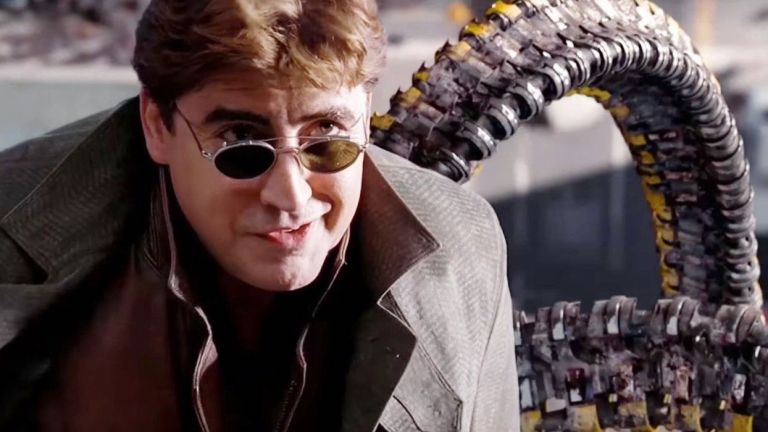
Among the movie's strengths is a superb performance from Alfred Molina as Doc Ock. After Willem Dafoe’s over the top performance as the Green Goblin, we have a villain who is more sympathetic and relatable.

As Otto Octavius, we see a benevolent man who wants to make scientific discoveries for the good of mankind, but after his experiment goes wrong, he worsens when he turns to a life of crime to do the experiment again. Rather than being the over the top villain he could have been, Molina carries the role with subtlety and nuance, especially when he talks to his robotic tentacles. This is a great performance that ranks among the great movie villains.

Improved Special Effects And Action Scenes


Looking back on the first movie, the special effects hadn't aged well and looked more like video game cutscenes, so there was room for improvement and it paid off tremendously. There isn't a wasted shot or a moment where it was obvious that they used CGI. It's like they took what didn't work in the first movie and worked around it by creating more inventive fight sequences. 

The subway train sequence is a superb example. It’s well choreographed, tightly edited, and the CGI is more convincing this time. This ranks as among the greatest action sequences of all time.

Conclusion 

Spider Man 2 is a rare example of how a sequel can improve over the original. It takes what works best with the original film and expands upon it with it's strong emotional core. It is truly one of the best superhero movies ever made!

Tuesday, December 23, 2025

The Princess Bride (A Tribute to Rob Reiner)


                                                  In Memory of Rob Reiner (1947-2025)

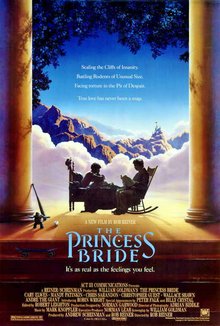
On December14, 2025, something terrible has happened! Legendary director Rob Reiner and his wife were murdered by his son! In honor of him, I revisited two of his best films, This is Spinal Tap, and The Princess Bride. I have yet to revisit Stand By Me, When Harry Met Sally, Misery, and The American President and I plan to watch The Sure Thing and A Few Good Men, but if I had to pick a favorite, it would be his 1987 fantasy, The Princess Bride.

Based on the book by William Goldman, who also wrote the screenplay, the movie opens with a kindly old grandfather (Peter Falk) who reads a storybook for his sick grandson (pre-Wonder Years Fred Savage). Then the movie establishes its fairy tale setting where the beautiful Princess Buttercup (Robin Wright) falls in love with a farmhand named Westly (Cary Elwes). After Westly was presumed to be killed by pirates, Buttercup is forced to marry the vain and egotistical Prince Humperdinck (Chris Sarandon). Buttercup runs away from her kingdom, but was captured by a notorious criminal (Wallace Shawn) and his two henchmen, a Spanish swordsman who wants to avenge his father's death (Mandy Patinkin), and a giant with a heart of gold (Andre the Giant). Westly survives the pirate attack, dresses up and fights like one, and saves Buttercup. Now Buttercup has two choices, will she marry the evil Prince Humperdinck, or will she stay with the true love of her life, Westly?

This movie works on any level. It works as a fairy tale, a romance, a comedy, and an adventure film. But the most special and important quality is that while the movie is made for kids, it doesn't talk down to them. It treats the audience with the utmost respect with its memorable characters, great sense of humor, heartwarming romance, and its adventurous story. This is my personal favorite film from Rob Reiner and it's a shame that we lost him. May he rest in peace!

NOTE: Sorry for another year where I haven't written an article in a year due to my busy schedule, but I promise that I will be more active in 2026!


Tuesday, December 24, 2024

The History of Roger Ebert's Movie Home/Video Companion


NOTE: I'm sorry that I haven't written an article in about a year. A lot has happened since I wrote about the 90s indie scene in November 2023. Earlier this year, I wrote a play for a repertory theater company. It was picked up, it was a success, and I made a lot of money off it, but I neglected my abilities to write insightful blog posts about the movies, but now I'm back! This time, I'm writing about movie books and what better way to start than with Roger Ebert! 

Roger Ebert was widely regarded as one of, if not, the most influential film critic who ever lived. Primarily known for his televised debates with his partner Gene Siskel, he helped to make film criticism more accessible for a wider audience. But during his time on television, and way before the Internet, he transferred his in depth newspaper reviews into a series of video guide books, encouraging his audience to find high quality movies on home video. We'll address how these books have a place in home video history and what made Roger's reviews accessible to the general public. 

A Brief History of Home Video

In the late 70s and early 80s, the home video revolution has started to take shape. Before that, if you missed a movie in it's original theatrical run, you'll never be able to see it unless if it opens in your local revival theater, or if it airs on broadcast TV. But then home video came along, giving you the opportunity to not only own a film, but to watch it over and over again. 

Most people were initially skeptical of home video, as they feared that it might replace the theatrical experience (similar to the current streaming revolution), but that didn't happen, as home video has seemed to generate a new generation of movie fans. 

As home video grew into popularity, many film critics and experts have written video guide books, and Roger Ebert was one of them.

The History of Roger Ebert's Movie Home/Video Companion

Since 1967, Roger Ebert became one of the most prominent film critics and one of the most trusted tastemakers who ever lived. Known for his wit, intelligence, and genuine passion for movies, his reviews have touched the hearts of the newer generation of both regular moviegoers and hardcore movie lovers. With his influence greatly increasing on television, he began writing books.


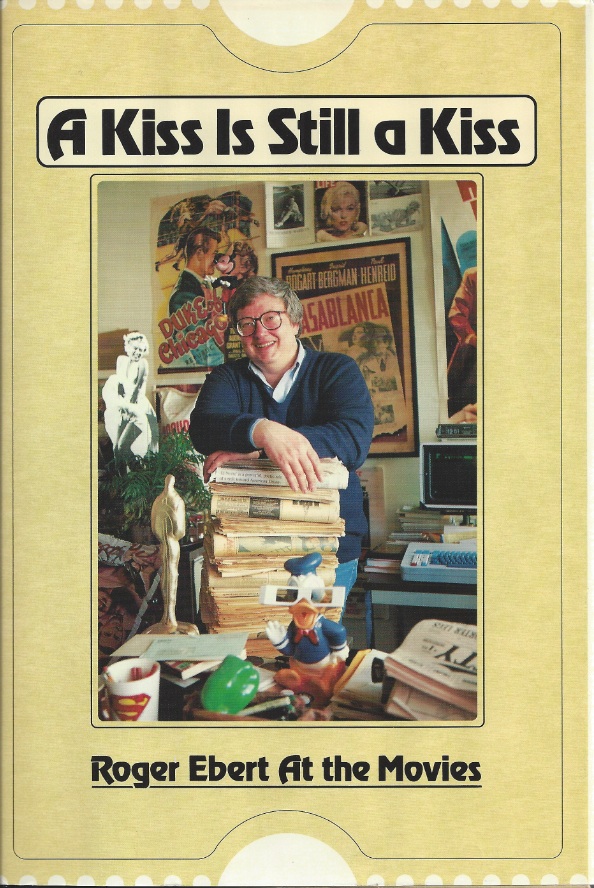
In 1984, Roger wrote a book compiling his interviews called A Kiss Is Still A Kiss. It contains essays and interviews with directors and stars like Groucho Marx, Lee Marvin, Martin Scorsese, Sylvester Stallone, and dozens more. The book was a success and led to a publishing partnership with Andrews McMeel Publishing. According to editor and colleague Donna Martin, she proposed Ebert to make a compilation of his reviews of movies available on home video. 


The first volume was published in October 1985. Both due to his initial reluctance to embrace home video and his observation that most video stores have a recency bias towards the new releases, the book chronicles his reviews written between 1980 to 1985, but the book became successful enough that it became an annual series, with updated reviews, essays, and interviews.  

By 1990, the books have sold 65,000 and 75,000 copies  in the first five years, making them best-sellers. As the years went on, the books have gotten bigger and bigger to the point that there's barely enough room for newer reviews and the format needed to change. The last volume of the Companion series was published in 1997 and the format was replaced by "Roger Ebert Movie Yearbook" the following year, this time covering two years of movies per volume. The last Movie Yearbook was published in 2012.

With his influence in the film community greatly increasing over time, Roger Ebert had become the go-to film critic up until his death on April 4, 2013. 

What Makes It Stand Out From Other Video Guide Books?

Most video guides written during that time often provide short, surface level paragraphs. Roger’s reviews are his in-depth newspaper reviews from the Chicago Sun Times, and they’re his firsthand accounts to huge changes in Hollywood. There’s the New Hollywood period in the 70s, the advent of the summer blockbuster in the 80s, and the indie film explosion in the 90s, and he covered as many films as possible. More than just mainstream Hollywood films and box office hits, he's also covered foreign films, independent films, documentaries, cult films, animation, and restored classics. 

In addition to his reviews, he has also written interviews and essays highlighting trend and issues within the film industry. He has written about why colorization of black and white films is inherently wrong, why Laserdiscs are better than VHS, how the MPAA rating system is flawed, why letterboxing widescreen movies on video is better than panning and scanning, and how the blockbuster mentality that was established by Star Wars was antithetical to the creative freedom and experimentation in the late 60s and early 70s. 

But the primary takeaway from these books is that Roger is a genuine lover of cinema. It doesn't matter if you agree with his reviews or you don't, his enthusiasm for great movies really shines through in his reviews. This is why these books primarily focus more on his positive reviews, as it's his way to encourage his readers to seek out high quality movies and decide for themselves. 

Conclusion 

Roger Ebert’s Movie Home/Video Companion is a thoughtful, passionate series of books about the movies, and it further showcases how much of a passionate and intelligent critic he was. A true film critic for the people.

Saturday, November 18, 2023

How The 90s Indie Boom Changed And Challenged American Cinema?

In the 90s, a new generation of younger filmmakers were making their most renowned works either in or out of the major Hollywood studios. Their body of works took chances, expanded their scope, and experimented with new ideas on what movies should be. But that all ended in the turn of the new millennium when the studios began hyping smaller films with awards hype and Oscar potential. Let’s examine the rise and fall of the 90s indie film boom.

How It All Began?

The 90s indie boom was Generation X's answer to the New Hollywood movement of the late 60s and 70s, when a new generation of directors have gained power and made their most renowned works year after year. But in the late 70s and early 80s, George Lucas and Steven Spielberg have created the summer blockbuster trend with Jaws, Star Wars, and Raiders of the Lost Ark, while remaining director-driven Hollywood films like Heaven's Gate and One from the Heart turned out to costly box office bombs. As a result, the major studios regained control, and concentrated on selling high concept, crowd pleasing blockbusters. This also meant making endless sequels, planting the seeds of Hollywood's current obsession with franchises.

Many critics and film historians have considered the 80s to be the worst decade for American movies because of this, but amidst of all of Hollywood's hunger for the opening weekend, there's a smaller window for other types of movies and directors like The Coen Brothers, David Lynch, John Sayles, John Singleton, Spike Lee, Oliver Stone, Gus Van Sant, Richard Linklater, and Jim Jarmusch have rose to prominence in the late 80s and early 90s.


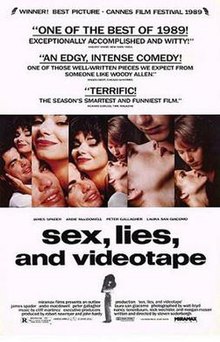
The turning point of independent cinema came in August 1989 with the release of Steven Soderberg's directorial debut, Sex, Lies, and Videotape. Released in a summer season dominated by sequels and Tim Burton's Batman, Sex, Lies, and Videotape was a critical and commercial success, made Miramax (which was in its tenth year) a prominent distributor for smaller films, and gained Robert Redford's Sundance Film Festival widespread media attention. All of this has led to the indie revolution of the 90s. 

How It Expanded In The 90s (And How It Fell)

In the 90s, the big six major studios were Warner Bros, Disney, Universal, Paramount, Sony (which purchased Columbia/TriStar Pictures in 1989), and 20th Century Fox, and they continue to make crowd pleasing blockbusters. But what changed is that the major studios have created their subsidiaries (Sony Pictures Classics, Fox Searchlight Pictures, and Gramercy Pictures) specializing in indies and foreign films while smaller companies like Miramax, Trimark, PolyGram, Artisan, October Films, NewMarket Films, and IFC Films were distributing niche titles. 


Part of what drew to the arriving interest in indies in the 90s were films like Quentin Tarantino's Reservoir Dogs, Neil Jordon's The Crying Game, and Robert Rodriguez's El Mariachi, proving that smaller films can be more than just highbrow, arthouse cinema.


Then in 1994, Tarantino took independent cinema to the next level with the release of Pulp Fiction. It was financed by Miramax, which was acquired by Disney in 1993 and it was the first movie to be greenlit after the acquisition, so it's debatable if it's a genuine indie. But the movie is made in the spirit of an indie and it costs $8 million to make. That's less money than most mainstream movies at that time, but it paid off excellently. Pulp Fiction opened to critical acclaim for Tarantino's unique storytelling, awards hype, and it grossed over $200 million, making it one the first low/mid budget films to make 9 figures at the box office. 

It could be argued that the success of Pulp Fiction helped turned independent films into a full fledged phenomenon in the mid and late 90s and more rising directors have emerged like Paul Thomas Anderson, Darren Aronofsky, David O Russel, Ang Lee, Atom Egoyan, Spike Jonze, Sofia Coppola, The Wachowskis, Wes Anderson, Alexander Payne, Todd Solondz, David Gordon Green, Christopher Nolan, Neil LaBute, Noah Baumbach, and Kevin Smith. Many of these directors went on to have successful careers in the years to come and their works have acclaimed by critics, audiences, and the awards circuit. But of course, nothing lasts forever.


The spirit of the 90s indie film movement have gradually died out thanks to Oscar campaigns from Miramax co-founder Harvey Weinstein. First The English Patient won over Fargo, then, most infamously, Shakespeare in Love won over Saving Private Ryan. Even though they were financed by Miramax, they're not really indie films. Both movies have been development hell for years from the major studios and cost more money than Sex Lies and Videotape and Pulp Fiction combined. 

As a result of both victories, the 90s indie boom is coming to an end. Though the Weinstein brothers moved away from Miramax to form The Weinstein Company in 2005, Harvey became increasingly obsessed with his awards lust. This does not sound like an artistic goal for producing films. And even before his criminal misconduct and sexual abuse allegations (which led to the MeToo movement in the late 2010s), he became notorious with meddling in the editing room and clashing with directors, which is the same kind of studio interference promising filmmakers are trying to avoid.

On top of that, the indie subsidiaries of the major studios like Fox Searchlight Pictures, Universal's Focus Features (formerly Gramercy), and Sony Pictures Classics have been releasing critically acclaimed, mainstream titles with awards hype (Brokeback Mountain, No Country For Old Men, Birdman, Little Miss Sunshine, Sideways, Slumdog Millionaire, and dozens more) while most genuine indie companies were forced to pack up and move out. By the turn of the new millennium, the 90s indie film movement has officially ended, spiritually speaking. 

Aftermath (Hollywood's Increasing Blockbuster Mentality)

After the 90s indie boom fizzled out, the major studios started focusing on blockbusters and franchises again, while many directors associated with the indie film movement went on to direct mainstream awards contenders and popular hits. At the same time, most of today's indie filmmakers either sign up to do a big budget franchise movie or sell their smaller films to streaming platforms like Apple tv, Netflix, and Hulu.  

Today, film companies like A24 and Neon have helped keep the indie spirit alive by producing art driven films made by younger filmmakers for younger audiences who want to go far beyond conventional Hollywood fare. But the market is still dominated by blockbusters and franchises, as evidenced by the successes of the Marvel Cinematic Universe and the recent Star Wars films. 

In late 2019, Martin Scorsese has dismissed Marvel films as "not cinema" and compared them to amusement park rides, fearing that big budget superhero movies might crowd out smaller films. After receiving backlash from comic book fans, Scorsese further explains his point in an op-ed for the New York Times, stating that "Many of the elements that define cinema as I know it are there in Marvel pictures. What's not there is revelation, mystery, or genuine emotional danger. Nothing is at risk." He sees them as corporate products that are "market-researched, audience-tested, vetted, modified, revetted and remodified until they're ready for consumption." 

With the increasing blockbuster mentality, smaller films going to streaming platforms, and the CO-VID pandemic affecting movie theaters, it would seem like the American cinema is at death's door, but with Oppenheimer and Barbie opening to critical acclaim and commercial success this past summer, only time would tell that another creative renaissance in Hollywood might actually happen.

Legacy

The 90s indie film movement remains influential to this day. It shows that quality movies can be made regardless of what it costs or what type of movie it is. It shows that smaller films can have universal themes audiences identify with. It shows that movies can be more that just escapist entertainment. Like the New Hollywood movement of the 1970s, the 90s indie explosion is a monument of creative experimentation, exploring new ideas, expanding their scope, and keeping up with the times. 

Saturday, June 10, 2023

How American Cinema Has Changed: From New Hollywood To The Rise Of The Blockbusters (1970s to the 1980s)

WHERE HAVE I BEEN: 2022 was a really busy year for me. I've been through four family weddings in the past summer and fall. It's also a rough year for me as well, as my cousin just died at the age of 21. I've been to so many family events to the point that I've forgotten my strengths as a writer. But now I'm back, and I'm ready to do what I do best, write passionately about the movies.

In the late 1960s, the major Hollywood studios seem to be out of touch with what the current generation of movie goers wanted to see. The old guards that were running the studios had either died or retried, and audiences were tired of the big budget epics and musicals that have been dominating the market since the 1950s, when Hollywood was threatened by television. Change was very much needed and that change came in 1967 with the release of Bonnie and Clyde.

How Bonnie And Clyde Changed American Cinema


The film's origin was a story of Hollywood legend. Studio executive Jack Warner, after viewing a rough cut, hated the movie. He felt that the movie was overly violent and dumped it in small amounts of theaters around the country. It opened to a mixed critical response, but audiences seem to fell in love with this film. With it's frank depiction of sex and violence, anti-establishment themes that resonated with countercultural audiences, and filmmaking techniques that have been borrowed from European arthouse cinema (notably The French New Wave), Bonnie and Clyde, alongside other late 60s hits like 2001: A Space Odyssey, Easy Rider, The Graduate, Midnight Cowboy, and The Wild Bunch, have opened the floodgates of director driven cinema in the 1970s.

The Rise of the American Auteurs

With the major Hollywood studios diminishing power, a new generation of directors have gained more artistic freedom than directors have ever had before. Directors like Robert Altman, Stanley Kubrick, Steven Spielberg, George Lucas, Martin Scorsese, Peter Bagdanovich, Francis Ford Coppola, William Freidkin, Woody Allen, Hal Ashby, and dozens more, have spoke for a generation that have been disillusioned with The Vietnam War and the Nixon administration, an audience that have become increasingly alienated from past generations. 

These ambitious directors were influenced by European and Japanese art house cinema, as well as classic Hollywood filmmakers like Orson Welles, Alfred Hitchcock, John Ford, and Howard Hawks. And in taking inspiration from great directors while trying new things, the newer generation of directors have become authors, or as the French call, "auteurs."  

As a result of all of this creative power, many film historians and critics have considered the 1970s to be a golden age for American cinema. Of course, any golden age wouldn't last as long as it should have. In the late 70s, Steven Spielberg and George Lucas have inadvertently created a new trend in Hollywood that has had a severe impact in director driven filmmaking: the summer blockbusters.

The Creation of the Summer Blockbusters


In March 1975, Steven Spielberg's upcoming monster movie, Jaws, have heled two successful test screenings in Dallas and Long Beach respectively. Studio executives and producers Richard D. Zanuck and David Brown knew they had a hit on their hands, so they've done something unprecedented in the history of film distribution. Prior to Jaws, films would open in selected cities, then it would open in more theaters across the country based on critical acclaim and positive word of mouth from audiences. Jaws however, was an entirely different matter. It was the first film to open in wide release on its opening weekend, a distribution process most common for exploitation and grindhouse movies.

Universal Studios also spent $2 million on marketing Jaws, from 30 second ads on prime-time TV, to its elaborate merchandising campaign. Companies have sold beach towels, blankets, books, board games, toy sharks, squirt guns, the soundtrack album, and other tie-in merchandise. 

On June 20th, Jaws opened in over 400 theaters in North America. By July and August, distribution has ranged from 700 to 950 theaters. By the end of the year, it overtook The Godfather as the top grossing movie of all time, grossing over $100 million domestically. The summer blockbuster has been born.


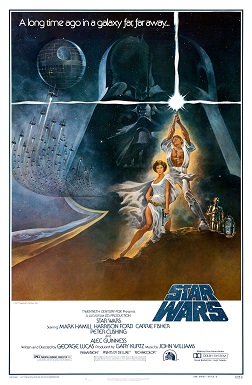
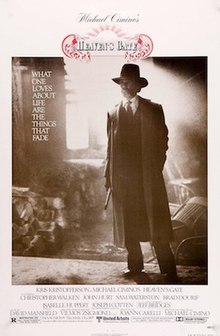
If Jaws created the high concept, amusement park trend in Hollywood, then Star Wars certainly cemented that on May 25, 1977. It eventually beaten Jaws as the most successful movie ever made, sending Hollywood the message to sell as many crowd pleasing blockbusters to mass audiences as possible. By the late 70s and early 80s, the summer blockbusters were about to dominate the film industry and the auteur era was coming to an end, with Michael Cimino's expensive Western, Heaven's Gate, being the final nail in the coffin. 

How Heaven’s Gate Ruined Everything 


After The Deer Hunter won the Academy Awards for Best Picture, director Michael Cimino has been given carte blanche from United Artists for his next project, Heaven's Gate. Unfortunately, things went south once the cameras started rolling.

Cimino was a notorious perfectionist and a stickler for authenticity. He would often build, destroy, and re-build sets to his liking, causing massive cost overruns. He also demanded massive retakes to get the performances he wanted, and there's even allegations of animal abuse. Cimino reportedly shot over 220 hours of footage, costing the studio million of dollars.

After production had been completed, a four hour version of the film premiered in New York City on November 1980. By all accounts, the premiere was a complete disaster. It lasted only one week due to negative word of mouth from audiences and critics, including Vincent Canby of The New York Times. 

United Artists pulled the movie from theaters so it would be re-cut at a shorter length. A two hour and twenty nine minute version opened to 810 theaters in April 1981, and it had a worse reception as well, with Roger Ebert calling it "the most scandalous cinematic waste I have ever seen." It ended up being one of the biggest bombs of all time, grossing $3.5 million out of it's $44 million budget.

As a result, United Artists have faced financial difficulties that led to its merger with MGM, and other studios no longer give directors the same creative control they had in the 70s. The Hollywood auteur era is over.

Aftermath (The Blockbuster Mentality Of The 1980s)

After the failure of Heaven's Gate, the American film industry shifted its focus on high concept, spectacle driven, crowd pleasing blockbuster films of the 1980s (Superman, Indiana Jones, Ghostbusters, Who Framed Roger Rabbit, Back to the Future, Rambo, Beverly Hills Cop, and dozens more). This also meant making sequels, giving birth to Hollywood's franchise obsession that is still going on today.  

The remaining 70s auteurs like Scorsese, Altman, and Coppola have struggled to stay relevant, the independent film boom was in its early stages, and foreign films were given limited distribution in North America. As a result, the blockbuster mentality have created a monoculture, leading to the consensus among many critics and film scholars that the 80s was the worst decade in the history of American cinema. 

What made the groundbreaking director driven films so popular with critics and audiences during the 1970s was the sense of dread and cynicism that was going on in America. But with The Vietnam War and Watergate scandal now behind them, and with Ronald Regan inaugurated as president in 1981, the American public has become accustomed to the big budget Hollywood blockbusters. 

The most interesting thing is that while many critics consider the 1980s to be a creative dead zone, you still have many beloved films of tremendous quality. Films like Raging Bull, Do The Right Thing, Platoon, The Right Stuff, Scarface, and Brazil. While these films were seen as masterpieces today, things couldn't be farther than the truth on their initial releases. Even John Carpenter's The Thing, a film that it iconic as his 1978 film Halloween, was incredibly controversial. Critics panned it for graphic violence and shocking images, and audiences flocked to see E.T. These high quality films didn't seem to be connecting with audiences that have become accustomed to simplicities and spectacles of the blockbusters. 

There is a silver lining to all of this. Things were going to change in the 1990s with the independent film boom and a reviving interest in foreign films. And that's a story for another day.
 

Wednesday, May 18, 2022

Batman Begins (How Christopher Nolan Revived Batman And Took Him Seriously)


Eight years after the disastrous Batman and Robin, Warner Bros made a comeback with Batman Begins, directed by Christopher Nolan.  Because Batman and Robin was fresh in people's minds, audiences seemed to be skeptical of another film featuring the The Dark Knight. But when people finally saw the movie, they were impressed with its complex story and interesting characters.

How Nolan Made The Right Decision To Focus On Bruce Wayne/Batman? 

The very core strength of Batman Begins is its insight on who Bruce Wayne is as a person. We no longer get to see Batman being used as a secondary character in his own franchise. What we got is an insightful character study. We get to see how he thinks and what motivated him to fight crime beyond the death of his parents. 

The previous films only gave us surface level details on Bruce Wayne's backstory because the villains stole the show in each film primarily to capitalize on the big names who were portraying them, so we really don't know much about him apart from the basics. Nolan and screenwriter David S. Goyer made the right decision to focus on Bruce Wayne, because it adds a lot to his character.

How Nolan Paid Attention To The Supporting Characters?


In addition to creating a successful origin story for Batman, Nolan and Goyer didn't forget the supporting characters, especially Commissioner Gordon. We finally get to see Batman and Gordon work together.

The previous films depict Gordon as a bystander rather than a real participant to Batman's crime fighting, so he really wasn't given much to do. But with Batman Begins, we get to see Gordon being an active partner this time. We see him at a younger age, trying the best he can to help Gotham City, and is the only one who understands Batman.

You can't go wrong with the casting of Gary Oldman. It's one of his best performances.


Rather than using a traditional villain like The Joker and The Riddler, Nolan makes a wise decision to use the character of Ra's al Ghul, the leader of the League of Shadows.   

Rather than depicting him as a typically evil supervillian, he's portrayed as a complex mentor to Bruce Wayne. Both want to achieve the same goals in fighting crime, yet they have completely different ideas.

We see Ra's as Bruce's mentor, teaching him the stealth and martial arts techniques he will later use as Batman. Then they go on their separate ways, because while Bruce wants to fight crime, he doesn't want to kill his enemies. When Ra's finally arrives in Gotham, he plans to punish the city for its crimes by injecting fear-inducing toxin in the city's water supply. 

Liam Neeson totally embodies the complexity of the character with his performance. It's hard to see anyone else to play him in this particular way.


Michael Caine is perfectly cast as Alfred Pennyworth. He doesn't portray him as a mere butler, but rather a genuine father figure for Bruce. 

Even though he disagrees with Bruce's actions as Batman, we still get the sense that he truly cares for him, since he continues to raise and support him throughout his life.

No disrespect to Michael Gough, who played Alfred in the previous films with the best he could, but Caine offers a far more interesting and complex performance.

My Issues With The Film (And Thankfully I'm Not Alone)


Batman Begins is not without its faults however, and thankfully I'm not the only one who pointed them out.

If you're a fan of the Scarecrow, you might be disappointed with how little he was used in the series. I imagine fans walking into the movie, expecting him to have a bigger impact within the story, only to be disappointed that he was really second fiddle to Ra's al Ghul and his plans to spread fear to Gotham City.

When he arrives in the climax, you'd expect an epic confrontation between him and Batman. But no, he gets tasered by Rachel (Bruce's love interest), and that's it. 

You'd think more of the Scarecrow would be used in the sequels, but's that's not the case. He just pops up for a cameo in The Dark Knight and his exploits were resolved at the beginning of the film. Why put the Scarecrow in the franchise and not give him much to do?

I also think Cillian Murphy is miscast as Jonathon Crane/Scarecrow. He looks too young and good looking to play Crane (keep in mind, he actually auditioned to play Batman), since the comics depicted him as an older, much awkward person.


Another issue I have is that the action scenes are sloppily edited. Nolan shoots the action in close ups and the edits are so quick, it's impossible to see what the hell is going on. Thankfully, Nolan showed improvement in directing action not only in The Dark Knight, but also later films such as Inception.


The love story between Bruce and Rachel is a little forced and underdeveloped. It's really down to the lack of chemistry between Christian Bale and Katie Holmes and the limited screen-time, which really didn't establish their relationship enough for the audience to buy in to their love for each other. 

I'm not going to comment much on Bale's infamous Batman voice, as I would be beating a dead horse at this point. But I would say this, I liked Bale better as Bruce Wayne than as Batman.

Closing Thoughts

Regardless of its flaws, I still think Batman Begins is a great movie and it might very well be my personal favorite Batman film.  

I loved The Dark Knight as well and I have a soft spot for Tim Burton's Batman from 1989, but Batman Begins is the one I watch the most often, mainly because of how Bruce Wayne's journey to become Batman is the focus of the story, and we get to see what he does best.

Christopher Nolan is the right filmmaker to revive Batman, he doesn't play things safe or dumb everything down, and he takes the material seriously, similar to Richard Donner's approach with Superman.

With superb performances, Nolan's sense of verisimilitude, and an effective origin story, Batman Begins has the ingredients to make a solid, entertaining Batman movie. It is truly one of a kind!

Thursday, April 28, 2022

Ghostbusters (An Imperfect But Solid Blend of Comedy and Special Effects) (Part 2) (SPOILERS)


WARNING: The following review might contain spoilers. Watch the movie before reading this review.

Hello and welcome to part 2 of my retrospective on Ghostbusters. Previously, I talked about the film's tumultuous production history, now I discuss how the movie is a solid mix of comedy and special effects regardless of any issues I have. 

Ghostbusters have come out when the rise of summer popcorn movies was in full swing after Jaws and Star Wars, but I don't think the general public had high expectations for another big budget special effects driven comedy. 

Steven Spielberg made his 1979 WWII comedy 1941, and that movie was a critical and commercial dud because that movie prioritized special effects and not much else, so that movie was a bloated mess.

Director Ivan Reitman has made two successful comedies (Meatballs, Stripes) with smaller budgets, so he took a huge risk by jumping on to a big scale production. But thankfully, any doubts the public might have had were put to rest when they finally saw it.

Audiences were given a big budget special effects-driven comedy with characters they cared about. The film's core strength, to me, is that the Ghostbusters were given individual personalities. This is why I think Roger Ebert's review is valid when he said that the special effects serve the actors and not the other way around. They really develop a strong team with their interactions instead of being props for the special effects. 

Reitman made the right decision to tell an origin story instead of throwing the audience into the action. Aykroyd's original idea was to set the movie into the future and the Ghostbusters were already in business, but Reitman felt that it was too bloated. So Reitman basically rewrote Aykroyd's concept into an origin story and set it in modern times, which I think benefits it greatly.

While nobody gives a bad performance, Bill Murray really steals the show as Peter Venkman. Not only he gives joy with his clever one-liners, there are moments when he actually gets serious with the role, such as the scene when the EPA tries to shut down the Ghostbusters headquarters and Venkman protests. It's scenes like this that show Murray's versatility as an actor. 

Obviously, the movie is not perfect, as it has its flaws here and there. Some of the initial reviews at the time pointed out that the supporting characters were given little to do. It's not a criticism I necessarily agree with, but I can understand where they are coming from. 

Even though I credited the individual personalities of the Ghostbusters and their interactions, it's not always easy for me to remember what the supporting cast did or said that I find funny, since Murray dominated most of the comedy with his improvisations and ad-libs while Aykroyd and Ramis played their roles somewhat straight. Still, there still some funny moments from them, such as when Aykroyd thought about the Stay Puft Marshmallow Man in the film's climax, and when Rick Moranis gets possessed by one of the terror dogs.

The romance with Venkman and Dana Barret feels rushed. She's clearly not interested in him at all when they first meet and only shows interest in him when he becomes famous. Sure, she kisses him after he saves her, but since there wasn't enough time to establish their relationship, I honestly don't buy the chemistry between Murray and Weaver. 

Another issue I have is the abrupt arrival of Winston, the fourth Ghostbuster. He kind of does feel tacked on in the second act without even giving us a proper backstory, so we really don't know much about him. As I said in part 1, originally there was much more to Winston when Ernie Hudson read the script, but when filming started, much of his character was omitted. 

And lastly, the special effects are mixed in quality. Because of the short production schedule, many effects shots looked rushed, from wobbly blue screen composites, to stiff stop motion animation. The best effects for me were the Ghostly Librarian, Slimer, and Stay Puft Marshmallow Man, and I liked some of the matte paintings and traditional animation. But the stop motion animation of the Terror Dogs disappoint. They just look stiff and poorly processed in the optical printer.

I think the issues I've mentioned might have been the result of the studio rushing the production to meet it's summer 1984 deadline, because by doing that, it kind of does come across like they were trying to capitalize on the rise of the summer blockbusters, since it was a new concept that was established by Jaws and Star Wars.

Despite it's faults, I still think Ghostbusters is a solid film. Mixing comedy and special effects is not easy, as 1941 obviously demonstrated, but the filmmakers did the best they could under a tight schedule to make a solid movie despite its faults. Ghostbusters is a 3.5 out of 4 movie for me. 

Saturday, April 23, 2022

Ghostbusters (An Imperfect But Solid Blend of Comedy and Special Effects) (Part 1)


In the summer of 1984, Ghostbusters became a cultural phenomenon. With an estimated budget between $25-$30 million, it grossed $285 million, making one of the most successful comedies of all time. Critics praised the film for its unique mix of comedy and special effects, and Bill Murray's performance was often singled out for high praise. Ghostbusters has since become one of the most popular franchises in Hollywood history. But the movie almost never got made, and almost didn't get made the way it did.

Origins, Inspiration, and Development


Ghostbusters was the brainchild of Dan Aykroyd. Apart from being one of the early members of Saturday Night Live, he also has a huge fascination with the paranormal, which he had inherited from his family. In 1981, he read an article on quantum physics, which gave him the idea of a comedy about trapping ghosts, taking inspiration from the likes of Abbot and Costello, Bob Hope, and The Bowery Boys. 


The film was originally conceived as another star vehicle for Aykroyd and his best friend John Belushi (along with Eddie Murphy) and was originally set in the future, but when Aykroyd was working on the screenplay, Belushi died of a drug overdose in March 1982. 


RIP Ivan Reitman (1946-2022)

Shortly after Belushi's death, Akroyd chose Ivan Reitman to direct the film, who co-produced Animal House and directed Meatballs and Stripes with Bill Murray. Reitman felt that Akroyd's original concept was too costly and impossible to make, so he decided to set the movie in New York City at the present day (early 80's), and decided to establish an origin story of the Ghostbusters going into business. 


In March 1983, Reitman pitched the project to Frank Price, then an executive at Columbia Pictures, hoping that it could be made with a $25-$30 million budget. Price agreed to greenlight the film, but with one condition, it must be ready by June 1984. That's 13 months before they settled on a finished script, an effects studio, and even a filming start date, so Ghostbusters was a somewhat rushed production.

Casting

One of the reasons the movie works so well is the individual personalities of the Ghostbusters and their interactions with one another. 


Bill Murray plays Peter Venkman, the mouth of the Ghostbusters and the scene stealer. Murray reportedly made a two-picture deal with Columbia to star in Ghostbusters on the condition that he should do his passion project first, an adaptation of W. Somerest Maugham's 1944 novel, The Razor's Edge. Ironically, Ghostbusters made him a superstar and The Razor's Edge didn't.


Dan Aykroyd plays Ray Stanz, the heart of the Ghostbusters. His childlike enthusiasm further elevates and enhances the comedy. 


Harold Ramis, who sadly passed away in 2014, plays Egon Spengler, the brains of the Ghostbusters. Though there are funny moments when Egon loves to snack, Ramis plays the character somewhat straight and acts calm most of the time. 

Murray, Aykroyd, and Ramis are very good friends and worked together on other projects, so it's a wise choice to give them individual personalities.


For the supporting cast, we have Ernie Hudson as Winston Zeddemore, a new recruit for the Ghostbusters in the last half of the movie. Originally, Winston's role in the story was much larger, as he was originally established as an Air Force demolitions expert with an elaborate backstory. But due to the short production schedule, much of his character was greatly reduced.


Sigourney Weaver plays the role of Dana Barret, the Ghostbusters' first client and Venkman's love interest. Weaver was known for playing serious roles such as Alien and The Year of Living Dangerously, and she expressed interests in doing comedic roles. It was her idea that Dana would be possessed by a supernatural creature, so she acted like a dog during her audition and got the job immediately.


Rick Moranis plays Louis Tully, a nerdy accountant who seemingly has a crush on his neighbor, Dana Barret. The role was originally offered to John Candy, but he turned it down because he felt that he didn't understand the character. Moranis replaced Candy, and implemented his own ideas for the character, including his job as an accountant.


Annie Potts plays Janine Melnitz, a secretary at Ghostbusters headquarters. My personal favorite scene from her is when she gets frustrated with constant phone calls from clients ("GHOSTBUSTERS! WHAT DO YOU WANT?).


And last but not least, we have William Atherton as the jerk EPA agent Walter Peck. Since Ghostbusters, he's been typecast into playing jerks in such titles as Real Genius and Die Hard.

Filming and Special Effects

Principal photography began on October 1983 and ended in January 1984, taking place on location in New York City (where the film was set) and Los Angeles for the remainder of the shoot. 


During filming, a legal conflict ensued that the name "Ghostbusters" had already been used for a children's television show developed by Filmation, which was owned by Universal Studios. So they used alternate titles such as "Ghostsmashers", "Ghostbreakers" and "Ghoststoppers". Thankfully, the legal conflict was resolved when Frank Price moved to Universal and sold the title to Columbia for $500,000 plus 1% of the film's profits. 


After the success of Star Wars, Industrial Light and Magic became to go-to special effects warehouse, but ILM turned down Ghostbusters because they were busy with other projects, namely Star Trek III and Indiana Jones and Temple of Doom. But luckily, ILM veteran Richard Edlund left the company to start his own effects house, Boss Film Studios. 

They used every effects in the book, such as traditional animation, animatronics, stop motion puppets, blue screen photography, and monster costumes. Due to the tight production schedule, many of the effects shots were done in only one take, which is why the effects are somewhat uneven in the finished product. I'll explain more about the special effects in part 2.

Test Screening and Music

With its tight summer 1984 deadline just around the corner, the movie was screened for test audiences that February, with unfinished special effects shots to determine if the comedy worked. It was a positive response. Audiences reacted to the Librarian Ghost and The Stay Puft Marshmallow Man with fear, laughter, and applause. It was that very test screening that convinced Reitman that the film was working.


Having worked with Reitman on Meatballs and Stripes, veteran Hollywood composer Elmer Bernstein agreed to score the film. Bernstein said in a 1985 interview that it was the most difficult score he has ever created, as it was a challenge to create a balance the comedic and serious tones. 
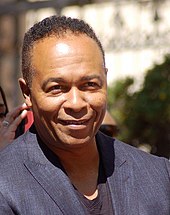

Musician Ray Parker Jr was hired to record the iconic theme song. According to the Netflix series The Movies That Made Us, Parker was struggling to write lyrics for the song. Then one night, he saw a commercial for a cheap local service. This inspired him to create the iconic lyric, "Who Ya Gonna Call?"

While the song was and still is very popular, there was some controversy when Huey Lewis accused Parker of plagiarizing his 1983 song "I Want A New Drug". This was settled out in court in 1985.

Release, Response, and Legacy


After 13 months of hell to get this film out, Ghostbusters met it's summer 1984 deadline to great success. It ranked number-one at the box office for seven weeks in its theatrical run and it became one of the most commercially successful comedies of all time.

Critics gave the film generally positive reviews, though some aspects were criticized. Many critics, especially Roger Ebert, were surprised with its successful blend of comedy and special effects, with Ebert pointing out that the special effects were in service to the actors and not the other way around. He even praised the dialogue.  

Others single handedly gave credit to Bill Murray for his performance, with some (Gene Siskel for example) even interpreting him as the film's main attraction.

The interactions with the Ghostbusters and the supporting characters were given mixed responses however. Some praised the chemistry between Aykroyd, Ramis, and Murray, while others felt that the supporting cast were given little to do (I'll address my responses to these criticisms in part 2). But these criticisms were drowned out by the overwhelmingly positive reviews. 

Since it's release, Ghostbusters has since became a huge phenomenon, and one of the most popular franchises in film history.

Stay tuned for part 2, in which I discuss how well Ghostbusters combines special effects and comedy regardless of its flaws. 

Why I Didn't Like The Great Mouse Detective As A Kid (And Still Don't Today) (Part 1)

  I hated The Great Mouse Detective from the moment I first saw it as a kid. I watched it on VHS completely astonished with what I've wa...