Monday, May 21, 2018
I'm going on vacation
Hello, my readers. On May 26th, I'm going to North Carolina for a vacation to visit my brother and his girlfriend. I'll be back to write more reviews and write more passionate essays in early June. For all those who supported my work and what I do, thank you.

Sunday, May 13, 2018
Roger Ebert Archive: A Word About Laservision

Roger Ebert was one of the most well respected film critics in the film community and my favorite reviewer. But some of his reviews and essays have been difficult to find on his website. So I decided to quote essays and reviews you can find on his video guide book series written between 1985 to 2012. The first article in this Roger Ebert Archive series is about his first exposure to Laserdiscs, which he prefers than VHS for superior picture and sound quality and for adding more bonus content. The source I'm using is an emulator for a 1991 floppy disc for DOS computers that contains contents of Roger Ebert's 1986-1992 edition's of his Movie Home Companion books series. The emulator is available on archive.org. This essay about Laserdiscs was taken from his 1988 edition, published in 1987.
" 'How come,' he said to me, ' that you don't ever mention discs when you talk about video?' "
"You mean, like video discs?"
" 'Yeah,' he said, realizing he was going to have to start at square one."
" 'These are LaserDiscs,' he said, nodding at the racks and speaking with such drama that I could hear the capital D."
"Are they still making those, I said. I thought they went out of business. 'This is a completely different technology than the old video discs you're thinking of,' he said. 'These use the same technology as compact discs, only with images as well as sound. Once you've seen them, you'll never go back to old-fashioned tapes again, if you can help it.' "
"He started talking to me about the really neat expert's edition of 'Citizen Kane' that was on LaserDisc, and about how good the music on 'The Cotton Club' sounded with digital sound on LaserDisc, and how about LaserVision owners (I could hear the capital V) considered themselves the gourmet of video."
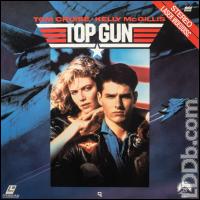
"But meanwhile, my attention was captured by a large-screen rear-projection TV that was showing 'Top Gun'. The jets were taking off from the aircraft carrier, and the sound was so good, it sounded like the movie itself. In fact, some of it seemed to be coming from behind me."
"That's a pretty good cassette of 'Top Gun', I said"
" 'That's a LaserDisc with full surround sound' he explained patiently. 'You can put speakers behind you, and LaserVision will give you true Dolby stereo and true separation. Also, anyone who owns a big-screen TV and doesn't have a LaserVision player ought to have his head examined. Cassette tapes have about 260 lines of horizontal resolution. LaserDiscs have about 380 lines. Also, you get true blacks and true whites. Black-and-white never looked better than on laser.' "
"I looked at 'Top Gun' again. He was right. Not only was the sound amazing, but the picture on the big-screen TV was sharper than most of the pictures I've seen on smaller TVs. The guy had me sold; when I got back to Chicago, I started experimenting with LaserVision."
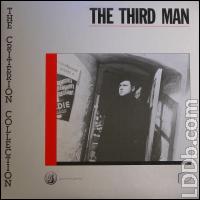
"Right after I bought my new Pioneer 838 LaserVision machine home, I attached both my VCR and my LaserDisc machine to my TV. I loaded a VHS cassette tape version of 'The Third Man', one of the greatest movies of all time, into the VCR. I loaded a LaserDisc of 'The Third Man' into the laser machine. I started them at the same point, and toggled back and forth between the two signals, to see if LaserVision really is, as he claimed, the future of serious home video. It wasn't even a close contest. The taped version was muddy and fuzzy, but the quality of the LaserDisc version approached the best 6-millimeter film prints of the movie I had seen. In the early scenes, as Joseph Cotten swings off the train and into postwar Vienna, the LaserDisc picture showed his patterned vest, his tweed sports coat and his dark overcoat. On VHS cassette, it looked like he was draped in assorted dark shapes."
"The difference in sound was even more startling. The VHS tape of The Third Man (a reputable version from Media Home Entertainment - not one of those cheap bootleg tapes) opened, of course, with the immortal 'Third Man Theme' by Anton Karas on the zither. But the sound track was cold and distant, with a slight hiss. On LaserDisc, the music was clear, bright, and warm (and in mono, just like in the original movie)."
"I'd stacked the deck just a little. My laser version of 'The Third Man' was from the Criterion Collection, A Los Angeles - based manufacturer of exceptionally high-quality LaserDiscs. It had been mastered with loving care from a good-condition original British print of the movie. And because of it's British origins, I noticed one dramatic difference between the two versions: On the U. S. tape, the opening monologue is spoken by Joseph Cotten. In the British version, it's by Trevor Howard. (That must not be the only difference; the LaserDisc is three minutes longer than the U. S. cassette)."
"Since I conducted that test I have become another of the small but devoted group of fans of LaserVision, a long-overlooked video technology that is finally enjoying a boomlet. Pioneer, which manufactures most of the laser players for sale in America and many of the discs, claims that LaserVision images are 60 percent sharper than any videocassette. And the sound, of course, is of CD quality - a LaserDisc is essentially a Compact Disc that includes images as well as sound."
"Somehow, I'd gotten Laservision confused in my mind with those old RCA videodisc players that were around in the early 1980s, the ones that played videodiscs with a needle. RCA dropped that technology, and about the same time MCA/Universal also abandoned its equally ambitious system, named DiscoVision. Consumers agreed that discs had better resolution than cassette tapes - but disc machines couldn't record off the air, and VCRs could."
"As a result, more than 50 million VCR machines have been sold since 1980, in the greatest consumer appliance windfall since television itself. Meanwhile, however, Pioneer persisted with the basic idea of a videodisc played with by a laser beam. And when compact discs got hot two years ago, laservideo technology hitched a ride on the CD coattails."
"What is a LaserVision machine? It is a compact, flat box a little smaller than most VCRs. It has a tray that slides out, and on the tray, you place a shimmering silver LaserDisc. (The discs themselves, much more aesthetically pleasing than clunky cassettes, look as if they should be the table service in 'Close Encounters of the Third Kind'.) The tray slides noiselessly back into the player, and the disc supplies a noticeably better picture and dramatically better sound than I ever saw or heard on a television. Because the laser beam merely reads the disc, they are virtually indestructible even after hundreds of plays."
"Pioneer's top-of-the-line machine, the Model 909, combines laservideo with a CD player, so you get two machines for the price of one (about $700). Their videodisc-only machine, the Model 838, sells for $549, with a street price around $475 - about the same as VHS Hi-fi. In the bargain basement, a Magnavox videodisc player, made by Pioneer, can be mail-ordered for $495, and the Criterion Collection will throw in $100 worth of LaserDiscs from its catalog. (Phone 213-475-3524 for more information.)"
"There are currently 1,700 LaserDiscs available, as compared with around 10,000 VHS cassettes. Prices are the same or as cheaper than cassettes - from $19 to $34, with most titles at $29.95. Full-length operas and double-disc sets that provide special stop-action and double sound tracks range from $39 to $99. About 10 percent of video stores now carry LaserDiscs; most have rental bins."
"Many of the major video suppliers issue video discs, but the Criterion Collection is true connoisseur video. Not only is the quality of the Criterion discs superb, but the company is run by movie fanatics who have added several bonus features to many of its discs."
"To understand the features, you need to know that Laserdiscs come in two formats: standard and expanded. Both generate the same picture quality on TV but paradoxically, standard offers more features than expected. Both features can be played on all laser machines. With the extended format, a feature length movie can be squeezed on two sides on one disc, and the viewer can use remote control to fast-forward, reverse, or to instantly cut to any of the "chapters" (scenes in a drama, songs in a musical). Unlike tapes, discs offer immediate access to any point in a movie without the tiresome rewinding of the tape."
"With the standard format, however, several additional features are available. The format requires roughly twice as much memory space, so standard feature movies come on two discs. Any frame of the movie can be frozen (with a true, rock-solid freeze-frame instead of the shivering frames on VCRs). Film can be advanced one frame at a time, or at quarter-speed, half-speed, or three-fourths speed-up to twice normal speed. Also, if you know the number of any individual frame in the movie (supplied by a digital readout in the upper corner in the picture), you can advance directly to that frame."
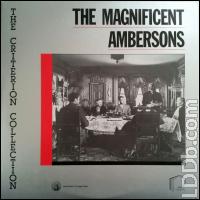
"And - here's the amazing part - many Criterion LaserDiscs use a second, separate parallel sound track to supply a commentary by an expert on the film. For the Criterion versions of Orson Welles's 'Citizen Kane' and 'The Magnificent Ambersons' Welles expert Robert Carringer of the University of Illinois provides a blow-by-blow account of the movie's history, technique, and narrative strategy, and explains the special effects as they're happening. The remote-control device allows the viewer to listen to the movie, to the expert plus a background check, or to both at once."
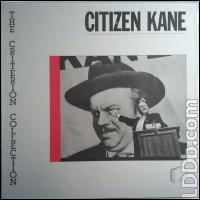
"On the last side of the 'Ambersons' package, Criterion even supplies still frames of the entire script, the art director's drawings, the movie's publicity photos, and an interview with Welles about how the film was butchered by the studio. Also on the second sound track, there is Welles's Mercury Theater radio version of 'Ambersons'. 'Kane' also includes dozens of production photos, and supplies the movies original coming attractions trailers."
"The sound tracks on LaserDiscs include not only stereo but a separate "surround" track that gives true, separated surround-sound instead of the approximation on VHS Hi-Fi. Because most TVs have shoddy speakers, it's advisable to run LaserDisc sound through the stereo system. The newest wrinkle on LaserDisc is full digital sound, now available on over 100 discs. I listened to the LaserDisc digital version of Francis Ford Coppola's 'The Cotton Club' and decided that it was so good that, frankly, I needed better speakers."
"True, LaserVision will not record off the air. But with more than 50 million VCRs in existence, a lot of people are buying a second one to make copies of their favorite tapes. LaserDiscs can be copied onto tapes just like ordinary cassettes, and the copy is better because the disc itself approximates good broadcast quality. So anyone considering a second VCR might seriously consider a LaserVision player instead."
"The key advantage of LaserVision over the earlier disc-based video systems is, obviously, the enormous popularity of it's first cousin, Compact Discs. If you intend to buy a CD player and find that, for a little more money, you can add LaserVision - why not go for it? And once you've seen a LaserDisc on your own TV, it's hard to get used to cassette tape again."
Thursday, April 26, 2018
Criterion Collection's Laserdisc Highlights (1984-1999)


1984: Criterion launched their first titles, Citizen Kane and King Kong. Laserdisc contains innovative technology at the time and pioneered the concept of the special editions. Both discs are recorded in a CAV format, which allows you to freeze frame, slow the movie down, speed the movie up and watch the movie backwards. Both discs end with interactive essays about the making of each film, using notes and photos to focus on topics like history and inspiration, screenplays, cinematography, special effects, and initial theatrical release. The King Kong disc features the very first audio commentary ever recorded. The commentary is by the late film professor and preservationist Ronald Haver, who talks about the making of King Kong.

1985: Criterion has issued The Third Man, The 39 Steps, and The Lady Vanishes. All editions are surprisingly bare bones, meaning they have little to no special features.
1986: Orson Welles' 1942 adaptation of The Magnificent Ambersons is an early example of a movie that was victimized by studio interference and this edition contains information on what you missed. It includes an audio commentary from Welles expert Robert Carringer, the original screenplay in it's entirety, interviews with Orson Welles taken before his death, Welles' radio broadcast, and footage from the 1925 silent version of The Magnificent Ambersons. Criterion also released their first letterbox (widescreen) titles, Invasion of the Body Snatchers (1956 version), and Lola Montes. Special editions of Swing Time and High Noon were issued.
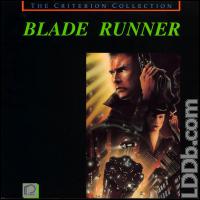
1987: Letterboxed editions of Blade Runner, The Graduate, and The Hidden Fortress were released for the very first time and contain their own shares of extras, including art galleries, audio commentaries, still photos, and screen tests. Special editions of A Hard Days Night, A Night at the Opera, Help!, The Seventh Seal and It's a Wonderful Life were also issued and contain extras.
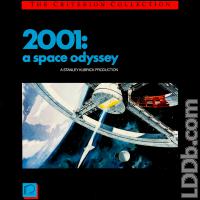
1988: In honor of it's 20th anniversary, Criterion has issued the very first letterboxed edition of Stanley Kubrick's 2001: A Space Odyssey, which contains an interactive retrospective that contains documents, memos, and photos. Special editions of The Wizard of Oz, The Adventures of Robin Hood, Singin' in the Rain, Seven Samurai and North by Northwest were released and contains so many special features. Martin Scorsese has recorded audio commentaries with British director Michael Powell on editions of Black Narcissus, and The Life and Death of Colonel Blimp.
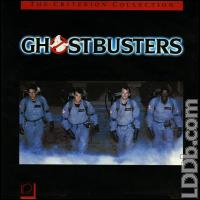
1989: Criterion has released the very first collector's edition of Ghostbusters. The disc includes production photos that showcases the special effects, split screen demonstrations of the special effects, storyboards, deleted scenes, trailers, and the screenplay. Criterion has also issued collector's editions of Casablanca, Forbidden Planet, Lawrence of Arabia, Some Like It Hot, and West Side Story.
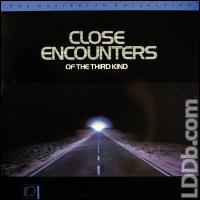
1990: Two influential forces in modern film making, Martin Scorsese and Steven Spielberg has contacted Criterion to transfer Taxi Driver, Close Encounters of the Third Kind, and Raging Bull into the Criterion library and adds a huge variety of extras. For Close Encounters, they used the 1977 theatrical cut as the main program and the scenes from the 1980 Special Edition cut as bonus features. You can watch them separately or make your own cut by putting the Special Edition scenes depending on how you program your player. The disc also has an interactive program about the making of the film, which contains interviews, notes, multi audio channels, designs, and production photos that showcases the special effects. Taxi Driver has an audio commentary by Martin Scorsese and writer Paul Schrader, an isolated music track, Schrader's original script in it's entirety, storyboards, production and publicity stills, and an essay about Bernard Hermann's music. Raging Bull contains an audio commentary by Scorsese and editor Thelma Schoonmaker, rare boxing footage of the real Jake La Motta and interviews with him, storyboards and script pages, production and publicity photos, clips of movies that inspired Raging Bull and clips of Siskel and Ebert embracing the movie. Special editions of Notorious, Rebecca, and Sex, Lies, and Videotape were issued.
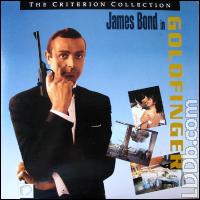
1991: Criterion has issued the first 3 James Bond films featuring Sean Connery and the contain a variety of bonus content. They include audio commentaries, production and publicity stills, trailers and TV commercials, and isolated music and effects track. Special editions of Silverado, The Last Picture Show, Carrie, Midnight Cowboy and The Great Escape were released.
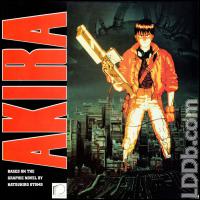
1992: Criterion has released it's very first animated title and the only animated title on Laserdisc. Criterion would later do DVD and Blu Ray editions of Fantastic Mr Fox and Watership Down. This edition of Akira includes a bilingual audio track that allows you to choose between Japanese and English, production drawings and animation cels, behind the scenes footage, pages of the manga, trailers, and more. Criterion has also issued the 50th Anniversary edition of Citizen Kane. Not only it contains the special features from 1984, it also contains an interactive documentary which utilizes the multi-channel audio track to watch and listen to directors, producers, and actors talking about Citizen Kane. The interviews are in 3 small windows and you press the audio button on your remote to hear another person talk. Special editions of Boyz N the Hood, The Adventures of Baron Munchausen, Dr Strangelove, Tootsie, Jason and the Argonauts, and Spartacus were released and were jam packed with extras.

1993: Criterion has released an interactive edition of Francis Ford Coppola's Bram Stoker's Dracula. It contains an audio commentary by Coppola and his collaborators, and isolated music and effects track, storyboards, behind the scenes footage, a history lesson on the Dracula legend, and an interactive editing workshop that allows the viewer to edit certain scenes from the film and make their own cuts. Criterion has also issued editions of Monty Python and The Holy Grail, The Player, and other titles.
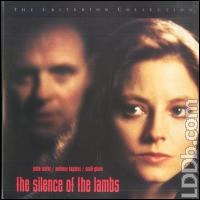
1994: Criterion has released it's very first THX title, The Silence of the Lambs. The special features include an audio commentary from Director Jonathon Demme and his collaborators, deleted scenes, production stills, storyboards, filmographies and career overviews, and research on serial killers from the FBI. Criterion has also issued a collector's edition on John Carpenter's 1978 horror masterpiece, Halloween. It contains an audio commentary from John Carpenter and his collaborators, an isolated music and effects track, a history lesson on the slasher genre, production and publicity stills, notes on the film's history, and a 1980 clip of Siskel and Ebert praising Halloween while bashing other slasher films. Editions of This is Spinal Tap, Menace II Society, and other titles were released.
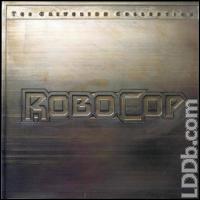
1995: The company released a collector's edition of RoboCop, which contains an audio commentary from Director Paul Verhoeven and his collaborators, THX certified picture and sound quality, footage that was cut from the film to avoid and X rating, storyboard to film comparison, and production and publicity stills. An edition of Do The Right Thing contains audio commentary, a one hour documentary about the making of the film, rare outtake footage, production photos, and more. Editions of Sid & Nancy, The Red Shoes, and other titles were issued and contains a lot of supplemental material.
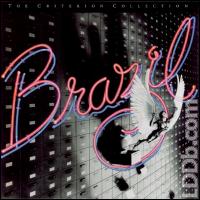
1996: Terry Giliam's 1985 futuristic satire, Brazil has been meddled by Universal Pictures before it was released and Criterion has fixed the film by adding 10 minutes of missing footage. It also includes documentaries, and an interactive archive chronicling the film's troubled production. Criterion has also issued a special collector's edition of Quentin Tarantino's Pulp Fiction. It includes THX certified picture and sound quality, a one hour interview with Tarantino, trailer and TV spots, production and publicity stills, deleted scenes, and a behind the scenes featurette. Editions of Dead Ringers, Dead Presidents, Seven, and other titles were available.
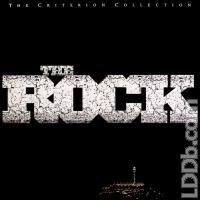
1997: Believe it or not, Michael Bay has contacted Criterion to create a special edition of The Rock, which I didn't mind because that's the only Michael Bay movie I liked so far. The supplemental material includes and audio commentary from Bay and his cast and crew, THX certified picture and sound quality, outtakes, a clip from The Discovery Channel's Movie Magic episode which focuses on the special effects, Bay's "Got Milk?" commercial, and storyboards, production stills, and designs. Other editions like Evita, Monty Python: Life of Brian, The Princess Bride, and Chasing Amy were released (Kevin Smith's Laserdisc commentary infamously opened with him saying "F--- DVD").
1998: Criterion goes to DVD for the first time. Most of Criterion's first titles have been released on Laserdisc in the past, including Robocop, Walkabout, The Seventh Seal, This Is Spinal Tap, Sid & Nancy, and Silence Of The Lambs. Laserdisc releases include The Game, Boogie Nights and more titles.
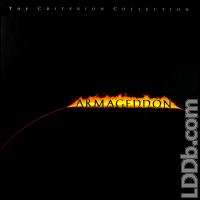
1999: Of all the movies to end Criterion's supply of Laserdiscs, they had to go with the worst movie to ever get a Criterion release, Armageddon. The bonus features of this pile of crap includes 2 audio commentaries, gag reels, trailer and TV spots, Aerosmith's "I Don't Wanna Miss A Thing" music video, deleted scenes, and special effects tests. Enough of the bonus features, how the hell did Armageddon get a Criterion release? Seriously?
Shortly after Criterion stopped transferring movies to Laserdiscs, they continue to transfer and distribute movies on DVD and Blu Ray and they continue to do so today. Criterion sure helped revolutionize the collector's edition trend for home video. Without Criterion, other home video distributors wouldn't put special features on their movies and Laserdisc, DVD and Blu Ray wouldn't become film school formats. We movie buffs thank God for the Criterion Collection.
Thursday, March 29, 2018
Reader's Guide to Pulp Fiction (Spoiler Warning)

This is a readers guide for Quentin Tariantino's 1994 masterpiece, Pulp Fiction. The film contains 4 interconnected stories of violence, crime, and redemption. This film has made a cultural impact for it's non linear structure, complex characters, and character driven dialogue. This reader's guide contains why these 3 elements were necessary along with elements of the film that are open for interpretation. If you're confused by the film on your first viewing, this list might help you understand why these elements work if you're planning to give the film a second viewing. One word of warning though, this list may contain spoilers so make sure you watch the movie before you read this list.
Non-linear structure: Most movies have typical 3 act structures that basically consists of buildup, conflict, and resolution. While not all 3 act structures are bad, they sometimes can get formulaic. Quentin Tarintino intentionally mixes up his chronology to figure out the events of the movie for themselves instead of guessing what's going to happen next. It also allows ambiguity, and mystery into the plot instead of spelling out information to the audience.
Character-driven dialogue: There are so many movies when dialogue pushes the plot forward and the characters weren't given time to say interesting things. This is not the case with Pulp Fiction. There are long stretches of the characters talking about things they are passionate about because the dialogue is much more interesting than the cookie cutter dialogue that you hear from routine films. The dialogue also gives the audience time to know the characters. If these long stretches were cut from the film, we wouldn't know the characters well.
Character development: I complained on my Mighty Morphin' Power Rangers The Movie review that the characters were cookie cutter and one dimensional. The characters in Pulp Fiction are rich, interesting, and fully developed. Each of the characters have distinct personalities and they develop by redeeming themselves. The biggest character development in the film comes from Jules (Samuel L. Jackson), who is sick and tired of being a hit man for the mob. His development takes place at the end of the film when he holds a robber hostage and plays peacemaker during a robbery at a diner. He spares the robber and saves a lot of customers.
The glowing briefcase: The glowing briefcase is the film's MacGuffin. A MacGuffin is a device or object that serves as a trigger for the plot. The glowing briefcase is also open for interpretation because we never see what's really in that briefcase. Some people think it was drugs and money, others think the glow is actually the soul of crime boss Marsellus Wallace (Ving Rahmes). If you want a behind the scenes example, the glow is obviously a small light bulb operated by two battery packs.
The band aid on Marsellus Wallace's head: The band aid on the back of Marsellus Wallace's head was also open for interpretation, but it was never intended to be ambiguous. Ving Rahmes actually cut himself shaving while preparing for the role. When he put the band aid on, Tarantino liked the image of the band aid on his head and kept it in the movie.
Central Theme: The central theme of Pulp Fiction is redemption because each of the 4 stories end with the characters redeeming themselves and saving others. John Travolta saves Uma Thurman from dying of a drug overdose. Bruce Willis saves Ving Rahmes from sado-masochists. And Samuel L. Jackson foils a diner robbery operated by Tim Roth and Amanda Plummer.
This concludes this reader's guide to Pulp Fiction. I hope you see the film and read this article after you see the film.
Monday, February 26, 2018
Mighty Morphin Power Rangers The Movie (1995)

On August 28, 1993, the hit superhero show Mighty Morphin' Power Rangers hit our television sets and was very popular with kids back in the day, resulting in one of the biggest merchandising phenomenons of the 90's and it still continues to this day. What few people realized at that time is that Power Rangers is actually an adaptation of the long running Japanese superhero show, Super Sentai. Shortly after the success, Saban, the company responsible for the franchise, joined forces with 20th Century Fox to make a movie, hoping it would make summer dollars in 1995. The film however, was doomed from the start.

Director Brian Spicer did very little research on the show and insisted that the Ranger helmets would have no visors and mouthpieces to show emotion. Realizing that the Power Rangers weren't supposed to show emotion, Spicer decided to put the visors and mouthpieces back in the helmets. And there's a major casting change during shooting.
Mariska Hargitay, known for her work on the Law and Order series, was hired for a key supporting role named Dulcea. The filmmakers decided that she was miscast and they fired her, resulting a lot of deleted material, including Dulcea's backstory and a training montage. Hargitay is later replaced by Gabrielle Fitzpatrick.
The show was also being worked on while the movie was being filmed, which is why we had episodes of the Rangers taking a vacation in Australia while the evil Rita Repulsa marries Lord Zedd. All in all, the film had a troubled shoot. But what are the results? Let's find out!

An evil alien creature named Ivan Ooze (Paul Freeman) has been freed by Rita and Lord Zedd and plans to destroyed Zordon, the Rangers' mentor, and rule the universe. As Ivan takes over the city of Angel Grove, Zordon and his robotic assistant Alpha 5 send the Rangers to a distant planet called Phaedos. Led by the scantly clad warrior named Dulcea (Gabrielle Fitzpatrick), the Rangers get new powers to save the world and defeat Ivan.
 |
Speaking of the writing, the Rangers barely have personalities in the film. While the show was formulaic, the Rangers at least had personalities like the nerd (Blue Ranger), the valley girl (Pink Ranger), the goofball (the original Black Ranger), and the leader (White Ranger). But ever since 3 members of the original cast left the show due to contractual disputes, the Red, Black, and Yellow Rangers were replaced by three blank slates. In the movie, we know very little of them and it's hard for the casual viewer to distinguish one Ranger to another apart from the colors of the costumes.
The special effects are atrocious. The show took footage from Super Sentai for most of the action scenes, which consists of cheap robot and monster costumes. But these action scenes have charm. Not in this film because the Zords and monsters were made of terrible CGI. They look like video game graphics and they look very cheap.
The only positive I could say about the film is Paul Freeman's performance of Ivan Ooze. He's clearly having fun with the role and appreciate him for this achievement. But that's about it.
In conclusion, this film is an example of Hollywood cashing in to what's popular and making a corporate sell out. The plot is a non canon extended episode of the show, the characters are one dimensional, and the special effects are just wretched. But of all the Hollywood sell outs of the 90's, the film is at least watchable, mainly because of Paul Freeman. Otherwise, you're better off watching the show, which had much better seasons after the Mighty Morphin' era.
RATING: 2/4
Sunday, January 28, 2018
The Summer Movies of 1980's (1980)

What better time to start the series with the summer movies of 1980. We have a long awaited Star Wars sequel, The Blues Brothers heading to the big screen, and Bill Murray chasing a gopher. The summer of 1980 has it all.
 |
| FRIDAY THE 13TH RELEASE DATE: MAY 9th |
MY OPINION: After Psycho and Halloween, more slasher films were being made and this was an era when slasher films make money at the box office, regardless of the quality, violence, or what the critics thought of them. I watched the film with an open mind and I don't think it's that bad. Yeah, the characters were kind of hard to care about and there are random scenes and filler, such as a snake in the cabin and the characters playing Monopoly, but Tom Savini's gore effects were good, the cinematography was atmospheric, even for a low budget film, and Betsy Palmer did a great job of playing the culprit. It's no masterpiece, but it's not a terrible film either. Still, despite negative reviews from critics, the film made enough money at the box office to convince Paramount Pictures to green light a sequel, but we'll get to that in 1981.
 |
| STAR WARS EPISODE V: THE EMPIRE STRIKES BACK RELEASE DATE: MAY 21st |
MY OPINION: This is one of the great achievements in the history of film and it's a rare sequel that's better than the original film, which is also a great movie. In addition of being a great special effects spectacular, this also a surprisingly mature and moody film that has a life goes on ending instead of a traditional happy ending and the mythology and themes are as strong as it is in the original film. It's not just a great Star Wars film, it's one of the best films of all time and already the summer of 1980 has just gotten started.
PLOT SUMMARY: Acclaimed filmmaker Stanley Kubrick brings us his own unique adaptation of Stephen King's haunted house story. Recovering alcoholic and writer Jack Torrance (Jack Nicholson) has been hired as the caretaker of The Overlook Hotel and has his wife and son to come along with him. Unfortunately, the hotel has a haunted past and Jack has been influenced by the supernatural forces and plans to murder his family.
MY OPINION: I've read early chapters of the book but I couldn't finish it because real life gets in the way. So I decided to see the movie with an open mind for this article and I enjoyed the film for what it is, an ambiguous psychological thriller. There's has been criticism on how the film diverged from the book and Stephen King himself disowned the film, but I greatly enjoy the film. The ambiguous visuals and pacing is hypnotic, the creepy music has some bizarre charm, and I loved Jack Nicholson's performance.
PLOT SUMMARY: Three years after Race For Your Life, Charlie Brown, Paramount Pictures decided to make another movie based on the Peanuts comic strip by Charles Schultz. This time, Charlie Brown and the gang decide to take a field trip to France as foreign exchange students. A young and mysterious French girl has written a letter for him to invite him to her chateau. When Charlie Brown and his friend Linus arrive to the chateau, they realize that the girl is living with an unkind uncle and the boys don't feel welcome.
MY OPINION: I've been a fan of the Charlie Brown cartoons as a kid but I haven't seen them in ages. So, I decided to watch this film for the sake of this article and I found it charming. It was harmless, inoffensive, and it's now making me go back to the cartoons I've enjoyed back as a child. Sure the animation was cheap but the film survives because of it's likable characters and decent comedy between Snoopy and Woodstock.
PLOT SUMMARY: In the 1830's, two fur trappers (Charlton Heston and Brain Keith) get caught up in a war against Native Americans while an Indian woman (Victoria Racimo) runs away from her abusive husband (Stephen Macht). The two fur trappers protect her, unaware that her husband has rounded up his tribe to search for her.
 |
| THE SHINING RELEASE DATE: MAY 23rd |
PLOT SUMMARY: Acclaimed filmmaker Stanley Kubrick brings us his own unique adaptation of Stephen King's haunted house story. Recovering alcoholic and writer Jack Torrance (Jack Nicholson) has been hired as the caretaker of The Overlook Hotel and has his wife and son to come along with him. Unfortunately, the hotel has a haunted past and Jack has been influenced by the supernatural forces and plans to murder his family.
MY OPINION: I've read early chapters of the book but I couldn't finish it because real life gets in the way. So I decided to see the movie with an open mind for this article and I enjoyed the film for what it is, an ambiguous psychological thriller. There's has been criticism on how the film diverged from the book and Stephen King himself disowned the film, but I greatly enjoy the film. The ambiguous visuals and pacing is hypnotic, the creepy music has some bizarre charm, and I loved Jack Nicholson's performance.
 |
| BON VOYAGE, CHARLIE BROWN (AND DON'T COME BACK) RELEASE DATE: MAY 30th |
MY OPINION: I've been a fan of the Charlie Brown cartoons as a kid but I haven't seen them in ages. So, I decided to watch this film for the sake of this article and I found it charming. It was harmless, inoffensive, and it's now making me go back to the cartoons I've enjoyed back as a child. Sure the animation was cheap but the film survives because of it's likable characters and decent comedy between Snoopy and Woodstock.
 |
| THE MOUNTAIN MEN RELEASE DATE: MAY 30th |
MY OPINION: Charlton Heston has been a big star since the 50's and 60's with hits such as The Ten Commandments, Ben-Hur, and Planet of the Apes. But since the 70's and 80's, his career seems to be on a downward spiral. He's been in movies that are so campy, they could have been made in the 50's. This film is no different. The action is standard cowboys and Indians, the comedy is not funny, and the music is kind of campy and silly. The Mountain Men was forgotten back then and deserves to be.
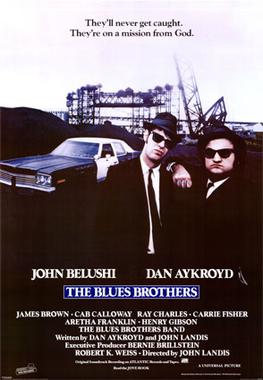
PLOT SUMMARY: Jake and Elwood Blues (John Belushi and Dan Akroyd) team up on a mission from God to reunite their R&B band so they could raise money to save an orphanage from foreclosure while the team is targeted by Neo-Nazis, a crazy woman with weapons (Carrie Fisher), a country band, and the police.
 |
| THE BLUES BROTHERS RELEASE DATE: JUNE 20th |
MY OPINION: This is another summer movie from 1980 worth remembering. This film is a great mixture of rhythm and blues, action, and comedy. John Belushi and Dan Akroyd made a great team, the music and action scenes are exciting and the comedy works. This film was reportedly very expensive to make, costing $30 million, and you can tell that director John Landis put a lot of effort into those action scenes. This film deserves to be remembered.
PLOT SUMMARY: In this third sequel to the 1968 Disney comedy, The Love Bug, the lovable Volkswagen with the mind of it's own teams up with an orphaned pickpocket (Joaquin Garay, III) and a couple of American tourists (Charles Martin Smith and the late Stephen W. Burns) to travel on a cruise ship to across Central America while the pickpocket unknowingly carries important information from 3 crooks and wacky hi-jinks ensue. Mel Brooks regulars Cloris Leachman and Harvey Korman co star.
 |
| HERBIE GOES BANANAS RELEASE DATE: JUNE 25th |
 |
| AIRPLANE RELEASE DATE: JULY 2nd |
PLOT SUMMARY: Writing and directing team Jim Abrahams, David Zucker, and Jerry Zucker tackle 1970's disaster movies in this classic comedy about a man with a fear of flying who saves an airplane from crashing after the pilots became ill of food poisoning. In addition to parodying disaster films, the filmmakers also make fun of Jaws and Saturday Night Fever.
MY OPINION: Prior to the crap from Aaron Seltzer and Jason Friedberg (Epic Movie and Meet the Spartans), movie parodies were made with actual effort, especially parodies from Mel Brooks and The Abrahams and Zucker Brothers team. Airplane is a great example of the effort and hard work into the film. In addition to the quotable dialogue and funny sight gags, the cast clearly had fun with the performances, especially Leslie Nielsen, who later became a comedic star after his past as a dramatic actor. This is another summer movie of 1980 that deserves to be remembered.
 |
| USED CARS RELEASE DATE: JULY 11th |
MY OPINION: I remember having mixed feelings when I first saw the film. But after re watching the film for this article, I began to enjoy the film more. I felt there was joy in the performances, I laughed at most of the comedy, and the film's climax showcases Zemeckis' talent as a director and his style and storytelling improves through the course of his career. This looks like a fun movie to make and it shows in my opinion.
 |
| CADDYSHACK RELEASE DATE: JULY 25th |
PLOT SUMMARY: A down-on-his-luck caddy (Michael O'Keefe) works at a golf course to get money for college while comedic situations are taking place. There's a gopher who wrecks havoc while Bill Murray tries to stop it, a rivalry between co-founder Ted Knight and obnoxious golfer Rodney Dangerfield, Chvey Chase's bizarre philosophy, and a candy bar that gets mistaken for fecal matter in a swimming pool.
MY OPINION: Boy, a lot of good comedies had came out that summer did they? First The Blues Brothers, then Airplane, then Used Cars, now Caddyshack. Sure the plot kinda meandered but the comedy works, the characters were fun to be around, and the dialogue is very funny. It's crude, crass, and juvenile, but it's also a very funny and smart comedy and worth checking out.
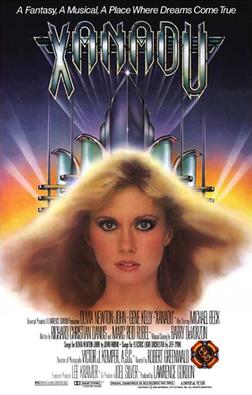 |
| XANADU RELEASE DATE: AUGUST 8th |
PLOT SUMMARY: A frustrated artist for album covers teams up with Gene Kelly and Olivia Newton John to open a disco club called Xanadu. But as the artist falls in love with Newton John, he begins to realize that she's a muse from Greek mythology.
MY OPINION: Wow! What a bizarre, incoherent mess this movie really is! I knew it was a critical and commercial flop, I knew the Disco era was starting to decline, I knew that this film helped inspire the infamous Golden Raspberry Awards, but I was not prepared for this at all. The story was making things up as it went along, the characters are bland and uninteresting, and the musical numbers and special effects really don't hold up. If you're interested in this kind of film, give it a watch. If not, then avoid this one.
This wraps up the Summer Movies of 1980. Before I go, I just like to say that I'll only post entries of the Summer Movies of the 1980's series once in a while because these articles are hard to do and I'll also focus on real life activities like school, other series I plan to do on this blog, writing articles on RetroJunk, and making VLOGs I can post on this blog.
My reviews of the Summer Movies of 1981 will be coming soon. As Siskel and Ebert always say, "The balcony is closed".
Monday, January 8, 2018
I now have a Retrojunk account.
First of all, I just like to wish you all a happy belated new year. I hope you have a great time so far this year and I'm almost done with my first entry of my Summer Movies of 1980's series. What I'm writing today is that I now have an account on a pop culture site called RetroJunk, which you can upload movie trailers, TV commercials, and write articles on what you're passionate about. I have written 2 articles so far and you can click on the links below.
https://www.retrojunk.com/article/show/5354/the-making-of-the-big-4-of-the-disney-renaissance
https://www.retrojunk.com/article/show/5353/why-is-star-wars-so-popular
Have a safe new year everyone.
https://www.retrojunk.com/article/show/5354/the-making-of-the-big-4-of-the-disney-renaissance
https://www.retrojunk.com/article/show/5353/why-is-star-wars-so-popular
Have a safe new year everyone.
Subscribe to:
Posts (Atom)
Why I Didn't Like The Great Mouse Detective As A Kid (And Still Don't Today) (Part 1)
I hated The Great Mouse Detective from the moment I first saw it as a kid. I watched it on VHS completely astonished with what I've wa...

-
On May 28th, 1993, two iconic video game characters named Mario and Luigi arrived on the big screen. With a budget of $48 million, it gro...
-
NOTE: I'm sorry that I haven't written an article in about a year. A lot has happened since I wrote about the 90s indie scene in Nov...
-
June 18th, 1993 saw the release of Last Action Hero. It was expected to be the biggest summer blockbuster of 1993. But a week before th...


