Saturday, June 10, 2023

How American Cinema Has Changed: From New Hollywood To The Rise Of The Blockbusters (1970s to the 1980s)

WHERE HAVE I BEEN: 2022 was a really busy year for me. I've been through four family weddings in the past summer and fall. It's also a rough year for me as well, as my cousin just died at the age of 21. I've been to so many family events to the point that I've forgotten my strengths as a writer. But now I'm back, and I'm ready to do what I do best, write passionately about the movies.

In the late 1960s, the major Hollywood studios seem to be out of touch with what the current generation of movie goers wanted to see. The old guards that were running the studios had either died or retried, and audiences were tired of the big budget epics and musicals that have been dominating the market since the 1950s, when Hollywood was threatened by television. Change was very much needed and that change came in 1967 with the release of Bonnie and Clyde.

How Bonnie And Clyde Changed American Cinema


The film's origin was a story of Hollywood legend. Studio executive Jack Warner, after viewing a rough cut, hated the movie. He felt that the movie was overly violent and dumped it in small amounts of theaters around the country. It opened to a mixed critical response, but audiences seem to fell in love with this film. With it's frank depiction of sex and violence, anti-establishment themes that resonated with countercultural audiences, and filmmaking techniques that have been borrowed from European arthouse cinema (notably The French New Wave), Bonnie and Clyde, alongside other late 60s hits like 2001: A Space Odyssey, Easy Rider, The Graduate, Midnight Cowboy, and The Wild Bunch, have opened the floodgates of director driven cinema in the 1970s.

The Rise of the American Auteurs

With the major Hollywood studios diminishing power, a new generation of directors have gained more artistic freedom than directors have ever had before. Directors like Robert Altman, Stanley Kubrick, Steven Spielberg, George Lucas, Martin Scorsese, Peter Bagdanovich, Francis Ford Coppola, William Freidkin, Woody Allen, Hal Ashby, and dozens more, have spoke for a generation that have been disillusioned with The Vietnam War and the Nixon administration, an audience that have become increasingly alienated from past generations. 

These ambitious directors were influenced by European and Japanese art house cinema, as well as classic Hollywood filmmakers like Orson Welles, Alfred Hitchcock, John Ford, and Howard Hawks. And in taking inspiration from great directors while trying new things, the newer generation of directors have become authors, or as the French call, "auteurs."  

As a result of all of this creative power, many film historians and critics have considered the 1970s to be a golden age for American cinema. Of course, any golden age wouldn't last as long as it should have. In the late 70s, Steven Spielberg and George Lucas have inadvertently created a new trend in Hollywood that has had a severe impact in director driven filmmaking: the summer blockbusters.

The Creation of the Summer Blockbusters


In March 1975, Steven Spielberg's upcoming monster movie, Jaws, have heled two successful test screenings in Dallas and Long Beach respectively. Studio executives and producers Richard D. Zanuck and David Brown knew they had a hit on their hands, so they've done something unprecedented in the history of film distribution. Prior to Jaws, films would open in selected cities, then it would open in more theaters across the country based on critical acclaim and positive word of mouth from audiences. Jaws however, was an entirely different matter. It was the first film to open in wide release on its opening weekend, a distribution process most common for exploitation and grindhouse movies.

Universal Studios also spent $2 million on marketing Jaws, from 30 second ads on prime-time TV, to its elaborate merchandising campaign. Companies have sold beach towels, blankets, books, board games, toy sharks, squirt guns, the soundtrack album, and other tie-in merchandise. 

On June 20th, Jaws opened in over 400 theaters in North America. By July and August, distribution has ranged from 700 to 950 theaters. By the end of the year, it overtook The Godfather as the top grossing movie of all time, grossing over $100 million domestically. The summer blockbuster has been born.


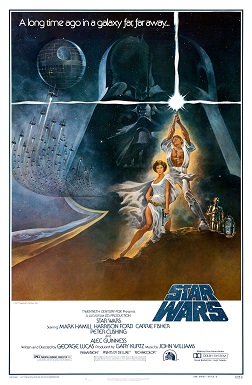
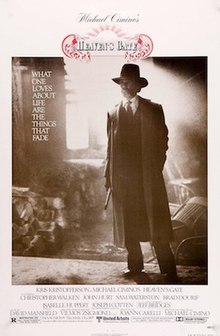
If Jaws created the high concept, amusement park trend in Hollywood, then Star Wars certainly cemented that on May 25, 1977. It eventually beaten Jaws as the most successful movie ever made, sending Hollywood the message to sell as many crowd pleasing blockbusters to mass audiences as possible. By the late 70s and early 80s, the summer blockbusters were about to dominate the film industry and the auteur era was coming to an end, with Michael Cimino's expensive Western, Heaven's Gate, being the final nail in the coffin. 

How Heaven’s Gate Ruined Everything 


After The Deer Hunter won the Academy Awards for Best Picture, director Michael Cimino has been given carte blanche from United Artists for his next project, Heaven's Gate. Unfortunately, things went south once the cameras started rolling.

Cimino was a notorious perfectionist and a stickler for authenticity. He would often build, destroy, and re-build sets to his liking, causing massive cost overruns. He also demanded massive retakes to get the performances he wanted, and there's even allegations of animal abuse. Cimino reportedly shot over 220 hours of footage, costing the studio million of dollars.

After production had been completed, a four hour version of the film premiered in New York City on November 1980. By all accounts, the premiere was a complete disaster. It lasted only one week due to negative word of mouth from audiences and critics, including Vincent Canby of The New York Times. 

United Artists pulled the movie from theaters so it would be re-cut at a shorter length. A two hour and twenty nine minute version opened to 810 theaters in April 1981, and it had a worse reception as well, with Roger Ebert calling it "the most scandalous cinematic waste I have ever seen." It ended up being one of the biggest bombs of all time, grossing $3.5 million out of it's $44 million budget.

As a result, United Artists have faced financial difficulties that led to its merger with MGM, and other studios no longer give directors the same creative control they had in the 70s. The Hollywood auteur era is over.

Aftermath (The Blockbuster Mentality Of The 1980s)

After the failure of Heaven's Gate, the American film industry shifted its focus on high concept, spectacle driven, crowd pleasing blockbuster films of the 1980s (Superman, Indiana Jones, Ghostbusters, Who Framed Roger Rabbit, Back to the Future, Rambo, Beverly Hills Cop, and dozens more). This also meant making sequels, giving birth to Hollywood's franchise obsession that is still going on today.  

The remaining 70s auteurs like Scorsese, Altman, and Coppola have struggled to stay relevant, the independent film boom was in its early stages, and foreign films were given limited distribution in North America. As a result, the blockbuster mentality have created a monoculture, leading to the consensus among many critics and film scholars that the 80s was the worst decade in the history of American cinema. 

What made the groundbreaking director driven films so popular with critics and audiences during the 1970s was the sense of dread and cynicism that was going on in America. But with The Vietnam War and Watergate scandal now behind them, and with Ronald Regan inaugurated as president in 1981, the American public has become accustomed to the big budget Hollywood blockbusters. 

The most interesting thing is that while many critics consider the 1980s to be a creative dead zone, you still have many beloved films of tremendous quality. Films like Raging Bull, Do The Right Thing, Platoon, The Right Stuff, Scarface, and Brazil. While these films were seen as masterpieces today, things couldn't be farther than the truth on their initial releases. Even John Carpenter's The Thing, a film that it iconic as his 1978 film Halloween, was incredibly controversial. Critics panned it for graphic violence and shocking images, and audiences flocked to see E.T. These high quality films didn't seem to be connecting with audiences that have become accustomed to simplicities and spectacles of the blockbusters. 

There is a silver lining to all of this. Things were going to change in the 1990s with the independent film boom and a reviving interest in foreign films. And that's a story for another day.
 

Wednesday, May 18, 2022

Batman Begins (How Christopher Nolan Revived Batman And Took Him Seriously)


Eight years after the disastrous Batman and Robin, Warner Bros made a comeback with Batman Begins, directed by Christopher Nolan.  Because Batman and Robin was fresh in people's minds, audiences seemed to be skeptical of another film featuring the The Dark Knight. But when people finally saw the movie, they were impressed with its complex story and interesting characters.

How Nolan Made The Right Decision To Focus On Bruce Wayne/Batman? 

The very core strength of Batman Begins is its insight on who Bruce Wayne is as a person. We no longer get to see Batman being used as a secondary character in his own franchise. What we got is an insightful character study. We get to see how he thinks and what motivated him to fight crime beyond the death of his parents. 

The previous films only gave us surface level details on Bruce Wayne's backstory because the villains stole the show in each film primarily to capitalize on the big names who were portraying them, so we really don't know much about him apart from the basics. Nolan and screenwriter David S. Goyer made the right decision to focus on Bruce Wayne, because it adds a lot to his character.

How Nolan Paid Attention To The Supporting Characters?


In addition to creating a successful origin story for Batman, Nolan and Goyer didn't forget the supporting characters, especially Commissioner Gordon. We finally get to see Batman and Gordon work together.

The previous films depict Gordon as a bystander rather than a real participant to Batman's crime fighting, so he really wasn't given much to do. But with Batman Begins, we get to see Gordon being an active partner this time. We see him at a younger age, trying the best he can to help Gotham City, and is the only one who understands Batman.

You can't go wrong with the casting of Gary Oldman. It's one of his best performances.


Rather than using a traditional villain like The Joker and The Riddler, Nolan makes a wise decision to use the character of Ra's al Ghul, the leader of the League of Shadows.   

Rather than depicting him as a typically evil supervillian, he's portrayed as a complex mentor to Bruce Wayne. Both want to achieve the same goals in fighting crime, yet they have completely different ideas.

We see Ra's as Bruce's mentor, teaching him the stealth and martial arts techniques he will later use as Batman. Then they go on their separate ways, because while Bruce wants to fight crime, he doesn't want to kill his enemies. When Ra's finally arrives in Gotham, he plans to punish the city for its crimes by injecting fear-inducing toxin in the city's water supply. 

Liam Neeson totally embodies the complexity of the character with his performance. It's hard to see anyone else to play him in this particular way.


Michael Caine is perfectly cast as Alfred Pennyworth. He doesn't portray him as a mere butler, but rather a genuine father figure for Bruce. 

Even though he disagrees with Bruce's actions as Batman, we still get the sense that he truly cares for him, since he continues to raise and support him throughout his life.

No disrespect to Michael Gough, who played Alfred in the previous films with the best he could, but Caine offers a far more interesting and complex performance.

My Issues With The Film (And Thankfully I'm Not Alone)


Batman Begins is not without its faults however, and thankfully I'm not the only one who pointed them out.

If you're a fan of the Scarecrow, you might be disappointed with how little he was used in the series. I imagine fans walking into the movie, expecting him to have a bigger impact within the story, only to be disappointed that he was really second fiddle to Ra's al Ghul and his plans to spread fear to Gotham City.

When he arrives in the climax, you'd expect an epic confrontation between him and Batman. But no, he gets tasered by Rachel (Bruce's love interest), and that's it. 

You'd think more of the Scarecrow would be used in the sequels, but's that's not the case. He just pops up for a cameo in The Dark Knight and his exploits were resolved at the beginning of the film. Why put the Scarecrow in the franchise and not give him much to do?

I also think Cillian Murphy is miscast as Jonathon Crane/Scarecrow. He looks too young and good looking to play Crane (keep in mind, he actually auditioned to play Batman), since the comics depicted him as an older, much awkward person.


Another issue I have is that the action scenes are sloppily edited. Nolan shoots the action in close ups and the edits are so quick, it's impossible to see what the hell is going on. Thankfully, Nolan showed improvement in directing action not only in The Dark Knight, but also later films such as Inception.


The love story between Bruce and Rachel is a little forced and underdeveloped. It's really down to the lack of chemistry between Christian Bale and Katie Holmes and the limited screen-time, which really didn't establish their relationship enough for the audience to buy in to their love for each other. 

I'm not going to comment much on Bale's infamous Batman voice, as I would be beating a dead horse at this point. But I would say this, I liked Bale better as Bruce Wayne than as Batman.

Closing Thoughts

Regardless of its flaws, I still think Batman Begins is a great movie and it might very well be my personal favorite Batman film.  

I loved The Dark Knight as well and I have a soft spot for Tim Burton's Batman from 1989, but Batman Begins is the one I watch the most often, mainly because of how Bruce Wayne's journey to become Batman is the focus of the story, and we get to see what he does best.

Christopher Nolan is the right filmmaker to revive Batman, he doesn't play things safe or dumb everything down, and he takes the material seriously, similar to Richard Donner's approach with Superman.

With superb performances, Nolan's sense of verisimilitude, and an effective origin story, Batman Begins has the ingredients to make a solid, entertaining Batman movie. It is truly one of a kind!

Thursday, April 28, 2022

Ghostbusters (An Imperfect But Solid Blend of Comedy and Special Effects) (Part 2) (SPOILERS)


WARNING: The following review might contain spoilers. Watch the movie before reading this review.

Hello and welcome to part 2 of my retrospective on Ghostbusters. Previously, I talked about the film's tumultuous production history, now I discuss how the movie is a solid mix of comedy and special effects regardless of any issues I have. 

Ghostbusters have come out when the rise of summer popcorn movies was in full swing after Jaws and Star Wars, but I don't think the general public had high expectations for another big budget special effects driven comedy. 

Steven Spielberg made his 1979 WWII comedy 1941, and that movie was a critical and commercial dud because that movie prioritized special effects and not much else, so that movie was a bloated mess.

Director Ivan Reitman has made two successful comedies (Meatballs, Stripes) with smaller budgets, so he took a huge risk by jumping on to a big scale production. But thankfully, any doubts the public might have had were put to rest when they finally saw it.

Audiences were given a big budget special effects-driven comedy with characters they cared about. The film's core strength, to me, is that the Ghostbusters were given individual personalities. This is why I think Roger Ebert's review is valid when he said that the special effects serve the actors and not the other way around. They really develop a strong team with their interactions instead of being props for the special effects. 

Reitman made the right decision to tell an origin story instead of throwing the audience into the action. Aykroyd's original idea was to set the movie into the future and the Ghostbusters were already in business, but Reitman felt that it was too bloated. So Reitman basically rewrote Aykroyd's concept into an origin story and set it in modern times, which I think benefits it greatly.

While nobody gives a bad performance, Bill Murray really steals the show as Peter Venkman. Not only he gives joy with his clever one-liners, there are moments when he actually gets serious with the role, such as the scene when the EPA tries to shut down the Ghostbusters headquarters and Venkman protests. It's scenes like this that show Murray's versatility as an actor. 

Obviously, the movie is not perfect, as it has its flaws here and there. Some of the initial reviews at the time pointed out that the supporting characters were given little to do. It's not a criticism I necessarily agree with, but I can understand where they are coming from. 

Even though I credited the individual personalities of the Ghostbusters and their interactions, it's not always easy for me to remember what the supporting cast did or said that I find funny, since Murray dominated most of the comedy with his improvisations and ad-libs while Aykroyd and Ramis played their roles somewhat straight. Still, there still some funny moments from them, such as when Aykroyd thought about the Stay Puft Marshmallow Man in the film's climax, and when Rick Moranis gets possessed by one of the terror dogs.

The romance with Venkman and Dana Barret feels rushed. She's clearly not interested in him at all when they first meet and only shows interest in him when he becomes famous. Sure, she kisses him after he saves her, but since there wasn't enough time to establish their relationship, I honestly don't buy the chemistry between Murray and Weaver. 

Another issue I have is the abrupt arrival of Winston, the fourth Ghostbuster. He kind of does feel tacked on in the second act without even giving us a proper backstory, so we really don't know much about him. As I said in part 1, originally there was much more to Winston when Ernie Hudson read the script, but when filming started, much of his character was omitted. 

And lastly, the special effects are mixed in quality. Because of the short production schedule, many effects shots looked rushed, from wobbly blue screen composites, to stiff stop motion animation. The best effects for me were the Ghostly Librarian, Slimer, and Stay Puft Marshmallow Man, and I liked some of the matte paintings and traditional animation. But the stop motion animation of the Terror Dogs disappoint. They just look stiff and poorly processed in the optical printer.

I think the issues I've mentioned might have been the result of the studio rushing the production to meet it's summer 1984 deadline, because by doing that, it kind of does come across like they were trying to capitalize on the rise of the summer blockbusters, since it was a new concept that was established by Jaws and Star Wars.

Despite it's faults, I still think Ghostbusters is a solid film. Mixing comedy and special effects is not easy, as 1941 obviously demonstrated, but the filmmakers did the best they could under a tight schedule to make a solid movie despite its faults. Ghostbusters is a 3.5 out of 4 movie for me. 

Saturday, April 23, 2022

Ghostbusters (An Imperfect But Solid Blend of Comedy and Special Effects) (Part 1)


In the summer of 1984, Ghostbusters became a cultural phenomenon. With an estimated budget between $25-$30 million, it grossed $285 million, making one of the most successful comedies of all time. Critics praised the film for its unique mix of comedy and special effects, and Bill Murray's performance was often singled out for high praise. Ghostbusters has since become one of the most popular franchises in Hollywood history. But the movie almost never got made, and almost didn't get made the way it did.

Origins, Inspiration, and Development


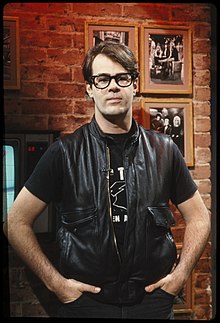
Ghostbusters was the brainchild of Dan Aykroyd. Apart from being one of the early members of Saturday Night Live, he also has a huge fascination with the paranormal, which he had inherited from his family. In 1981, he read an article on quantum physics, which gave him the idea of a comedy about trapping ghosts, taking inspiration from the likes of Abbot and Costello, Bob Hope, and The Bowery Boys. 


The film was originally conceived as another star vehicle for Aykroyd and his best friend John Belushi (along with Eddie Murphy) and was originally set in the future, but when Aykroyd was working on the screenplay, Belushi died of a drug overdose in March 1982. 


RIP Ivan Reitman (1946-2022)

Shortly after Belushi's death, Akroyd chose Ivan Reitman to direct the film, who co-produced Animal House and directed Meatballs and Stripes with Bill Murray. Reitman felt that Akroyd's original concept was too costly and impossible to make, so he decided to set the movie in New York City at the present day (early 80's), and decided to establish an origin story of the Ghostbusters going into business. 


In March 1983, Reitman pitched the project to Frank Price, then an executive at Columbia Pictures, hoping that it could be made with a $25-$30 million budget. Price agreed to greenlight the film, but with one condition, it must be ready by June 1984. That's 13 months before they settled on a finished script, an effects studio, and even a filming start date, so Ghostbusters was a somewhat rushed production.

Casting

One of the reasons the movie works so well is the individual personalities of the Ghostbusters and their interactions with one another. 


Bill Murray plays Peter Venkman, the mouth of the Ghostbusters and the scene stealer. Murray reportedly made a two-picture deal with Columbia to star in Ghostbusters on the condition that he should do his passion project first, an adaptation of W. Somerest Maugham's 1944 novel, The Razor's Edge. Ironically, Ghostbusters made him a superstar and The Razor's Edge didn't.


Dan Aykroyd plays Ray Stanz, the heart of the Ghostbusters. His childlike enthusiasm further elevates and enhances the comedy. 


Harold Ramis, who sadly passed away in 2014, plays Egon Spengler, the brains of the Ghostbusters. Though there are funny moments when Egon loves to snack, Ramis plays the character somewhat straight and acts calm most of the time. 

Murray, Aykroyd, and Ramis are very good friends and worked together on other projects, so it's a wise choice to give them individual personalities.


For the supporting cast, we have Ernie Hudson as Winston Zeddemore, a new recruit for the Ghostbusters in the last half of the movie. Originally, Winston's role in the story was much larger, as he was originally established as an Air Force demolitions expert with an elaborate backstory. But due to the short production schedule, much of his character was greatly reduced.


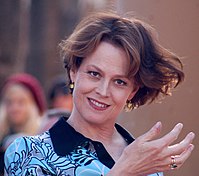
Sigourney Weaver plays the role of Dana Barret, the Ghostbusters' first client and Venkman's love interest. Weaver was known for playing serious roles such as Alien and The Year of Living Dangerously, and she expressed interests in doing comedic roles. It was her idea that Dana would be possessed by a supernatural creature, so she acted like a dog during her audition and got the job immediately.


Rick Moranis plays Louis Tully, a nerdy accountant who seemingly has a crush on his neighbor, Dana Barret. The role was originally offered to John Candy, but he turned it down because he felt that he didn't understand the character. Moranis replaced Candy, and implemented his own ideas for the character, including his job as an accountant.


Annie Potts plays Janine Melnitz, a secretary at Ghostbusters headquarters. My personal favorite scene from her is when she gets frustrated with constant phone calls from clients ("GHOSTBUSTERS! WHAT DO YOU WANT?).


And last but not least, we have William Atherton as the jerk EPA agent Walter Peck. Since Ghostbusters, he's been typecast into playing jerks in such titles as Real Genius and Die Hard.

Filming and Special Effects

Principal photography began on October 1983 and ended in January 1984, taking place on location in New York City (where the film was set) and Los Angeles for the remainder of the shoot. 


During filming, a legal conflict ensued that the name "Ghostbusters" had already been used for a children's television show developed by Filmation, which was owned by Universal Studios. So they used alternate titles such as "Ghostsmashers", "Ghostbreakers" and "Ghoststoppers". Thankfully, the legal conflict was resolved when Frank Price moved to Universal and sold the title to Columbia for $500,000 plus 1% of the film's profits. 


After the success of Star Wars, Industrial Light and Magic became to go-to special effects warehouse, but ILM turned down Ghostbusters because they were busy with other projects, namely Star Trek III and Indiana Jones and Temple of Doom. But luckily, ILM veteran Richard Edlund left the company to start his own effects house, Boss Film Studios. 

They used every effects in the book, such as traditional animation, animatronics, stop motion puppets, blue screen photography, and monster costumes. Due to the tight production schedule, many of the effects shots were done in only one take, which is why the effects are somewhat uneven in the finished product. I'll explain more about the special effects in part 2.

Test Screening and Music

With its tight summer 1984 deadline just around the corner, the movie was screened for test audiences that February, with unfinished special effects shots to determine if the comedy worked. It was a positive response. Audiences reacted to the Librarian Ghost and The Stay Puft Marshmallow Man with fear, laughter, and applause. It was that very test screening that convinced Reitman that the film was working.


Having worked with Reitman on Meatballs and Stripes, veteran Hollywood composer Elmer Bernstein agreed to score the film. Bernstein said in a 1985 interview that it was the most difficult score he has ever created, as it was a challenge to create a balance the comedic and serious tones. 


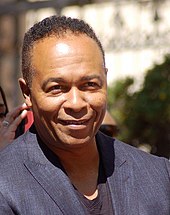
Musician Ray Parker Jr was hired to record the iconic theme song. According to the Netflix series The Movies That Made Us, Parker was struggling to write lyrics for the song. Then one night, he saw a commercial for a cheap local service. This inspired him to create the iconic lyric, "Who Ya Gonna Call?"

While the song was and still is very popular, there was some controversy when Huey Lewis accused Parker of plagiarizing his 1983 song "I Want A New Drug". This was settled out in court in 1985.

Release, Response, and Legacy


After 13 months of hell to get this film out, Ghostbusters met it's summer 1984 deadline to great success. It ranked number-one at the box office for seven weeks in its theatrical run and it became one of the most commercially successful comedies of all time.

Critics gave the film generally positive reviews, though some aspects were criticized. Many critics, especially Roger Ebert, were surprised with its successful blend of comedy and special effects, with Ebert pointing out that the special effects were in service to the actors and not the other way around. He even praised the dialogue.  

Others single handedly gave credit to Bill Murray for his performance, with some (Gene Siskel for example) even interpreting him as the film's main attraction.

The interactions with the Ghostbusters and the supporting characters were given mixed responses however. Some praised the chemistry between Aykroyd, Ramis, and Murray, while others felt that the supporting cast were given little to do (I'll address my responses to these criticisms in part 2). But these criticisms were drowned out by the overwhelmingly positive reviews. 

Since it's release, Ghostbusters has since became a huge phenomenon, and one of the most popular franchises in film history.

Stay tuned for part 2, in which I discuss how well Ghostbusters combines special effects and comedy regardless of its flaws. 

Thursday, April 7, 2022

Raiders of the Lost Ark (The Kind Of Movie That Disney Should Have Been Making In The 70s And Early 80s) (Part 2) (SPOILERS)


WARNING: The following review might contain spoilers. Watch the movie before reading this review.

Hello and welcome to part 2 of my retrospective on Raiders of the Lost Ark. Previously, I talked about the film's production, now I address how George Lucas and Steven Spielberg were innovating with Raiders of the Lost Ark in a time when Disney was being creatively bankrupt after Walt's death. 

When it comes to discussing Raiders of the Lost Ark, it's not always easy to add further to what has already been said by countless critics and fans. Everyone knows how flawless this movie is. It's a masterpiece in terms of action, performances, direction, humor, special effects, and storytelling.

Everyone often addresses these aspects, but what's often overlooked by many (except the late film critic Richard Schickel of TIME Magazine), is that this is the kind of entertainment that Disney should have been making during this period. One of Spielberg's influences is Walt Disney, and his movies were more in line with the kind of entertainment that Walt used to make in his lifetime.

After Walt's death in 1966, Disney became a tight knit and conservative community, played things safe with family audiences rather than breaking new ground, and relied on older filmmakers. So the company was stagnating at the time and has given us some awful films such as The Apple Dumpling Gang, Midnight Madness, and Pete's Dragon.

The other studios on the other hand, focused on newer, younger, and more ambitious talent, and created more innovative material, which was lacking from the Disney films from that period. With George Lucas and Steven Spielberg pioneering the summer blockbusters, their movies have more energy and flair with their imagination and creativity.

What makes Indiana Jones one of the most memorable movie heroes is his genuine concern for history. He's not some egotistical, greedy explorer who goes off on adventures for his well being. He wants to collect ancient artifacts and to preserve them in the right conditions, so they will never be forgotten in the years to come. He's the complete opposite of his rival Belloq (Paul Freeman), who only interest in archeology is to plagiarize Jones' research for some fast cash.  

In addition to its beautifully executed action sequences and special effects, the movie employs a sense of humor throughout, but it's not done in a cheap slapstick way, like those crappy Disney comedies from the 70s. The humor is very subtle throughout, from the spiders crawling on Indy's sidekick at the beginning of the film, to Indy shooting a swordsman dead because he's too tired to deal with him. These moments don't jar with the film's tone at all and nicely complements the action scenes. 

The cast all give great performances, especially Harrison Ford. He broke the mold from just being known as Han Solo and further demonstrates his skills as an actor. I think Ford seems to enjoy playing Indy more than Han Solo. After all, he wanted Han to be killed off after Empire Strikes Back, but he didn't get his way, and he wasn't given much to do in Return of the Jedi. But with the Indiana Jones franchise, he's center stage while Han Solo is a supporting character, so some people, including myself, see Harrison Ford as Indy than Han Solo, despite being great in both roles.

With the capable hands of George Lucas and Steven Spielberg, Raiders of the Lost Ark has all of the ingredients to make a rock solid summer blockbuster. This is what Lucas and Spielberg were masters of. Unlike what Disney was doing during this period, they have that special talent of knowing what audiences wanted to see. These two were on a roll, especially Spielberg, who snagged with his 1979 comedy 1941, which was a costly dud at the box office. Raiders gave Hollywood the confidence they needed with Spielberg, and he's been an active filmmaker and innovator ever since.

Raiders of the Lost Ark is worthy of all of the praise it gets. It stood the test of time and it's a masterpiece on all fronts. If you never saw it, check it out immediately. 

Monday, April 4, 2022

Raiders Of The Lost Ark (The Kind Of Movie That Disney Should Have Been Making In The 70's And Early 80's) (Part 1)


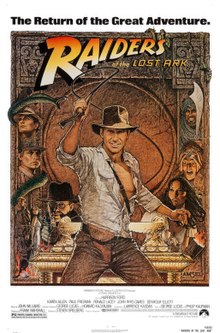
In the summer of 1981, Raiders of the Lost Ark arrived in theaters. With a budget of $20 million, it grossed $389 million. Critics and audiences alike embraced the film for it's action, sense of humor, it's unique take on classic serials, and Harrison Ford's iconic performance as Indiana Jones. Roger Ebert called the movie an "out of body experience, a movie of glorious imagination and breakneck speed that grabs you through a series of incredible adventures, and deposits you back in reality two hours later-breathless, dizzy, wrung-out, and with a silly grin on your face." It has spawned 3 sequels, video games, merchandise, and stunt shows at the Disney theme parks. Raiders of the Lost Ark has since been considered one of the best movies ever made, but it had a tough time getting on the screen.

Origins, Inspiration, and Development


George Lucas conceived Raiders of the Lost Ark in 1973, shortly after completing American Graffiti. Lucas, as we all know, grew up with classic serials on TV, such as Flash Gordon and Buck Rogers, and studied subjects such as anthropology, literature, and sociology in college. He conceived an archeologist named Indiana Smith, named after his dog (Indiana Jones and the Last Crusade even made an in joke about this at the end of that movie). He temporarily put Indiana Smith on hold to work on Star Wars, which had become the most successful film ever made at that time. 


Meanwhile, Lucas discussed the idea to his friend Phillip Kaufmann (pictured here) and Kauffmann suggested the idea of the Ark of the Covenant. The Ark of the Covent of course is where the supposed fragments of the actual Ten Commandments are hidden, which would provide the conflict between Indiana Smith and the Nazis. Lucas wanted Kauffman to direct, but he was already committed to the Clint Eastwood vehicle, The Outlaw Josey Wales. 


After Star Wars have come out, Lucas and his friend Steven Spielberg were vacationing in Hawaii. Spielberg expressed his desire to direct a James Bond movie, but Lucas thought something better. He explained the Indiana Smith concept and Spielberg loved the idea. However, he didn't like the name Smith and suggested Jones. Lucas agreed with the name change.


Lucas now had to find a studio that is willing to fund the project for an estimated budget of $20 million. Every studio in Hollywood have turned it down, not only because of the budget, but also because Spielberg's previous films had fallen behind schedule and over budget. It also didn't help that Spielberg's 1979 comedy, 1941, was a critical and commercial disappointment. Thankfully, Paramount had green lit the project with the help of Michael Eisner (who would later revive Disney in 1984).


Having been impressed by the screenplay of the romantic comedy Continental Divide, Spielberg hired Lawrence Kasdan to write the screenplay for Raiders of the Lost Ark. Spielberg, Lucas, and Kasdan spent 3 days sketching out the plot and set pieces, and Kasdan would insert their ideas in the screenplay. Impressed with the wit and humor to the story, Lucas would later hire Kasdan to do The Empire Strikes Back.

The Casting of Indiana Jones


Lucas was initially reluctant to cast Harrison Ford, because, referring to Martin Scorsese, he didn't want Ford to be his Robert De Niro and cast him in everything he does. He wanted fresh talent such as Tim Matheson, Jeff Bridges, John Shea, and Tom Sellick (pictured on top). Sellick almost got the role, and he auditioned alongside Sean Young (who was considered for the role of Indy's girlfriend, Marion Ravenwood). But Sellick turned it down, because he was contractually obligated to do Magnum P.I. for CBS. Having seen Sellick in other films like Three Men and a Baby, In and Out, and An Innocent Man, it gives me insight that Sellick would be the wrong choice for Indiana Jones. 


Spielberg was impressed with Harrison Ford's performance in The Empire Strikes Back, and convinced Lucas to cast him. Ford agreed to the part, and it became one of Ford's most iconic roles in his career.

Filming and Special Effects

Principal photography commenced in June 1980 and concluded in September. With an estimated $20 million budget at hand, Spielberg did everything he could to stay on time and on budget. To date, this is the most storyboarded film of his career, with approximately 6,000 storyboard drawings from artists such as Michael Lloyd, and Joe Johnston. Spielberg also relied on pre-viz miniatures to set up and plan the action sequences carefully before they started shooting.

Filming took place in England for Elstree Studios, Hawaii for the opening sequence, and Tunisia was used to depict Egypt. To keep production costs down, Spielberg hired British talent, including cinematographer Douglas Slocombe, production designer Norman Reynolds, stuntman Vic Armstrong, and associate producer Robert Watts.

The shoot was a learning experience for Spielberg, as he managed to film the movie on schedule. However, that doesn't really mean that the shoot was free from problems. Filming in Tunisia was unbearable, since it was very hot and the crew got sick from food poisoning, although Spielberg remained healthy by eating canned goods. 


After the success of the Star Wars films, Industrial Light & Magic became one of Hollywood's most reliable special effects companies. Under the supervision from Richard Edlund, and made during the pre digital age, ILM employed techniques such as miniatures, stop motion, blue screen, rotoscoped animation, cloud tanks, and matte paintings. 


The film's climax is a masterstroke in special effects, but it also caused trouble with the MPAA. Because there was a shot of a head blowing up, the MPAA threatened the film for an R rating. Because Spielberg aimed for a PG rated film that audiences of all ages would see, a flame effect was added to conceal the violence, so the R rating was prevented, thankfully.

Raiders of the Lost Ark is ILM's first non-Star Wars project, as well as Spielberg's first collaboration with ILM, and they have been creating special effects since.

Music and Sound Design


John Williams has given us memorable film scores over the years, and Raiders proves that Williams' past contributions were no flukes. His intention was to create music that was theatrical and excessive. To establish Indy's heroic adventures, Williams created two separated pieces of music for Spielberg, who thankfully used both, and that's how we got the iconic "Raiders March".


Sound designer Ben Burrt was hired to create unique sound effects for Raiders of the Lost Ark, very much like he did for his groundbreaking work on Star Wars. The sounds of the snakes protecting the Ark was achieved by Burrt recording sounds of his fingers running through cheese and mixing it with sounds of a wet sponge dragged across a grid tape.  The iconic sound of the rolling boulder that opens the film is actually a Honda Civic driving down gravel hill. The sound of Indy's pistol is a Winchester rifle and the sound of the punches and kicks were the sounds of baseball gloves. 

Legacy and Lasting Impact

Raiders of the Lost Ark finally opened in June 1981 after a somewhat rocky development process and has since become one of the most iconic movies ever made. After the successes of Jaws, Star Wars, Close Encounters, and Superman, Raiders of the Lost Ark sent a signal to Hollywood that the big budget blockbusters are hear to stay.

Stay tuned for part 2, in which I will explain why Raiders of the Lost Ark is the kind of movie that Disney should have been making back in the 70s and early 80s. 

Thursday, February 10, 2022

Pete Dragon (Disney's Pointless 1977 Live Action/Animated Musical)


In the 1977 holiday season, Walt Disney Productions released the live action/animated musical extravaganza, Pete's Dragon. It was expected to "win back the crowd" by becoming a Mary Poppins-sized blockbuster, but it backfired drastically and it was panned by most critics. 45 years later, many Disney fans have since expressed their disappointment with the movie. After Walt Disney's death in 1966, the studio's popularity was loosing its steam, as the company became creatively stagnant by playing it safe for family audiences. That's why many moviegoers turned to a new generation of filmmakers such as Stanley Kubrick, Robert Altman, Martin Scorsese, Francis Ford Coppola, George Lucas, and Steven Spielberg. The movie also arrived when the rise of the summer blockbusters was at its peak, starting off with Jaws and Star Wars, and continuing with Close Encounters, Superman, Alien, Indiana Jones, and ET. The big budget blockbusters were in, and Disney was in a slump at the time.

Origins and Development

The movie was based on an unpublished short story written by Seton I. Miller and S. S. Field. Walt Disney optioned the rights in the late 1950's, with the intention of turning it into a two-part episode on the Disneyland TV show. But plans were scrapped, leading the project into development hell. In 1975, producer Jerome Courtland rediscovered the project, hired Malcolm Marmorstein to write the screenplay, and revamped the project into a musical. British filmmaker Don Chaffey (Jason and the Argonauts) was hired to direct the film, mainly because of his past experiences with Disney. 

Special Effects

Much like Song of the South, Mary Poppins, and later with Who Framed Roger Rabbit, Pete's Dragon combined live action with animation. The dragon was designed by long time veteran Ken Anderson and animated by Don Bluth and his team (it's one of the last projects Bluth did before he left Disney in 1979). A process similar to today's blue/greenscreen processes were used to help combine the live action and animation. The animation of the dragon and the live action footage were filmed separately, then they use an optical printer to give the audience the illusion that this poor kid really was interacting with that dragon. I'm not a fan of the design of the dragon. He looked a bit too cutesy for me with his green skin, large stomach, and inexplicably pink hair. The live action/animation mix is okay, but it's really nowhere as convincing as it later will be with Who Framed Roger Rabbit 11 years later.

My Thoughts on the 2016 Remake


Before we get to my thoughts on the original film, I think it's best to discuss the remake first, because I actually liked this film better than the original. I watched this film with very low expectations because I don't like Disney live action remakes and I didn't like the original film. So watching this new version is actually a surprise. Watching this film actually reminded me on what Siskel and Ebert used to say about remakes. They often say "don't remake masterpieces, remake flawed films", and I think director David Lowrey succeeded on that level, even though it's not a perfect film. I felt that it was a much more rounded story than the original film and I felt that it has a much more interesting dragon. I'll go into more detail in a stand alone review in the future.

My Honest Thoughts and Conclusion

I think the reason why many people have forgotten about this film 45 years after this film have come out is that it has a very weak story, it barely has memorable songs, and the dragon itself is such a crushing bore. The movie never establishes how Pete discovered the dragon, where the dragon came from, and how they became friends. Instead, it throws you straight into the film with no real build up, as they escape from Pete's abusive adoptive family. When they arrive a small town named Passamaquoddy, the film turns into predictable slapstick territory until Pete finally gets adopted by a woman who lives at the town lighthouse with her father, while two quacks make desperate attempts to kill the dragon to sell their crappy medicine. So far, we have an overstuffed script, with several plot threads just lazily slapped on each other. The film also spares no expense providing cheap slapstick that has been recycled from past Disney comedies. 

The film has been discussed a lot by Disney aficionados online, and most expressed their frustrations and disappointment with the movie. But to be honest, there are some things I liked about it. British stage actor Jim Dale and comedian Red Buttons were highlights to me as the quacks. Their two songs when they arrived in town to con potential patients and their desire to kill the dragon for profit were the best songs in the movie in my opinion. And Mickey Rooney, who plays the owner of the town lighthouse, does the best with what he is given. They made the movie more bearable to watch. The location shooting of the lighthouse totally tricked me, because it looked like it was filmed in the East Coast, but it was filmed in California. You got to give them credit for that. The real downside to the visual components, apart from the design of the dragon,  is the setting of Passamaquoddy. Given the fact that it was shot in a studio, it really looked like a theme park attraction at the Disney Parks rather than a real town that could exist in the early 20th century.

The whole thing about the dragon speaking gibberish is really flawed from the get go, and it gets irritating for a while. Whoever came up with the idea for the dragon's language needs a good slap in the face. As for the overstuffed climax, director Don Chaffey clearly can't shoot action. When the dragon gets trapped by the town fishermen so the quacks can kill him, everything looks very average and old fashioned. It's very standard stuff. And the movie ends with a sappy and corny conclusion that the dragon has to share his goodbye to Pete, so he can help another kid.

Overall, Pete's Dragon is not a good movie. It came out in a time when the movies were changing (especially with the release of Star Wars and Close Encounters) and Disney was in a slump at the time. So it's a film that nobody wanted to see in the first place, and seemed very much like a quick cash grab to capitalize on any remaining Disney fans. It's a shame that the Disney empire played it safe in the 1970s. The studio made a fatal mistake to keep making the same kinds of movies after Walt's death, which is really silly because Walt loved to innovate and explore new ideas. I understand that they were struggling without him, but there's really no need to keep things the same. There are some enjoyable scenes in the film, but these moments don't come from the dragon. The quacks are far more interesting to watch. What else could I add? Despite the 2016 remake correcting its mistakes, it's a highly forgettable movie that really shouldn't have been made.


Why I Didn't Like The Great Mouse Detective As A Kid (And Still Don't Today) (Part 1)

  I hated The Great Mouse Detective from the moment I first saw it as a kid. I watched it on VHS completely astonished with what I've wa...