Monday, May 18, 2020

The Troubled Story of Toy Story (Part 2: The Production)


Hello, welcome to part 2 on the troubled development history of Toy Story. Sorry about the long wait. Lots of stuff I have done in real life, which is really killing me since it resulted in my writer's block. Also, it's a real pain in the ass to survive COVID-19. But now I'm back on track. Before I continue, I just want to say that I saw Toy Story 4 last year in theaters. I didn't want to see the movie because I thought it would be a cash grab. Now that I have seen the film, I can honestly say that this is another winner in the Toy Story series, with an interesting story and characters, great visuals, and genuine heart. A surprisingly good sequel. Now we got Toy Story 4 out of the way, let's move on!

Let's Back Up A Bit!


Before we continue the story behind Toy Story, I think a brief mention on how Disney was operating between the mid-80's and early-90's is in order. In 1984, 18 years after Walt's death, the company was threatened by a hostile corporate takeover from financier Saul Steinberg, who intends to sell some of the company's assets. Attempting to save the company, Walt's nephew, Roy E. Disney hired 3 executives from outside studios. The outsiders were Paramount's Michael Eisner and Jeffery Katzenberg, and Warner Bros' Frank Wells. Their output in the studio resulted in what was called The Disney Renaissance, an era of Disney animated films that lasted between 1989 (or 1988 if you count Who Framed Roger Rabbit) to 1999. With the studio's new influence in Hollywood greatly increased, Disney was looking forward to expand it's empire, which leads to an independent computer animation company called Pixar, who signed a contract with Disney in 1991.
Early Development, Casting, and Temporary Shutdown


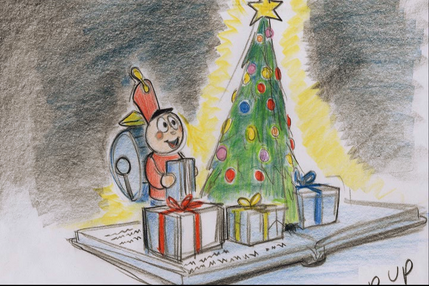
During the early 90's, Pixar was focusing on television commercials and were planning to make a Christmas special based on their Oscar-winning 1988 short film Tin Toy. When the Pixar singed Disney's contract, the Christmas special was scrapped in favor of a feature length animated film. Originally, the feature film was conceived as an expansion for Tinny, the main character from Tin Toy. Early ideas feature Tinny teaming up with a ventriloquist dummy, and together they embark on a sprawling adventure. At this point, it was decided that Tinny was too "vintage" to be played with, so Tinny was scrapped and was replaced by a spaced themed action figure named Buzz Lightyear. As for the ventriloquist dummy, he will later be transformed into a cowboy pull-string doll named Woody, partially inspired by a pull string doll director John Lasseter had as a child. Lasseter liked he contrast of the western and science fiction genres and included it in the film. Inspired by buddy films like 48 Hrs and Midnight Run, Lasseter decided to turn the project into a buddy/adventure film.

Once the concept has been established, screenwriters Joel Cohen (not to be confused with the Cohen Brothers), Joss Whedon (yes, that Joss Whedon), Alec Sokolow, and Pixar story man Andrew Stanton were hired to write the screenplay. 

After the script was finally approved, it was time to cast the film. For starters, Woody was created with Tom Hanks in mind.


To convince Tom Hanks to provide the voice of Woody, they made an animation test with sound clips taken from the 1989 comedy Turner and Hooch. Hanks later saw the test and agreed to take part in the film. 


For the role of Buzz Lightyear, Billy Crystal was offered, but he turned it down (Crystal said that this is the biggest regret of his career). So they turned to stand up comic turned TV star Tim Allen, then known for his work on Home Improvement. 


Toy Story is the first animated film they ever worked on and they recorded their lines together to make Woody and Buzz Lightyear's relationship more believable.

Throughout development, Jeffery Katzenberg, then chairman at Disney, often interfere with Lasseter and his team because he wanted the movie to be more "edgy" to appeal for an older audience. This lead to stripping Woody away from his charm and turning him into a cold-hearted character. Tom Hanks even admitted that Woody has turned into an unlikable character.


On November 19, 1993, Lasseter and his team showed an early version of the film (in edited storyboard form) to Disney. The test screening bombed. Disney executives were shocked by it's grim tone and unlikable characters. They even considered shutting down the project, but Lasseter and company begged for a second chance. Disney reluctantly agrees. By early 1994, the Pixar team came back to Disney with a new script, this time altering Woody's character from egotistical tyrant, to a wise and gentle leader. After Disney executives read the new script, the film was finally back into production.

Design and Animation


To design the world of Toy Story, art director Ralph Eggelston was tasked to create the color scheme and look of them. Eggelston and the art department would draw concept art, so that the final look will be approved.


Once the designs are approved, they are later formed into blueprints called "model packs", which will instruct modelers and technical directors to create these designs into the computer. 


To model characters with complex and believable organic curves, clay statues were sculpted into the computer by an electronic device called a digitizer. A grid was drawn into the sculpture so a technical director would connect the surface dots. 


Layout artists are the camera crew for computer animation. They arrange the character models into position and create camera movements that are common for live action film making. The "camerawork" in Toy Story is not done by a physical camera, but by a virtual program in the computer.


After layout is finished, the characters are ready to be animated. First, they animate the rough body positions, then they go into finer details, like facial animation. Each character's articulation and motion controls acre coded, so the animators were given the freedom to move them in a variety of ways, such as talking, running, walking, or jumping. Out of all of the characters, Woody was the most complex, as he required over 700 animation controls, including 212 for his face and 58 for his mouth. The animators often videotape themselves as references to create realistic movements. For the Green Army Men scene, the animators nailed tennis shoes to a board and filmed themselves wearing them.


After the characters are animated, it's time to apply the surfaces of the characters and objects by shading. The purpose of shading is to define the surface, its texture and color, and how it interacts with light. Examples of shading includes scratches on wood, rough asphalt of streets, and dirt on cars. Some of these surfaces came from real sources. For example, the curtain fabric in Andy's room is created by scanning real cloth. These details were often too time consuming and expensive to draw frame-by-frame in traditional animation. Lighting is done by breaking the shot down into various light sources, then they combined them until the desired effect was achieved. 

  
Some details, like smoke and rain, requires some complex visual effects work ever created for an animated feature film. The rain on Sid's window is actually a moving surface model that is later "mapped" into the glass.


Smoke, fire, and sparks are created by a program called Particle Systems. Particle Systems renders these effects as a pattern containing a large quantity of randomly moving shapes. So details like smoke is actually a large number of tiny objects moving together randomly within a fixed path. 


After all of the tools of computer animation have been completed, it's still needed to be transferred to 35mm film before its theatrical release. To transfer the film into final color, red, blue, and green filters were combined and scanned digitally into film.

Music, Editing, and Pre-Release


Disney was concerned about with Lasseter's position with the use of music. Unlike most animated films at the time, Lasseter did not want the film to be a musical. But Disney favored the musical format. So a compromise was reached, the characters will not break into song, but the film will use non-diegetic songs over the action to convey and amplify the emotions Woody and Buzz Lightyear were feeling. Hollywood musician Randy Newman was hired to compose the film and sound designer Gary Rydstrom was hired to create sound effects and mix the final audio.


Two scenes were animated, but were cut from the final film. The first scene shows Sid torturing Buzz Lightyear before he burned Woody's forehead with a magnifying glass. This was cut from the movie because they felt that the audience would love Woody and Buzz by that point.


The second scene shows an extended version of the scene when Woody is trapped into the milk crate while a rocket is strapped on Buzz's back. This scene was shortened because it slowed the movie down.

Reportedly, executive producer and Pixar/Apple co-founder Steve Jobs wasn't confident in the movie and was considering to sell Pixar to companies like Hallmark or Microsoft. As the film was near completion, Jobs became increasingly excited about the movie, feeling that he's on the verge of transforming the film industry. Disney finally announced that the movie would be released during the 1995 holiday season.

Release and Legacy

Toy Story finally hit theaters in November 22, 1995. It became a critical and commercial smash, grossing over $373.6 million at the box office. Critics such as Roger Ebert and Richard Corliss praised the technically innovative animation, characters, and wit. 

The film will later have an impact in the film industry and Hollywood has been producing feature length CG animated films ever since. Pixar will continue to make more feature length movies.
 
The film will later spawn 3 sequels, theme park attractions, and a wide variety of merchandise.

My Thoughts

What can I say that hasn't been said my many critics and audiences alike? The film is a masterpiece of animation, storytelling, and character development. It's the ultimate feel good movie and it will continue to have a lasting impact on people of all ages. I loved this movie as a kid, I still love it today.

Saturday, September 28, 2019

Film Criticism At It's Worst (Why You Need To Stop Watching Nostalgia Critic)


NOTE: Sorry for delaying Part 2 of my Toy Story retrospective for so long. I've been really lazy as of late and real life was really killing me. I'll finish the retrospective after I've done this article.

Nostalgia Critic's review of Pink Floyd's The Wall has to be the worst movie review I have ever seen. And it's not just my opinion. Shortly after the video was uploaded, many people have criticized the video for being the dumpster fire it really is. I used to be an NC fan for like a few years, then I lost interest in his stuff in 2012. Then when the Change The Channel scandal was confirmed, I hated his content even more. Still, I was a bit curious of the video after seeing JAR Media's take on it. I should have listened to them, because this is one of the worst videos I have ever watched. Everything about it pissed me off, and keeps finding ways to give me diarrhea. Let's take a look on how much of a stinker this turd is!

Mini Review Of The Wall


But first, my thoughts on the movie. Pink Floyd's The Wall is a 1982 film adaptation of the album of the same name, loosely based on the experiences of both Roger Waters and Syd Barrett. The film follows a man named Pink, a rock star who has a troubled life and feels discontent with those surrounding him. Metaphorically speaking, he creates a wall to separate himself from his fans, friends, and family. I really enjoyed the movie. I thought it told a compelling and personal story with great music and brilliant animated segments from illustrator Gerald Scarfe. It's a wild ride and I recommend it! But because NC is a hack, of course he has to make a review of it. And this time, he really outdid himself with his idiocy!

What's Wrong With The Video? 

I should start off by telling you that calling it a "review" is a real stretch. It's basically a recreation of specific scenes from the movie, which would be fine if there's any effort put into the parody and critical analysis, but there isn't any effort at all! For starters, it's obvious that Doug Walker (NC's creator) failed to do any research on Roger Waters' life, and instead focuses on mocking the songs for the sake of doing so. For those unfamiliar with the life of Roger Waters, he had a troubled life. His father was killed in battle during WWII, he suffered corporal punishment when he was at school, and he isolated himself from his peers during his success with Pink Floyd.  What NC did however is criticize the songs for being pretentious without any reason, which is ironic because the video itself is pretentious. 

The video is also unclear on what it wants to satirize and, again, takes the film's themes completely out of context. Doug's (sigh) "spoof" of "Another Brick In The Wall, Part 2" inexplicably mocks the American educational system, which has nothing to do with the actual context of the song, which was based on the corporal punishment Waters, went through. In general, corporal punishment was common practice in schools back in the 1950's. So this "song" is very insulting to people who were victimized by this kind of child abuse and is therefore not funny. It also doesn't help that the special effects are very sloppy. To quote the late Gene Siskel's controversial review of Poltergeist, "anyone can do special effects." Now what Siskel said in his review of that movie was disrespectful to the people who worked on it. But compared to what I saw, I think he might actually be "right". The CGI and green screen were atrocious and the compositing is lazy.

Later on in the video, it for some reason turns into a ham-fisted and on-the-nose satire about social media culture when it "parodies" scenes involving Pink's dictatorship. The audience members are depicted as blind fanboys/fangirls who blindly agree with everything their leader says and they "salute" him by saying "Hashtag". What's weird is that the audience members are not seen sitting down in benches. Instead, they are seen on video screens placed on these bleachers. Oops, I forgot to mention on how it doesn't know how to parody the character of Pink. Corey Taylor (from Slipknot) and his teenage son make cameos in the video as younger and older selves of the supposed main character, but when he becomes a dictator, he's somehow played by Doug Walker.  So Doug can't even make up his mind on how to parody Pink. Also, make a note that he wrote "Person You Hate" on his forehead, making it clear that Doug never took any criticism for his work and for his actions. The parodies of the other songs are equally insulting to the ones I pointed out for obvious reasons. But to make matters worse, Doug himself actually advertises a parody album in the middle of the video and calls it a "love letter" to Pink Floyd, when it's really disrespectful to their work. In response to Doug's disgusting ad, here's my promotion of something I personally consider a love letter. 


Roger Ebert is my favorite film critic of all time. Even though I don't always agree with his reviews, his love and passion for movies has been clear to me and I'm always interested in what he has to say. In 1996, he began writing essays on what he considers "Great Movies". I think Ebert really topped himself with these essays because this is such a love letter to the art of film and film history and you can read them either in book form or on his website. If you're new to Ebert or already a fan, I highly recommend checking out these essays. It's Roger Ebert in top form.

Other love letters to film I also recommend are Cinemassacre's Monster Madness, or Oliver Harper's Retrospectives and reviews. In fact, get your film education from a variety of sources instead of The Nostalgia Critic. Speaking of which...

Back To The Video (May God Forgive Me)

Towards the end of the video, we get an animated segment that unsuccessfully satirizes "The Trail" segment from the end of the movie. This is surprisingly good animation from YouTube artist FENNAH, but you can't top the legendary artwork from Gerald Scarfe, who poured his heart and soul into making those animated segments, so FENNAH's work is in the wrong video.

After the song if finally over, NC completely contradicts himself by telling Corey Taylor that he liked the movie for it's "good music and imagination". Are you serious? You actually go from unfairly trashing the songs for being "full of itself", then later contradicting yourself by saying that you liked the film? What kind a review is this?

But I saved the worst for last. The video ends with, I'm not making this up, Corey Taylor doing a pointless cover of the Spongebob Squarepants theme song and NC and his cronies are singing along. What does Spongebob have to do with Pink Floyd? In fact, I have a better question. WHY IS THIS VIDEO EVEN MADE?

In Conclusion

Just to sum up the obvious, Nostalgia Critic's review of Pink Floyd's The Wall is an unfunny, lazy, ham-fisted, on-the-nose, dim witted, pretentious, boring, and downright disrespectful to film criticism, to Pink Floyd, and to it's audience. It's perfect example on why you shouldn't be watching The Nostalgia Critic and his work should be avoided at all costs. It truly is the worst film review I have even seen, and one of the worst videos ever made. 

Saturday, June 22, 2019

The Troubled Story of Toy Story (Part 1: Pixar's Beginnings)


On November 22, 1995, the movies went infinity and beyond with the release of Toy Story, the first feature length movie made entirely by computer graphics. Critics were blown away with it's revolutionary computer animation and storytelling, and the film became a smash hit, prompting Hollywood to make more computer generated animated films in the future. But the film is a production nightmare and was almost never made. In this 2 part saga, we examine the case of the history of Pixar and the making of Toy Story.

Where Did It All Start?


Edwin Catmull

Pixar has it's roots back in the early 1970's. After graduating from The University of Utah, computer scientist Edwin Catmull applied to New York's Institute of Technology, which just started it's new computer division called Computer Graphics Lab. After meeting his partner, Alvy Ray Smith, they began to gather a team of early computer graphics pioneers to create some innovative software.


Shortly after Star Wars kicked off a renaissance of special effects extravaganzas, George Lucas was looking forward to expand his filmmaking empire. He contacted Catmull and his team to establish a computer graphics facility at his production company, Lucasfilm. Among the division's first actions were inventing a digital editing system (EditDroid), a digital audio system, and a laser film printer.


In 1982, Lucasfilm's Computer Graphics Division teamed up with it's sister company, Industrial Light and Magic, to create the famous Genesis Effect sequence from Star Trek II: The Wrath of Khan. They spent 5 months advancing texture mapping, motion blur, digital matte painting, and compositing programs to create this sequence. At that point, only one crucial element is missing: someone who is an expert in animation.


John Lasseter

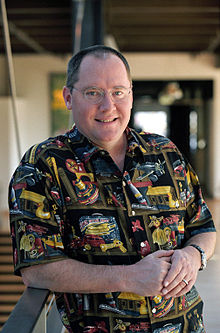
John Lasseter has been fascinated by animated films as a small child and often run home from school to watch cartoons on television. During high school, he read Bob Thomas' book, "The Art of Animation", which explores how animated films are made. After he finished reading, he finally realized that he was born to be an animator. In 1975, he graduated from high school and applied to the California Institute of the Arts (CalArts), an arts program founded by Walt Disney in 1961. He was taught by three members of Disney's Nine Old Men team of veteran animators, and his classmates went on to become celebrities like Brad Bird, John Musker, Tim Burton, and Henry Selleck.

After winning two student awards for his two short films and graduating from CalArts, Lasseter arrived at Disney in 1979. Shortly after his arrival, he became disillusioned with the management of the company, especially when the 1981 feature, The Fox and the Hound, was put into production. 


During the making of the 1983 cartoon short, Mickey's Christmas Carol, two close friends of Lasseter's, Bill Kroyer and Jerry Rees, were working on Tron, which was about the video game world. After they showed Lasseter a scene from the film, he was blown away by the computer generated environments to create this world. Tron only made a modest profit, thanks to Steven Spielberg's E.T. hogging box office records in 1982. But that didn't stop Lasseter from campaigning for computer graphics in animated films in the future. 


In 1983, Lasseter and fellow animator Glen Keane created an animated short test film that combined traditional hand drawn animation with state of the art computer graphics. Around the same time, they were developing an animated feature adaptation of The Brave Little Toaster, based on the book by Thomas Disch. After Lasseter pitched his ideas for the project, he was let go. The Brave Little Toaster did get made, but that was from a different animation studio. But Lasseter did not give up.


Shortly after his departure from Disney, Lasseter applied to Lucasfilm's Computer Graphics Division and brought his knowledge of animation along with him. Among his first actions at the company were his 1984 short film, The Adventures of Andre and Wally B, and his work on the stained glass knight scene in Young Sherlock Holmes (1985), which earned an Oscar nomination for Best Visual Effects. 


Steve Jobs

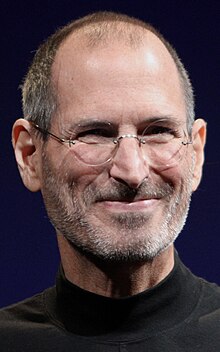
After Lucasfilm's Computer Graphics Division was experiencing financial difficulties, the company is later taken over by entrepreneur and Apple founder Steve Jobs in 1986. The company was later renamed Pixar, named after the Pixar Image Computer, which was used for medical research.


Between the late 1980's to the early 1990's. Pixar spent much of it's time making experimental short films for computer graphics conventions, making television commercials for various clients, and developing a digital ink and paint software for Disney's animation division for their animated films. Their 1988 short film, Tin Toy, won an Academy Award for Best Animated Short Film in 1989. This attracted Disney, who gave John Lasseter a choice, go back to Disney, or stay at Pixar. He chose the latter. Still, Pixar was willing to work for Disney and singed a contract. Originally, Pixar wanted to develop a Christmas special based on Tin Toy, but Disney went further with developing an idea for a feature length motion picture.

The story continues in part 2. 

Sunday, June 16, 2019

How Star Wars Almost Wasn't Made


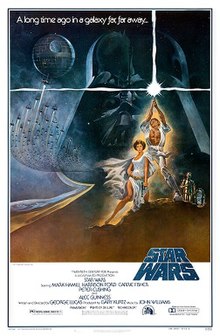
On May 25 1977, Star Wars hit theaters and was a massive hit, becoming the top grossing movie of it's time and cemented the summer blockbuster after Jaws created it 2 years earlier. It has since spawned a large franchise and helped kicked off a renaissance of big budget special effects extravaganzas we are still living through today. Since Star Wars, we had Indiana Jones, Ghostbusters, Jurassic Park, The Matrix, Marvel Cinematic Universe, and other successful franchises. But the movie almost wasn't made and had a very hard time getting released to theaters. Let's examine the case the troubled history of Star Wars.

New Hollywood and The Creation of the Summer Blockbuster


To understand what the movies were like before Star Wars, I think a little history is in order. In the late 1960's, Hollywood's studio system was coming to an end, so the American film industry focused on smaller movies made by a new generation of filmmakers who want to make movies they would like to make. This era of filmmaking was known as "New Hollywood". Among the directors from that period were Arthur Penn, Mike Nichols, Roman Polanski, Robert Altman, Bob Rafelson, Peter Bagdonovich, Brian de Palma, George Lucas, Steven Spielberg, Martin Scorsese, and Francis Ford Coppola. 

On June 20th 1975, Steven Spielberg's Jaws hit the big screen and hit the box office roof, making it the first summer blockbuster. Before Jaws and Star Wars, the big studios didn't release the bigger films in the summer. The summer months were used as dumping grounds for smaller productions, but Jaws changed all that and the studios continue to release the bigger films for the summer, which led to the end of the New Hollywood era (the box office failures of Michael Cimino's Heaven's Gate and Francis Ford Coppola's One From The Heart may have contributed to that too).

Origins, Inspirations, and Pre-Production


In the early 1970's, George Lucas began to develop an idea to make a space opera. He grew up reading adventure novels and watching Flash Gordon serials on television. Originally he wanted to make a Flash Gordon movie, but he failed to secure the rights. So Lucas decided to make his own space opera, similar to Flash Gordon. For preparation, Lucas began to do some research on science fiction, world history, and mythology. He watched a lot of sci-fi movies, Akira Kurosawa's samurai epic The Hidden Fortress, and read books on mythology, particularly the works of Joseph Campbell, to create his own universe. While working on the script, he pitched the idea to United Artists, Universal Pictures, and Walt Disney Productions, but they turned down the project.


After being rejected by other studios, Lucas turned to Alan Ladd Jr, who was an executive at 20th Century Fox at the time. Ladd believed that Lucas was talented because he enjoyed his 1973 teen comedy, American Graffiti, and agreed that the film had potential. To convince other Fox executives, Lucas hired conceptual artist Ralph McQuarrie to paint certain scenes. Lucas had his then-wife Marcia, and their friends Willard Huyck and Gloria Katz to further revise the script. After Lucas showed the studio the screenplay and several of McQuarrie's paintings, the project was finally green lit with a budget of $8 million. The success of American Graffiti led to Lucas renegotiating his deal with Alan Ladd Jr, therefore protecting the film's sequel and merchandising rights.


When it came time to cast the film, Lucas didn't want to go for big names, favoring actors who have little experience with the film industry. 20th Century Fox were concerned over this and demanded established actors. Mark Hamill plays Luke Skywalker, a farm boy who joins the Jedi cause after his home is destroyed by the Empire. Hamill was chosen because of his natural delivery to the dialogue.


Lucas was initially reluctant to cast Harrison Ford as smuggler Han Solo, since they worked together for American Graffiti and Lucas' desire for new faces. So Ford was hired to assist actors who were auditioning for the role. Lucas was won over by Ford's performance and decided to cast him instead of the other actors who were considered.


Many young actresses were auditioned for the role of Princess Leia, including Jodie Foster, who turned down the role due to her contract with Disney. Carrie Fisher agreed to play the character on the condition that she loses 10 pounds.


For the role of Jedi Master Obi-Wan Kenobi, established British actor Alec Guinness was cast. He agreed to take the part on the condition that he would not have to do with any publicity with the film. After he completed the trilogy, Guinness has tried to distance himself from the Star Wars franchise.


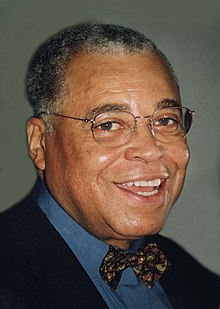
For the role of Darth Vader, English body builder and stuntman David Prowse was cast as the body of Darth Vader. He was originally going to do the voice, but due to Prowse's West Country English accent, Lucas wanted to search a voice actor. Fearing Orson Welles would be too recognizable, he cast the lesser-known James Earl Jones (pictured here) instead.


Veteran horror actor Peter Cushing was cast as Darth Vader's second in command, Grand Moff Tarkin. Lucas originally wanted Cushing to play Obi-Wan Kenobi, but decided that his lean features were best suited for the role of Trakin.


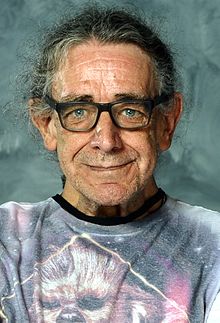
Peter Mayhew, who sadly passed away this year, plays Chewbacca, a Wookiee who is sidekick of Han Solo. Mayhew was immediately cast after he stood up to greet Lucas.


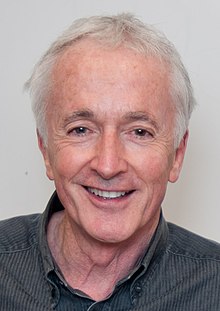
For the role of protocol droid C3PO, mime artist Anthony Daniels was picked after he saw one of Ralph McQuarrie's paintings. Lucas initially didn't want Daniels to do the voice. 30 voice actors were considered for the voice acting. According to Daniels, one of the actors recommended the role to him.


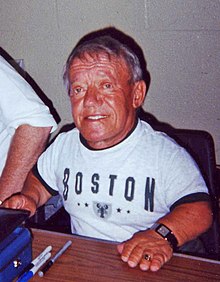
Midget actor Kenny Baker plays R2-D2, a droid who carries a secret message to be delivered to Obi-Wan Kenobi. Although he was initially reluctant to play the part, he was cast immediately after meeting with George Lucas.


After the studios abandoned their special effects departments in favor of smaller-scale films, George Lucas founded his own special effects company, Industrial Light and Magic (ILM), in the summer of 1975. Among the company's first actions was hiring a team of special effects artists and animators who will later become celebrities, like John Dykstra, Dennis Muren, Ken Ralston, Richard Edlund, and Phil Tippet. Their first job is to build models, blue screens, optical printers, computer controlled cameras, matte paintings, stop motion puppets, and animation stands for scenes that require traditional animation techniques. With project given the green light, a new special effects company, and a cast that is filled with mostly unknowns, it's time to bring George Lucas' vision to life.

Difficult Shoot


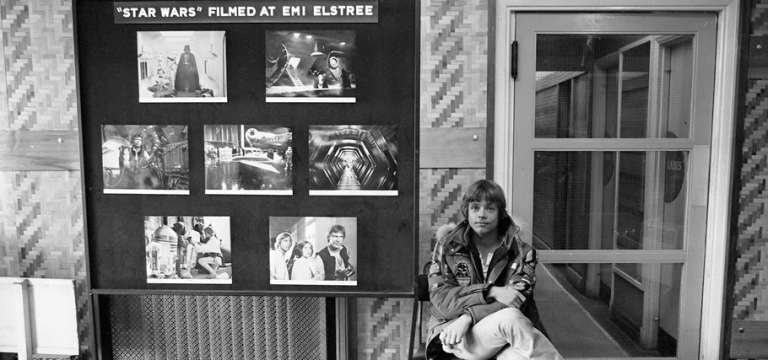
Production of Star Wars began in Tunisia on March 22, 1976. This is where trouble began. The project fell behind schedule due to malfunctioning props, electronic breakdowns, a freak rainstorm, and other production woes. The only silver lining is that after Tunisia, they'll move to Elstree Studios in London, which is a more controlled environment.


But just because it was filmed in a more controlled environment, it doesn't mean that it's problem-free. Lucas faced strict British union rules, meaning that he had to stop filming by 5:30 pm, unless he's in the middle of a scene. Despite Lucas' efforts, the crew didn't take the film very seriously and felt that it was a children's film. Lucas also clashed with cinematographer Gilbert Taylor, attempting to dictate where lights should go on set, and wanted to make adjustments himself, which Gilbert said wasn't his job. He would light the scene the way he thought Lucas wanted it. Problems arose with Taylor describing the sets John Barry made as "looking like a coal mine." He also complained about the black and gray color scheme. To solve the problem, they added holes on the ceilings, floors, and walls to add lights into the sets. Researching this article by watching Oliver Harper's Retrospective and Reviews series, I agree that Taylor receives more credit for this. 

Lucas rarely spoke to the actors, who believed that they expected too much of them while providing little direction. His only instructions he'd give the actors was "faster and more intense". Post-production was stressful due to pressure from the studio, and Mark Hamill's car accident restricted re-shoots. At this point, 20th Century Fox executives were growing less confident in the movie and support was offered from Alan Ladd Jr. He told Lucas to finish the movie within a week or he will shut production down. Lucas split the crew in 3 units, with Lucas doing the first, the second led by producer Gary Kurtz, and production supervisor Robert Watts doing the third.

I Got a Bad Feeling About This (Post-Production and Distribution)

Star Wars was originally slated for a Christmas 1976 release, but the release time was changed to summer 1977. Some doubted if the movie will ever hit theaters. But as things were bad with the shoot, post-production was even worse. After filming had been completed, Lucas was shocked when the first edited version of the movie was "a complete disaster". As a result, Lucas fired editor John Jympson and replaced him with Paul Hirsch and Richard Chew. He was able to borrow his then-wife Marcia, who was editing Martin Scorsese's New York, New York. Their job was to fix and improve 
the pacing, cut a lot of unneeded material, and restructure scenes in proper context. For more information on how Star Wars was saved during editing, check out RocketJump's video "How Star Wars Was Saved In The Edit" linked below. 


Industrial Light and Magic was also struggling with their groundbreaking special effects. The company spent half the budget on four shots that Lucas rejected. Rumors also surfaced that ILM employees lack discipline, which led to Lucas interfering constantly to ensure that they were on schedule. To complete the special effects, ILM was forced to do a year's worth of work in six months. For guidance, Lucas edited stock footage of aerial dogfights taken from WWII films, which enhanced the pacing of the space battles.

With disastrous rough cuts, ILM in chaos, and a studio putting too much pressure on the project, Lucas faced a lot of challenges. At one point, Lucas felt sharp chest pains. Fearing a heart attack, he went to the hospital. He was diagnosed with hypertension and exhaustion, and was warned to reduce his stress level.

   
During post-production, sound designer Ben Burtt to create a unique sound design for the film. Blaster sounds were modified recordings of steel wires being tapped. The sound effect for the lightsaber was created by mixing the hums of old movie projectors and interference caused by a TV set. For Chewbacca's growls and roars, he recorded several animal sounds and combined them together. Darth Vader's breathing was done by Burtt breathing through a scuba mask in front of a microphone. And R2-D2's beeps and blips were done by filtering his voice through a electronic synthesizer.

In February 1977, Lucas showed Fox executives and several director friends a rough assembly of the film. The cut had a different opening crawl than the finished film, and used David Prowse's voice as Darth Vader. It also lacked most special effects: hand-drawn arrows were used as placeholders or the blaster beams and WWII dogfight footage was used for the spaced battles. The response to the directors present was not very good. Steven Spielberg, who claimed to be the only director to have enjoyed the movie, believed that the disappointed reactions came from the lacking special effects and they believed that the film was nonsensical. Alan Ladd Jr and other Fox executives, in contrast, loved the movie. The budget increased from $8 million to $11 million. Only one crucial element was left: the musical score.


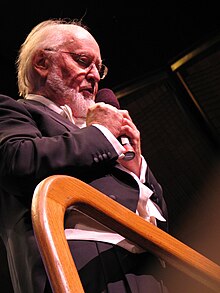
Spielberg recommended Lucas to hire legendary composer John Williams to compose the score, coming off from his Oscar winning score for Jaws. In March 1977, he conducted The London Symphony Orchestra to record the movie's soundtrack in 12 days.


The movie was finally completed, but it's having a rough time releasing it to theaters. George Lucas hired science fiction fan Charles Lippincott as the film's marketing director. Because 20th Century Fox gave the film little marketing support, he had to look elsewhere. He contacted Marvel Comics and Del Ray to publish comic books and novelizations based on the movie. Fearing that it will be crowded out by other summer movies, like Smokey and the Bandit, the release date was pushed to Wednesday, May 25th. Unfortunately, fewer than 40 theaters agree to book Star Wars. Fox actually expected The Other Side of Midnight, based on the novel of the same name, to be the big summer hit of 1977, while they expected Star Wars to be a "B movie". The movie hit 32 theaters on May 25th, 1977. This will be the day the movies will change forever.

May The Force Be With Us (Release and Impact)


On May 25th, 1977, Star Wars hit theaters and became a phenomenal smash hit. It replaced Jaws as the top grossing film of it's time, therefore cementing the summer blockbuster and creating a  renaissance of special effects blockbusters, replacing personal filmmaking from the 1970s. Critics and moviegoers were blown away by the film and won six Academy Awards for Best Art Direction, Best Editing, Best Visual Effects, Best Sound, Best Costume Design, and Best Original Score. It was nominated for Best Picture, but lost to the Woody Allen comedy, Annie Hall. It has spawn several prequels and sequels, spin offs, video games, and tons of merchandise and action figures. It made stars out of Mark Hamill, Harrison Ford, and Carrie Fisher. Star Wars is not just a movie, it's an event.

My Review and Conclusion

There's nothing I could have said about the movie that has already been said by countless critics, film historians, and fans. This is a revolutionary landmark in the history of the movies, with memorable characters, dazzling special effects, and fun storytelling that mixes mythology, fairy tales, Western and Eastern culture, references to other movies, and biblical references in such an effective way. It really was saved during post production. With a studio leaning over Lucas and crew members questioning him, the mishaps behind the scenes really did help and evolve the movie during production. If George Lucas had his own way, the film will be a gimmicky disaster. I'll get into more detail on this review when I review the whole trilogy as one of my favorite movies. But for now, Star Wars is truly one of a kind.


Monday, May 13, 2019

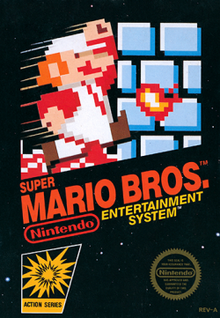
What Went Wrong With Super Mario Bros (1993)


On May 28th, 1993, two iconic video game characters named Mario and Luigi arrived on the big screen. With a budget of $48 million, it grossed $20 million domestically, making it a box office bomb. Critics (including Siskel and Ebert) panned the film for being an overblown special effects extravaganza, and fans were outraged with the liberties it has taken with it's source material. It easily could have fallen into obscurity, but with the rise of the Internet, it somehow became a cult film. The people involved in the making of the film began to talk openly about it's troubled production and how the movie went wrong. With stories of script rewrites, on set drinking, and a directing team who are vicious bullies, it's obvious that the movie went out of control and it shows in the finished product. Let's examine the case of Super Mario Bros (1993).

Origins and Casting


The roots for a Super Mario Bros movie goes back to the mid-80's and early-90's, when kids were being crazy for Nintendo games, including the Mario games. Hollywood saw an opportunity to make big-budget film adaptations of video games. In the Fall of 1990, Nintendo surprised Hollywood when they signed a $2 million movie deal to an independent film company called Lightmotive, operated by producers Roland Joffe, and Jake Eberts (no relation to film critic Roger Ebert).


While the company was not well known for mainstream films, their resume is very good. Their best known work was the 1984 Oscar-nominated drama, The Killing Fields, which is a film about genocide in 1970's Cambodia. Their vision for the film was a slightly dark, but still family-friendly adventure film for all ages. To sweeten the deal, Nintendo gave the producers some creative control and the merchandising rights. The Mario franchise seems to be too big to fail. After the deal is over, it's time to find a more responsible creative team and the right cast.


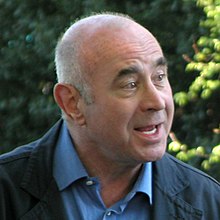
For the role of Mario, Dustin Hoffman and Danny DeVito were considered until the producers picked British actor Bob Hoskins. He was known for critically acclaimed British crime dramas like The Long Good Friday and Mona Lisa (which earned him a 1986 Oscar nomination for Best Actor), as well as Hollywood blockbusters like Who Framed Roger Rabbit and Hook. Hoskins wasn't aware of the games until his son told him. He singed on after reading the script.


After Tom Hanks has been rejected for the role of Luigi due to his career slump, John Leguizamo has been cast for the part. Leguizamo, who has been new to Hollywood at the time, was so excited for the part that he turned down the offer to be in a family sitcom about his life. He felt that he's too good for TV.


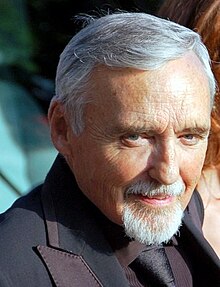
For the role of King Koopa, Arnold Schwarzenegger and Michael Keaton were offered the part, but both declined. The role was later given to Dennis Hopper, whose 1969 film Easy Rider gave Hollywood the opportunity make director-driven films between the late 60's and the early 80's. He took the job to entertain his son.


For the role of Princess Daisy, rising actress Samantha Mathis was chosen for the part. Her previous credits include the teen comedy Pump Up The Volume, and the 1992 animated feature, Ferngully: The Last Rainforest. So far, casting was smooth. But then the project is starting to become a nightmare when they were searching for a talented creative team.

Development Hell


One of the first directors considered for the part was comedian Harold Ramis, who know for his acting work in Ghostbusters and Stripes, along with his directing credits with Caddyshack, National Lampoon's Vacation, and Groundhog Day. Ramis wanted to direct the film because he's a fan of the games. But an agreement was never reached with the producers, so he declined.


Greg Beeman was hired as the film's director after he made the 1988 teen comedy, License to Drive, which stars The Two Coreys, Haim and Feldman. But due to his inexperience for tackling big budget blockbusters, he was rejected. "Beeman didn't have the stretch for it" co producer Roland Joffe says. 


After Beeman was fired, the producers hired music video directors Rocky Morton and Annabel Jankle. They were inexperienced with the movie business, since their only movie credit was the 1988 thriller DOA, which opened with mixed reviews and lackluster box office results. However, their famous creation was Max Headroom, a cult sci-fi TV show where comedian Matt Frewer plays an artificial intelligence character. Max Headroom was very popular in the 80's, as he appears in Coca Cola commercials and music videos.


The real nightmare begins when it came to write the film. Barry Morrow, known for his Oscar-winning script for Rain Man, was hired to write the script. But the producers realized that his draft was too much like Rain Man, and Morrow refused to make changes. So he was fired from the project.


After Morrow left the project, Jim Jennewain and Tom S. Parker were hired to write the script. Their previous credit was the 1992 comedy Stay Tuned, which starred John Ritter, Pam Dawber, and Jeffery Jones. Their take was a fantasy film and was closer to the source material. In their script, The Mario Bros were on their journey to save a princess, who was kidnapped by King Koopa so he can gain access to the "Crown of Invincibility".


After Lightmotive was happy with the script, Disney picked up the project and green lighted the film under their Hollywood Pictures label. The actors also signed on to that script. But when Morton and Jankel read the script after they were hired, they hated it. They still wanted to make the movie but they envisioned a gritty, futuristic style. After Jennewain and Parker left the project, a new set of writers were hired. They picked up the fantasy script and added sci-fi elements. After Morton and Jankel read the script, they're still unhappy. They envisioned a parallel dimension where the dinosaurs survived and live in an underground city that closely resembles Manhattan and is occupied by King Koopa. The new script was written accordingly. But their work did not please the directors and the studio, so they were fired. 


Two more writers were hired and wrote a script that was so action packed, it even contains a Bruce Willis cameo. But Nintendo, the filmmakers, and the producers decided that it was way over the top, so the violence was toned down. At this point, the film strayed too far from the source material and was becoming too dark. To soften the material, more writers have been hired on one condition, they're not allowed to talk to the directors. Rocky Morton and Annabelle Jankel were furious. They were thinking about walking off the set, but decided to stay because production was about to begin. After sets were being built in an abandoned North Carolina factory, production was about to begin in the summer of 1992.

All Hell Is Breaking Loose


When the cast arrived on the set, they were confused. It was a completely different movie that the one they singed up for and nobody told them. In response to their confusion, two of the former writers were re-hired to rewrite the script. The lack of AC didn't help either, as North Carolina has had a very hot summer back in 1992. But the cast and crew have one thing in common, an enemy: Rocky Morton and Annabelle Jankel. In August 1992, Los Angeles journalist Richard Stayton covered the troubled shoot in an article for the Los Angles Times. The article revealed that the cast and crew hated the directors so much they began to make fun of them and call them names. Bob Hoskins was more critical of them. He told his co-star John Leguizamo,"Not all English people are like them. He's a ^*%*, and she's a cow!" He also says that "their arrogance have been mistaken for talent." Dennis Hopper also called them "control freaks". The directors make poor decisions on a regular basis and they were also very abusive. 


Of all the behind the scenes anecdotes, the most notorious of them all is between co-director Rocky Morton, an extra, and a cup of hot coffee. According to John Leguizamo, Morton noticed that an extra's costume wasn't ugly enough, so he picked up some coffee that has been sitting around for a while. After he poured it, the extra was injured. Morton allegedly said "Oh well, he's just an extra" and shrugged. In Morton's side of the story, he tried to throw some mud in the costume, which didn't stick. He picked up some coffee and actually asked the extra for permission. When he poured the coffee, the extra screamed and Morton had to find help. Whoever's side of the story you believe in, someone should have told Morton that throwing coffee at an extra is not a good idea. Since then, the cast and crew wore T shirts than contains rude comments on the set.

The constant script rewrites and lack of communication made matters worse. The script changed so many times that the actors were even more confused. One scene originally called for strippers. But when the producers were aware of the this, the scene was changed to nightclub dancing. The cast and crew had to party because they were miserable. Bob Hoskins and John Leguizamo actually consumed shots of Scotch between shoots. This led to one of the most infamous on-set accidents. During the filming of a driving scene, Leguizamo shows signs that he had been drinking and the van almost tipped over. When Hoskins grabbed the door, it slammed his hand very badly. He had to wear a pink cast to match his skin color. 

At this point, the film had become a mess. The directors were not allowed to make the movie they would like to make because Disney, Lightmotive, and Nintendo wanted the movie to be more lighthearted and family friendly. After filming had been finished, it was time to edit the film and created the film's computer generated special effects. But the directors were locked out of the editing room. They had to get help from the Directors Guild of America so they can have access. Nintendo didn't care for the movie's quality, but they were confident that it would be successful at the box office because of the Mario name. They were mistaken.

Release and Failure

    
Siskel and Ebert

After all the behind the scenes turmoil, Super Mario Bros hit theaters in May 28, 1993. Nobody liked it. Fans were outraged with the creative liberties with the source material, and critics panned the film for it's over reliance on special effects and a lack of coherent narrative. Siskel and Ebert called it one of the worst movies of 1993 and it currently holds a a 21% on Rotten Tomatoes, along with a 4.0 out of 10 rating on IMDb. The people involved in the film were unhappy with the finished product and have been haunted by what happened during the filming. This is the second and last movie Rocky Morton and Annabelle Jankel directed, they haven't made a movie since. Dennis Hopper and John Leguizamo didn't care for it either, though the latter warmed up to the film recently. But the film's biggest critic is Bob Hoskins. He called the movie the worst film he had ever been in and regretted taking part.


Two weeks after Super Mario Bros, another dinosaur themed movie called Jurassic Park hit the big screen and opened to much greater success. With it's revolutionary special effects, it became the movie people saw that summer and actually surpassed E. T. to become the top grossing film at that time. Super Mario Bros, along with Last Action Hero, has since been forgotten.

Cult Following

It seems that everyone hates this movie and the film still has it's share of critics today. But in recent years, it has since developed a cult following, thanks to the rise of the Internet. Beginning in the late 2000's, there's an archival, fan-made website about the movie called Super Mario Bros. The Movie Archive. It contains storyboards, production photos, designs, media coverage, interviews, and even early drafts of the scripts that you can read online. If you're a fan of the movie or not, I recommend checking out that website. There's a lot of interesting stuff you can find. Currently, an animated film based on the games is in production. Will it be better than the movie we have, or will it repeat past mistakes? It's a good question.

My Opinion and Conclusion

Having played the games (doesn't matter which one), I can confirm that this is an unfaithful adaptation of the source material. As a movie, it's so over produced and overblown, that all of the special effects and action scenes distract you from the fact that the film lacks a coherent narrative or a contestant tone. The story makes no sense, and he script isn't well written enough to decide what it wants to be. Much like Last Action Hero, this is another movie that was altered so many times during production, it falls flat on it's face. I would be fair on one thing though, of all the movie versions of video games, this is not the worst.


Spider Man 2 (How A Sequel Can Improve On The Original)

In the summer of 2004, Spider Man made his second leap on the big screen. Critics and audiences alike have praised the film for its emotiona...