_theatrical_poster.png/220px-Ghostbusters_(1984)_theatrical_poster.png)
In the summer of 1984, Ghostbusters became a cultural phenomenon. With an estimated budget between $25-$30 million, it grossed $285 million, making one of the most successful comedies of all time. Critics praised the film for its unique mix of comedy and special effects, and Bill Murray's performance was often singled out for high praise. Ghostbusters has since become one of the most popular franchises in Hollywood history. But the movie almost never got made, and almost didn't get made the way it did.
Origins, Inspiration, and Development
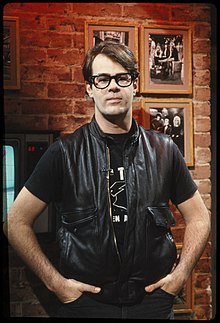
Ghostbusters was the brainchild of Dan Aykroyd. Apart from being one of the early members of Saturday Night Live, he also has a huge fascination with the paranormal, which he had inherited from his family. In 1981, he read an article on quantum physics, which gave him the idea of a comedy about trapping ghosts, taking inspiration from the likes of Abbot and Costello, Bob Hope, and The Bowery Boys.

The film was originally conceived as another star vehicle for Aykroyd and his best friend John Belushi (along with Eddie Murphy) and was originally set in the future, but when Aykroyd was working on the screenplay, Belushi died of a drug overdose in March 1982.
.jpg/170px-Labor_Day_20_(9766111984).jpg)
RIP Ivan Reitman (1946-2022)
Shortly after Belushi's death, Akroyd chose Ivan Reitman to direct the film, who co-produced Animal House and directed Meatballs and Stripes with Bill Murray. Reitman felt that Akroyd's original concept was too costly and impossible to make, so he decided to set the movie in New York City at the present day (early 80's), and decided to establish an origin story of the Ghostbusters going into business.

In March 1983, Reitman pitched the project to Frank Price, then an executive at Columbia Pictures, hoping that it could be made with a $25-$30 million budget. Price agreed to greenlight the film, but with one condition, it must be ready by June 1984. That's 13 months before they settled on a finished script, an effects studio, and even a filming start date, so Ghostbusters was a somewhat rushed production.
Casting
One of the reasons the movie works so well is the individual personalities of the Ghostbusters and their interactions with one another.
.jpg/250px-Peter_Venkman_(Bill_Murray).jpg)
Bill Murray plays Peter Venkman, the mouth of the Ghostbusters and the scene stealer. Murray reportedly made a two-picture deal with Columbia to star in Ghostbusters on the condition that he should do his passion project first, an adaptation of W. Somerest Maugham's 1944 novel, The Razor's Edge. Ironically, Ghostbusters made him a superstar and The Razor's Edge didn't.
.jpg/220px-Ray_Stantz_(Dan_Aykroyd).jpg)
Dan Aykroyd plays Ray Stanz, the heart of the Ghostbusters. His childlike enthusiasm further elevates and enhances the comedy.

Harold Ramis, who sadly passed away in 2014, plays Egon Spengler, the brains of the Ghostbusters. Though there are funny moments when Egon loves to snack, Ramis plays the character somewhat straight and acts calm most of the time.
Murray, Aykroyd, and Ramis are very good friends and worked together on other projects, so it's a wise choice to give them individual personalities.
.jpg)
For the supporting cast, we have Ernie Hudson as Winston Zeddemore, a new recruit for the Ghostbusters in the last half of the movie. Originally, Winston's role in the story was much larger, as he was originally established as an Air Force demolitions expert with an elaborate backstory. But due to the short production schedule, much of his character was greatly reduced.
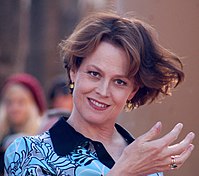
Sigourney Weaver plays the role of Dana Barret, the Ghostbusters' first client and Venkman's love interest. Weaver was known for playing serious roles such as Alien and The Year of Living Dangerously, and she expressed interests in doing comedic roles. It was her idea that Dana would be possessed by a supernatural creature, so she acted like a dog during her audition and got the job immediately.

Rick Moranis plays Louis Tully, a nerdy accountant who seemingly has a crush on his neighbor, Dana Barret. The role was originally offered to John Candy, but he turned it down because he felt that he didn't understand the character. Moranis replaced Candy, and implemented his own ideas for the character, including his job as an accountant.
.jpg/220px-Annie_Potts%2C_2019_(T6I0YV6Az8c).jpg)
Annie Potts plays Janine Melnitz, a secretary at Ghostbusters headquarters. My personal favorite scene from her is when she gets frustrated with constant phone calls from clients ("GHOSTBUSTERS! WHAT DO YOU WANT?).

And last but not least, we have William Atherton as the jerk EPA agent Walter Peck. Since Ghostbusters, he's been typecast into playing jerks in such titles as Real Genius and Die Hard.
Filming and Special Effects
Principal photography began on October 1983 and ended in January 1984, taking place on location in New York City (where the film was set) and Los Angeles for the remainder of the shoot.
.png/250px-The_Ghost_Busters_-_1975_TV_series_(logo).png)
During filming, a legal conflict ensued that the name "Ghostbusters" had already been used for a children's television show developed by Filmation, which was owned by Universal Studios. So they used alternate titles such as "Ghostsmashers", "Ghostbreakers" and "Ghoststoppers". Thankfully, the legal conflict was resolved when Frank Price moved to Universal and sold the title to Columbia for $500,000 plus 1% of the film's profits.

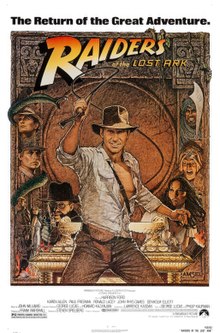
After the success of Star Wars, Industrial Light and Magic became to go-to special effects warehouse, but ILM turned down Ghostbusters because they were busy with other projects, namely Star Trek III and Indiana Jones and Temple of Doom. But luckily, ILM veteran Richard Edlund left the company to start his own effects house, Boss Film Studios.
They used every effects in the book, such as traditional animation, animatronics, stop motion puppets, blue screen photography, and monster costumes. Due to the tight production schedule, many of the effects shots were done in only one take, which is why the effects are somewhat uneven in the finished product. I'll explain more about the special effects in part 2.
Test Screening and Music
With its tight summer 1984 deadline just around the corner, the movie was screened for test audiences that February, with unfinished special effects shots to determine if the comedy worked. It was a positive response. Audiences reacted to the Librarian Ghost and The Stay Puft Marshmallow Man with fear, laughter, and applause. It was that very test screening that convinced Reitman that the film was working.

Having worked with Reitman on Meatballs and Stripes, veteran Hollywood composer Elmer Bernstein agreed to score the film. Bernstein said in a 1985 interview that it was the most difficult score he has ever created, as it was a challenge to create a balance the comedic and serious tones.
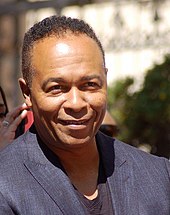
Musician Ray Parker Jr was hired to record the iconic theme song. According to the Netflix series The Movies That Made Us, Parker was struggling to write lyrics for the song. Then one night, he saw a commercial for a cheap local service. This inspired him to create the iconic lyric, "Who Ya Gonna Call?"
While the song was and still is very popular, there was some controversy when Huey Lewis accused Parker of plagiarizing his 1983 song "I Want A New Drug". This was settled out in court in 1985.
Release, Response, and Legacy
After 13 months of hell to get this film out, Ghostbusters met it's summer 1984 deadline to great success. It ranked number-one at the box office for seven weeks in its theatrical run and it became one of the most commercially successful comedies of all time.
Critics gave the film generally positive reviews, though some aspects were criticized. Many critics, especially Roger Ebert, were surprised with its successful blend of comedy and special effects, with Ebert pointing out that the special effects were in service to the actors and not the other way around. He even praised the dialogue.
Others single handedly gave credit to Bill Murray for his performance, with some (Gene Siskel for example) even interpreting him as the film's main attraction.
The interactions with the Ghostbusters and the supporting characters were given mixed responses however. Some praised the chemistry between Aykroyd, Ramis, and Murray, while others felt that the supporting cast were given little to do (I'll address my responses to these criticisms in part 2). But these criticisms were drowned out by the overwhelmingly positive reviews.
Since it's release, Ghostbusters has since became a huge phenomenon, and one of the most popular franchises in film history.
Stay tuned for part 2, in which I discuss how well Ghostbusters combines special effects and comedy regardless of its flaws.



.jpg/250px-Paramount_Pictures_logo_(2010).jpg)


.svg/220px-Industrial_Light_%26_Magic_(logo).svg.png)


_poster.jpg/220px-Teenage_Mutant_Ninja_Turtles_(1990_film)_poster.jpg)


