Sunday, September 30, 2018

The Patriot (Braveheart in Revolutionary War mode)


WARNING: This article may contain spoilers.

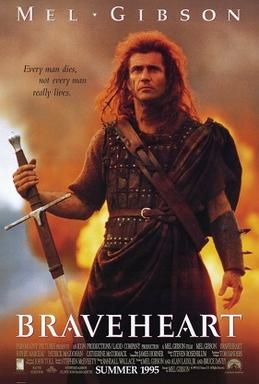
Five years after the success of Braveheart, Mel Gibson once again is cast in another historical epic, this time set in the Revolutionary War and directed by Roland Emmerich, known for Stargate, Independence Day, and that terrible 1998 version of Godzilla. This film is a heavily fictionalized account of The American War for Independence, with it's pro-American propaganda and the exaggerated evil of the British. Is the film worth watching despite it's historical inaccuracies, or are Mel Gibson and the filmmakers repeating the success of Braveheart? Let's examine the case of The Patriot. For my research, I used more than Wikipedia, I watched Youtube videos and read articles.

Deja Vu?

The movie opens in 1776 South Carolina, when widowed war veteran Benjamin Martin and his children were visiting Charlestown to vote for the support of the Continental Army.  As a veteran of the French and Indian War and a widowed father, he is reluctant to go to war against British. But his oldest son Gabriel has joined the Continental Army without his permission. After Gabriel was wounded in battle, the British, led by Colonel William Tavington, has taken the family hostage, arrests Gabriel so they can execute him for being a spy, destroyed his home, and has murdered one of the children for trying to free Gabriel. After freeing Gabriel, Benjamin decides to form a militia against the British.

If this sounds familiar, that's because this movie pretty much recycles the same plot from Braveheart, the common family man who wants peace in his life but hell broke loose when an empire destroys his life and he decides to go to war. Rather than making fresh insights into The Revolutionary War, the screenplay from Saving Private Ryan writer Robert Rodat relies on traditional Hollywood cliches you have seen so many times before.


The Real Benjamin Martin

The character of Benjamin Martin is a composite character of Revolutionary War veterans, such as Daniel Morgan, and Andrew Pickens. But the figure I'm most familiar with is Francis Marion, known by his nickname as "Swamp Fox". The family depicts Benjamin Martin as a genuine family man who loves his children and gets along with the film's black characters. Unfortunately, Francis Marion is nothing like Benjamin Martin. While a pioneer in modern guerrilla warfare, he was also a slave owner, a serial killer to Native Americans, and he has raped his female slaves. Francis Marion is a completely different character than the squeaky clean Benjamin Martin.


The Exaggerated Evil of the British

While the British weren't saints during The American War for Independence, they are far from the bloodthirsty monsters as depicted in the film. The film has a clear cut good vs evil story in which the Americans were pure while the British are mindless, thoughtless murderers. Even if they are not killing people, the film uses the old snobby Brit stereotype in some scenes. The most controversial scene in the film is when the British lock up a group of innocent American civilians into a church and they burned it. Not only is there no written record that the British has burned a church filled with innocent people during the Revolutionary War, but the attack was actually taken from a Nazi massacre that was committed in 1944. In the actual incident, the Nazis has rounded up French villagers into a church and and were blown to bits. If this movie wants the British to be the villains, than they should have depict the atrocities they have committed instead of recycling stuff from a different party and a totally different time period.

I didn't cover everything about the film's faithfulness to actual history but I did give you a taste of the movie's pandering pro-American propaganda. But hey, what can you expect from the creators of Independence Day? This film heavily recycles so much material from other historical epics that it's obvious that the filmmakers were only pandering to the Braveheart crowd rather than making a powerful statement about The American Revolution and the film is also biased to the opposite party. Despite some well made battle scenes and good performances, The Patriot is a run of the mill war movie.     

Friday, September 14, 2018

Braveheart (Hollywood's bastardization of Scottish history)


WARNING: This article may contain spoilers.

I shall tell you about the real William Wallace. Mel Gibson and screenwriter Randall Wallace will say I am a liar. But Hollywood movies were written by those who have hanged historical figures. Although the film was based on The First War of Scottish Independence between 1296 to 1328, all the historical events depicted in the film were completely false. That's maybe because Gibson's intention was to create a myth about 13th century Scottish rebel, William Wallace, a man who declares war against the English oppression of Scotland. Unfortunately, I can't cover everything and I apologize if I ignored anything major. I have used YouTube videos, Wikipedia pages on the film and it's historical figures, TV Tropes, and looked at lists of historically inaccurate films. Let's take a look on the many liberties this film has taken on history.

The first inaccuracy that comes to mind is actually the title. Braveheart is not the nickname of William Wallace, it was the nickname of the Scottish king Robert the Bruce. But this is only the beginning of the film's countless inaccuracies.


England's occupation of Scotland

The movie has already started and already the film did not to it's research. It starts off at 1280 and after the King of Scotland has died without male heirs, Edward I of England has taken over Scotland and claimed the throne himself. There is so much wrong, I don't know where to begin. For starters, King Alexander III of Scotland has died in 1286, not 1280. This led to Scotland's political turmoil over the crown and throne until Edward I's invasion in 1296.

I also like to point out that Edward never granted prima noctis, meaning he never let his nobles use peasant brides as sex objects on their first night as married women. There is no written evidence that prima noctis even happened at all.


Who is William Wallace?

Apart from his military campaign and his execution in 1305, very little evidence of the real William Wallace has survived, so no one knows who he really is. Much of the film's information on William Wallace was inspired by a poem written in the 15th century by Blind Harry. Much like the movie, Blind Harry's poem was meant to mythologize Wallace and his protest against the English occupation. Combine Blind Harry's poem and Randall Wallace's screenplay, you have a William Wallace who is depicted a Moses figure for the Scottish.

As the movie opens, William Wallace was a peasant who was motivated by the murders of his father, brother, and wife to lead Scotland to freedom from England. In real life, he was actually a son of a minor noble and there's no written records that suggest that his family was murdered, nor is there written evidence that he was married. I also like to point out that in real life Wallace never fell in love with Princess Isabella of France nor did they ever met each other like they did in the movie. If they did, then William Wallace would be considered a creepy pedophile because Isabella was actually about 10 years old when he was executed in 1305. 


 The Real Longshanks (aka Edward I of England)

The movie portrays Edward I as a heartless, cruel, homophobic, and tyrannical monster. While the real Longshanks was a brutal conquer at best and an Anti-Semite at worst (he expelled the Jews in 1290 and yes that did happen), he was far from the royal ugly dude as depicted in this film (Yes dudes, that's a Bill and Ted reference). Some believed that he was England's best kings due to his revamping England's legal system and, as mentioned before, he never had his nobles be sexual predators by law (aka prima noctis). He also never threw his son's gay boyfriend out of a window after he heard news of Wallace's invasion of England.

The movie also claims that Edward was pagan while in reality he was a Christian (like most people in Medieval Europe). And the real reason why Longshanks invaded Scotland in the first place was because he was asked by the nobles to mediate during Scotland's crisis over the crown and throne. He agreed but on the condition that Scotland should be on England's authority and that's how the war started.


Wallace's Battles Against England

While the iconic battle sequences were well made, there are more inaccuracies. For starters, the Scottish never wore kilts in the 13th century. Kilts wouldn't be invented until the late 16th century. The Scottish also didn't wear war paint in the 13th century either because the last time they did that was back in the ancient Roman times and were identified as Picts.

William Wallace's most victorious battle was The Battle of Stirling Bridge in 1297. In real life, the battle took place on a bridge and was used to ambush English troops. In the movie, it took place in an open field and the battlefield wasn't even called Stirling Bridge, just Stirling. There is actually a behind the scenes story for this. From what I've read, they were going to film the bridge but they changed the location to a field for budgetary reasons.

After Wallace was knighted for his victory at Stirling, he decides to invade England and attacks the city of York. While the real Wallace has invaded England, he never attacked York, nor did he decapitate the Duke (who turns out to be the Longshanks' nephew) and sent it as a gift to Longshanks. After the attack at York, the English and the Scots fought at Falkirk in 1298. During the battle, Scottish nobles, including Robert the Bruce betrayed Wallace and the Scots lost. In real life, Robert the Bruce never betrayed Wallace. He's known for switching sides but he never did that to Wallace.


The Execution of William Wallace

The actual execution of William Wallace was far more gruesome as depicted in the film and that's 9 years before Mel Gibson directed The Passion of the Christ. I might warn you that this section of this article is not suitable for the squeamish and for the people who are eating. Your discretion is advised. In real life, Wallace was stripped naked and dragged by horse, was castrated, disemboweled, hanged, his entrails were burned, and was finally dismembered. His head was piked in London bridge. The movie ignores much of the graphic details probably because the movie won't get an NC-17 rating from the MPAA.

In conclusion, while I still enjoy the movie for it's entertainment value, I can acknowledge and accept that Braveheart is a false depiction of Scottish history. If you wanna learn about the real history of Scotland and William Wallace, it's best to use other sources on the subject instead of Hollywood movies, which were meant for entertainment rather than telling what really happened.

Wednesday, August 29, 2018

Siskel and Ebert tribute


Prior to websites Rotten Tomatoes and Internet review shows like The Angry Video Game Nerd and The Nostalgia Critic, we have the 2 legendary film critics, Gene Siskel and Roger Ebert. They were an influence on how we view and judge movies today and left a lasting legacy in the history of both film and media criticism. But why were they so influential and how were they remembered so fondly? Let's take a look, but here's a small history lesson behind the show.

It all started when both critics began working for competing Chicago newspapers in the late 1960's. They were rivals back then. Throughout their early careers as film critics, a local PBS station in Chicago, WTTW, saw potential in making a movie review show and the duo teamed up in late 1975, when their first showed aired. It was called Opening Soon at a Theater Near You. The show was so successful in Chicago that PBS decided to air the show nationwide a few years later. The show was later re-titled Sneak Previews. After contractual issues with PBS, they moved to syndicated television in 1982 and the show was re-named At The Movies. This was when they created their signature "thumps up/thumbs down" ratings because they have previously have rated movies with either "Yes" or "No" during their time on PBS. In 1986, they moved to Buena Vista Television and was later renamed from Siskel and Ebert and The Movies to Siskel and Ebert. It was their broadcasting home ever since.

The duo was known for heated discussions for the movies they have reviewed. Every time when they disagree about a movies, viewers were in for a real treat when they quarrel. Among their disagreements were Apocalypse Now (1979), Full Metal Jacket (1987), Benji The Hunted (1987), Lambada (1990), and Cop And A Half (1993). But they don't always argue. In fact they agree more often than they disagree. They agree on movies that are clearly good or clearly bad in their opinions. Even if you don't always agree with them, they are still interesting to listen to.

But more importantly, they don't just review then-recent Hollywood films, but they also review foreign films, independent and art films, documentaries, sometimes made for TV films, and re-releases on classic films either in theaters or on video. And they also covered important issues about the movies either in special segments or in special episodes. They did an episode on their attack on colorization, the controversial process to turning classic black and white films into color films. They have done episodes and actors and directors and often analyse their talents and contributions to the cinema. They have done episodes discussing trends and genres such as science fiction films, classic silent films, the home video market, or teenage sex comedies. They were among the first reviewers to review movies on Laserdisc and DVD and demonstrated their special features like audio commentaries, superior picture and sound to VHS, wide screen transfers, deleted scenes, production stills, storyboards, and behind the scenes footage. They were among the first critics to endorse letterboxing, the process of preserving wide screen movies on video by adding black bars on the top and bottom (this was back when HDTV was in it's infancy.)

But the biggest movie issue they have witnessed throughout their careers as critics is the the change from the auteur era of the 1970's to the blockbusters of today. Here's a history lesson that today's reviewers won't tell you. After the end of The Golden Age of Hollywood in the late 60's, the American cinema is under control by auteur directors, meaning that they are the sole author of the films. The directors back in the late 60's and early 70's has been making films they wanted to make, like Bonnie and Clyde, Easy Rider, M*A*S*H, McCabe and Mrs Miller, Mean Streets, and other films. But after the successes of Jaws and Star Wars, these 2 films has created the blockbuster era of film-making. This resulted into Hollywood's obsession with special effects, multi-million dollar marketing campaigns, and mainstream films overshadowing foreign films, art and independent films, and reissues of classic films. Hollywood's obsession with the box office still continues today. 

In 1998, Gene Siskel was diagnosed with brain tumor and went to the hospital for surgery. He did come back to the show but he had only a few months to live and finally died of complications of brain surgery in February 20, 1999. After Gene's death, Roger decided to continue the show and rounded up guest critics to seek for a permanent replacement for Gene. In 2000, he picked Chicago Sun-Times columnist, Richard Roeper. Unfortunately, tragedy struck again. Roger Ebert was diagnosed with cancer and lost his voice in 2006. After Roeper continued the show with guest critics, he decided to leave the show in 2008. The show was revamped as At the Movies, which lasted only 2 seasons. The first season was hosted by Ben Mankiewicz of Turner Classic Movies and entertainment reporter Ben Lyons. After the this season received a lot of criticism, the two Bens were replaced by Chicago Tribune's Michael Phillips and The New York Times' A. O. Scott. The show was finally cancelled in August 2010.

In conclusion, I think the reason why Siskel and Ebert were remembered so fondly is because they are really passionate towards movies and deeply care about them. They don't do celebrity reports and gossip, they talk about movies and their knowledge and their love for the medium. That's why they were considered to be 2 of the best critics of all time.       

Monday, July 30, 2018

Christmas In July Special - We Wish You A Turtle Christmas (1994)


Welcome to my second Christmas in July special. Last year, we covered the infamous Power Rangers Christmas Special, now we're gonna dive further into the rabbit hole with the Teenage Mutant Ninja Turtles. But first, here's a history lesson about the Ninja Turtles franchise.

Teenage Mutant Ninja Turtles began life as a series of comic books created by Kevin Eastman and Peter Laird. The comics were meant to be parodies of popular comics at the time, including Daredevil. In 1987, in an attempt to sell action figures, the comics were transformed into the popular animated series that many children grew up with back in the late 80's and early 90's. I've actually watched a few episodes and the 1990 live action movie and I actually found them entertaining in their own right. They may be juvenile and silly but they were fun to watch.

By the early 90's, interest in the Ninja Turtles were slowly declining. Kids at the time were moving on to other superhero shows like Batman The Animated Series and Power Rangers, and the sequels to the 1990 movie made less money. Yet somehow, some children's entertainment company decided to make a rushed and lazy live action direct to video Christmas special and dumped the project to video stores in late 1994 because that's somehow gonna give the Turtles a new audience. Let's see what went wrong, shall we?

The basic premise of the special is that the Turtles forgot to give their sewer rat mentor named Splinter a Christmas gift, so they they have to go Christmas shopping across New York City to find Christmas gifts and singing and dancing ensue. No crime fighting, no diabolical super villains coming with evil plans to take over the city, just terrible renditions of classic Christmas songs.

The Turtles costumes are terrible and I'm not being picky because the first two films have excellent animatronics and costumes from Jim Henson's Creature Shop. But the costumes here are just lazy. You can see gaps where the neck meets the head, and the shells wobble sometimes. The lip syncing is just as bad and the facial expressions are just plain creepy.

There's also a lot of times of the director wasn't really paying any attention. In the scene when the Turtles are recapping the Christmas gifts, one of the Turtles is holding 5 yellow yo-yos yet you can hear a voice saying 6 yo-yos.

The songs are weak. In addition of terrible renditions of classic Christmas songs, you also get songs that do nothing but pad the running time like "Gotta Get a Gift for Splinter" or "Wrap Rap." Also, aren't the Turtles secretive warriors? Why are the people in New York City not freaking out when 4 human sized turtles are walking around in plain sight?

Last but not least, the terrible voice acting. The Turtles often speak in in surfer lingo yet at one point, one of the turtles suddenly has a Jamaican during their version of Deck the Halls. As for Splinter's voice, anyone can do a better Splinter impression than this voice actor.

We Wish You A Turtle Christmas is one of the worst holiday specials that has ever walked the planet. Everything about this "special" is wrong. The poor production values, the music, the premise, the plot, even the title. It's all terrible. If you're a Ninja Turtles fan, don't even bother seeing this special and avoid it at all costs. If you're not, this will not change your mind. It shouldn't be made at all.

RATING: 0/4

Tuesday, July 17, 2018

Top 5 Animation Production Nightmares

You think making an animated film is easy? Think again! Here is a top 5 list of animation's biggest production nightmares. This list discusses topics such as studio interference, personality clashes, out of control budgets, health issues, and technical difficulties with the animation process.

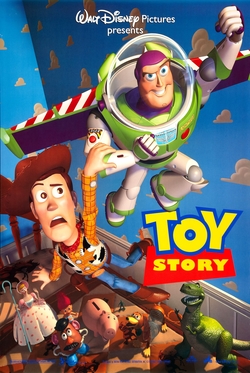
5. Toy Story (1995)
What went wrong: Toy Story was the first animated film made entirely by computers, made Pixar into a household name, and was a landmark in both animation and the cinema. But ideas from then-Disney executive Jeffery Katzenberg almost ended production. He wanted to add more edge to the project, so director John Lasseter and his team were forced to add darker elements, such as Woody being a self-entitled jerk. When a test screening made of edited storyboards drawings was shown to Disney executives in November 1993, they were displeased because the film turned out to be a mean spirited dark comedy. Disney was close to cancelling the project but Lasseter and his team of writers begged for another chance. After Lasseter fixed the film, Disney was impressed and production was back on track.

4. Cool World (1992)
What went wrong: Ralph Bakshi's nonsensical 1992 live action/animation hybrid, Cool World was a mess from the beginning. Originally, the film was supposed to be a horror film about a woman who is half human, half cartoon, who plans revenge on her cartoonist father for abandoning her and her mother. Producer Frank Mancuso Jr, who produced some of the Friday the 13th films, was growing tired of the horror genre and hired Micheal Grais and Mark Victor to rewrite the screenplay without Bakshi's permission. When Bakshi got wind of this, he punched Mancuso in the mouth and threatened to quit but Paramount forced him to finish the job or suffer legal consequences. Kim Basinger, who plays a role that was meant for Drew Barrymore, requested the film to be toned down so she can show the film to sick children, hence why the film changed from horror to comedy. The animators weren't given a script, so they had to improvise and create random scene son their own. The final product was released on July 10, 1992 and it bombed big time.

3. Toy Story 2 (1999)

What went wrong: After the success of the first Toy Story film, Disney and Pixar decided to make a continuation of the groundbreaking classic. Unfortunately, much like the first film, it almost wasn't made. It was originally planned as a direct to video sequel, but due to it's promising story and ideas, it was upgraded to a theatrical release. The plot was redone in one weekend and the film had to be completed in nine months, which caused inherent problems. The animators suffered carpal tunnel syndrome and repetitive strain injuries. The production schedule was so nightmarish, that one animator forgot to drop his child off at day care and left him at his car. Yikes!

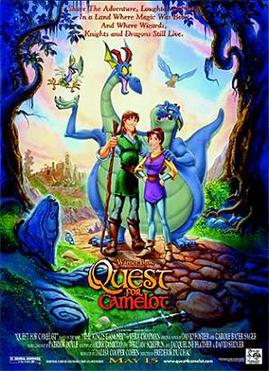
2. Quest for Camelot (1998)
What went wrong: Back when Disney was back on track in the 90's, other Hollywood studios were trying to cash in with what they have to offer and Warner Bros. 1998 bomb Quest for Camelot proved to be an answer. The original plan for the film was to create a more mature, and dark adaptation of Vera Chapman's The King's Damosel, which could possibly be a PG-13 style animated film. Unfortunately, Warner Bros forced the animators and writers to turn the project into a Disney-esqe musical to compete with the legendary studio. The animators knew that the powers that be at WB didn't care much for animation and were not happy with the finished product.

1. Foodfight (2012)
What went wrong: Foodfight was widely considered by critics and animation fans as one of the worst animated films of all time. So it's really no surprise that the film had a very doomed history.
The movie started production in 2002, with a planned Christmas 2003 release. But before the film could see the light of day, the computer hard drives were stolen. This led to a decade of missed deadlines, animation being reworked, and distribution problems. The film was finally unleashed in 2012 and was scorned by the animation community ever since.

Friday, June 15, 2018

Patrick's Favorite Movies: Jaws (1975)


Ever since I started this blog, I've always wanted to create a series on my favorite films. Now it's the summer, I figure I do a review of Steven Spielberg's first masterpiece, Jaws. Both this film and Star Wars were responsible for the summer blockbuster trend that is still going on in the American cinema today.

In 1975, Steven Spielberg unleashed his first masterpiece, Jaws. Based on Peter Benchley's 1974 bestseller, the movies follows the basic premise of a killer shark that eats people while they were swimming and it's up to water hating police chief Martin Brody (Roy Scheider), crazy shark hunter Quint, (the late Robert Shaw), and nerdy shark expert Matt Hooper (Richard Dreyfuss) to stop the creature.

This film had a very troubled production. Filming began without a completed script, many of the big names like Jon Voight and Robert Duvall turned down the project, there were technical difficulties with the mechanical sharks used in the film, Robert Shaw bullied Richard Dreyfuss, and the film fell behind schedule and over budget due to the hazardous nature of filming the second half of the film entirely in water. And yet, the film somehow became a major critical and critical success, became the top grossing film of it's time, and kick started the summer blockbuster.

The first half of the film keeps us in suspense both because we don't see the shark right away but we feel what it's up to with John Williams' creepy musical score and underwater photography by Bill Butler which films the shark's point of view. And when our 3 heroes get to ocean to kill the shark, the film gets even more intense as the team struggles to work together while the shark is surrounding them. Even the quieter moments is more suspenseful because the team are stranded in the ocean with no human contact (apart from the radio that's later destroyed by Quint), not knowing where they are, and not figuring out when the shark is coming back. As the tension and suspense builds, the film ends in one of the most thrilling climaxes in film history, which I won't give away.

Roy Scheider, Robert Shaw, and Richard Dreyfuss were perfectly cast in their roles and gave great performances that helped fit the personalities of these 3 charterers. We have Scheider's bravery, Shaw's eccentricity, and Dreyfuss' sense of humor and all three have great chemistry when they are brought together.

Jaws was often credited as the very first summer blockbuster and rightfully so. It's suspenseful, well acted, and helped establish Steven Spielberg as one of the great directors of his generation. It's still holds up after repeating and is much better than the thrillers than we get today. I highly recommend this film.

RATING: 4/4

Saturday, June 9, 2018

Roger Ebert Archive: The Hidden Fortress

Before I write the article, I would like to tell you about my vacation to North Carolina. I had a good time with my family. We went swimming, we attended a barbecue, we ate a lot, and we went to an arcade in downtown Charlotte, North Carolina. Now, on with the archive.

In this second entry of the Roger Ebert Archive, we're gonna be explore his thoughts on one of the films that helped inspire Star Wars, The Hidden Fortress. His review of the film is not on his website but you can find it on his Movie Home Companion book series or an emulator of a floppy disc for DOS computers that contains Ebert's thoughts and essays. You can find the emulator on archive.org. As for the movie itself, he gave it 4 stars out of 4 and even recommended the Criterion Collection Laserdisc version, which is letterboxed in it's original wide screen ratio (this review is written in the late 80's, before Ebert had DVD and Blu ray).

NOTE: Ebert's thoughts will be quoted.


"The Hidden Fortress is grand, bold moviemaking - a Japanese adventure classic that combines elements of samurai films, Westerns, and myths of heroes and commoners. It does something else, too. It reveals many of the sources of the Star Wars movies so clearly that you can almost see R2-D2, C-3PO, and Princess Leia there on the screen. Now that we had two sequels to Star Wars, how about this as a prologue?"

"The movie was made in 1958 by Akira Kurosawa, the greatest of Japanese directors, and it attracted a lot of attention at the time. It was the first Japanese movie in Cinemascope, it was one of the most expensive Japanese movies ever made, and it confirmed Kurosawa's role as a master of adventure epics. His Seven Samurai (1954) inspired Hollywood's The Magnificent Seven, but it took George Lucas to use The Hidden Fortress as the starting point for the most popular American movies ever made."

"The irony is that The Hidden Fortress has hardly been seen in this country. A much-shortened version had brief engagements in the early 1960s, but then it went out of release and the rights were allowed to lapse until late in 1983, when, for the first time, this uncut 139-minute version was brought to America. The best video version is the Criterion Collection's laserdisc, with a letterboxed format so Kurosawa's entire wide-screen compositions are visible."

"The debt of the Star Wars pictures to Kurosawa is obvious almost from the opening shots, when two hapless Army underlings, one short, one tall, stagger through an empty landscape bemoaning their fates. Then the other story elements fall into place: a brave, outcast warrior general; a proud and fierce princess who is forced to disguise herself as a commoner; a feared military leader who first opposes the princess's cause but then supports it; a mysterious hidden fortress that must be captured, defended, or destroyed; and, of course, chases and swordfights and appeals to tradition and history."

"Does all this sound vaguely familiar? Lucas gives full credit: He told Kurosawa that he saw the movie in film school, never forgot it, and used the characters of the two foot soldiers as an inspiration for his two inseparable androids."

"Kurosawa has made better movies, but never one more filled with humor and energy. His story isn't made into a dirge about honor and violence, but into a celebration of high spirits. The two foot soldiers enlist in the service of the general (Toshiro Mifune) without knowing who he is or that the woman accompanying him is their princess. They all conspire to move a wagonload of gold from one kingdom to another, concealing the gold inside sticks of firewood and hiding themselves in a procession to a firewood festival. There are lose scrapes, double crosses, cases of mistaken identity, and a thrilling lance-fight between Mifune and that other great Japanese star, Sumusu Fujita. An overnight stop at a rowdy frontier town will remind you of the saloon planet in Star Wars."

"There are also several breathtakingly great individual shots. One comes early in the film, when thousands of prisoners riot and run crazily down a long, sweeping flights of steps, overwhelming their captors. Another comes during the duel with the lances, when the troops in the background are choreographed to mirror every move of the fight with their own body movements. And there's the firewood festival, with waves of celebrants dancing around the flames in a pagan dream. Seeing The Hidden Fortress is like visiting the wellspring of the Force." 

Why I Didn't Like The Great Mouse Detective As A Kid (And Still Don't Today) (Part 1)

  I hated The Great Mouse Detective from the moment I first saw it as a kid. I watched it on VHS completely astonished with what I've wa...